The AI boom is entering the phase where its constraints are physical rather than computational. The stories on this desk this week look unrelated - a leaked low-power Intel chip, a satellite running poetry, a Senate debate interrupted by an angry voter, a meditation on investing in miracles - but they are all reports from the same frontier. The industry is discovering that scaling intelligence now means negotiating with watts, orbits, water, voters and investors, not just with GPUs.
Efficiency Becomes the Product
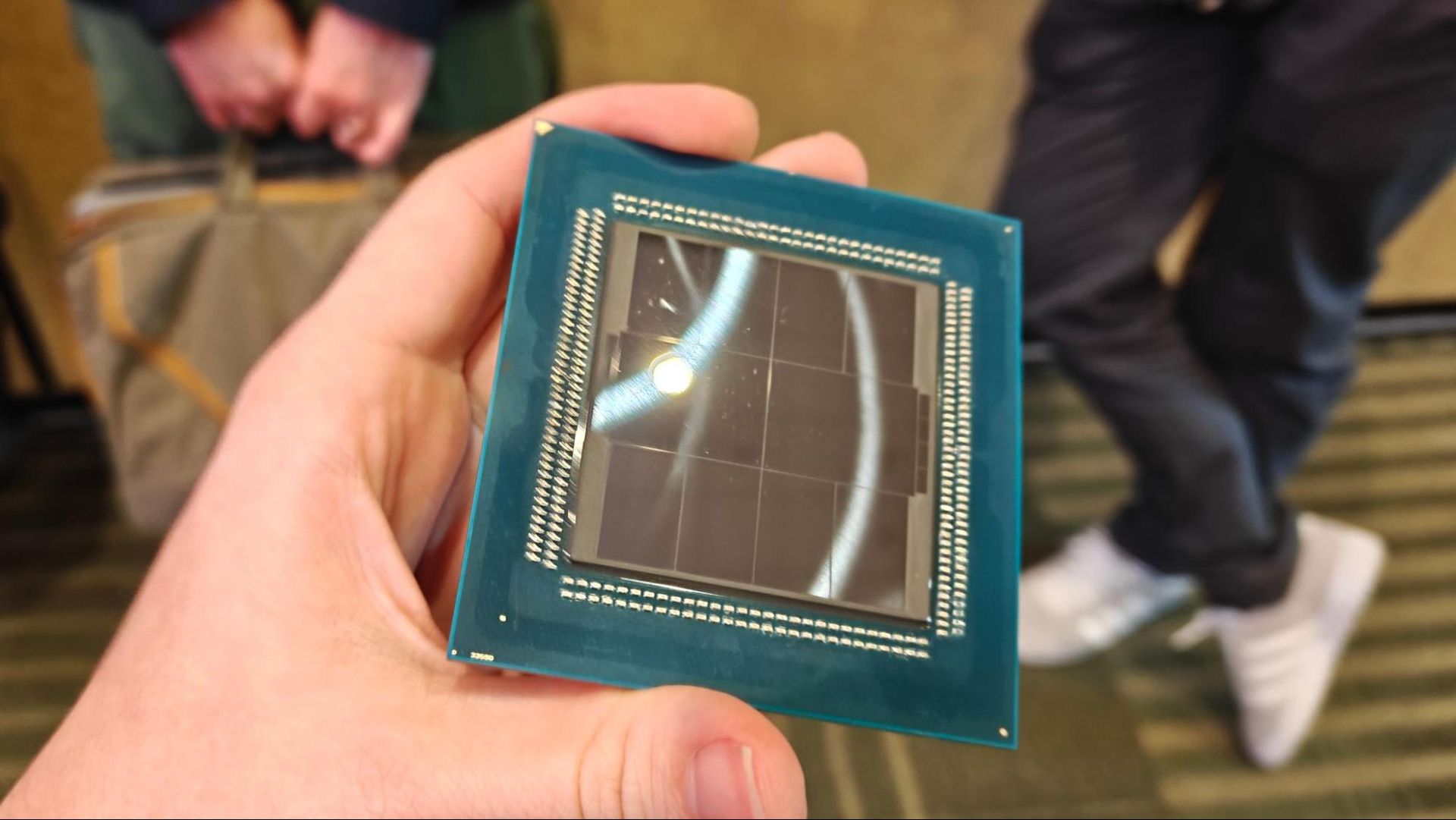
Consider the Intel leak first, because it is the smallest and most concrete signal. Tom's Hardware reported that an Intel leaker revealed a chip called Moon Lake, positioned as a likely replacement for the company's N-series SoCs, with four lower-power-efficiency cores, no performance cores, and a 6-watt TDP. That is a deliberately modest design. No performance cores at all means Intel is not chasing benchmark headlines with this part; it is chasing thermal envelopes. A 6-watt budget is the kind of figure that matters in thin clients, handhelds, embedded systems and edge devices where there is no room for a fan and often no reliable mains power.
The timing is telling. For two years the dominant narrative in US semiconductors has been about who can assemble the largest training clusters. Moon Lake suggests the next contested layer is the opposite end: silicon that can run smaller models, or inference workloads, inside a power budget measured in single-digit watts. If AI features are going to appear in every device rather than in a handful of data halls, the companies that win will be the ones that can deliver capability per watt, not capability per dollar of capital expenditure. For US chipmakers, that is a design and validation problem they understand well - and a reminder that the AI trade is not only a data center trade.
Compute Leaves the Building
TechCrunch reported that Google's first data center satellite is online and writing poetry, with the first TPU in space running a Google DeepMind Gemma 4 model. It is easy to treat this as a novelty item, and the cheesy poetry framing invites that. But the underlying fact is structural: a major US cloud provider has put inference hardware outside the atmosphere and connected it to a production model.
Why does that matter to the US market? Because terrestrial data centers are increasingly constrained by things that are not engineering problems - land, grid interconnection, local permitting and water. Moving even a slice of compute off-planet does not solve those constraints at scale, and the story offers no cost figures that would justify it commercially today. What it does do is establish an option. Google is testing whether orbital inference is operationally plausible while the political cost of building on the ground keeps rising. That is a hedge, and hedges are what companies build when they expect the ground to get more expensive.
The Local Cost of a Global Boom
The Verge's report from Maine shows what that expense looks like when it becomes political. At the final debate of the midterms, an audience member interrupted Republican Sen. Susan Collins with a shout that he was terrified, that AI data centers are destroying the climate and poisoning the water. Collins brushed off the outburst and tied the man to her Democratic challenger.
Read that carefully. A sitting senator, mid-sentence on her own record, was confronted with data centers as a climate and water issue - and her response was to convert it into a partisan affiliation. That is the tell. The story's framing, that Maine's data center revolt will decide who controls the Senate, may be overstated, but the mechanism it describes is real: data center siting has become an electoral issue in a state whose vote matters to control of the chamber.