The recent run of Windows news points to a single structural change on the operating systems beat: security is moving from something the OS does for a machine to something the machine must qualify for. A lock-screen zero-day that can expose BitLocker-protected PCs, a new enthusiast-built alternative OS, and Microsoft's Baseline Protection posture all describe the same tension between protection and exclusion. For US businesses and consumers, the practical question is shifting from whether Windows is secure to which Windows machines are allowed to be.
The Lock Screen Is Still an Attack Surface
The most concrete of the three stories is the one Tom's Hardware logged: a Windows 11 lock-screen zero-day that lets an attacker run software by partially bypassing the lock screen with a few keystrokes, with BitLocker-protected machines seemingly vulnerable as well. The detail that matters for the beat is not the keystroke count but the location of the flaw. The lock screen is the boundary users and IT departments treat as the last line before disk encryption does its work. When a few keystrokes can partially cross that boundary on a BitLocker-protected machine, the assumption that full-disk encryption covers the pre-boot and pre-login window is no longer safe to hold implicitly.
That is a design problem, not a patch problem. Lock screens sit where convenience features, accessibility paths, and recovery flows meet, and each of those is a legitimate reason for the OS to accept input before a user is authenticated. The more functionality that accumulates at that boundary, the more places an attacker can look. For US enterprises with large fleets of BitLocker-managed laptops, the operational consequence is that encryption compliance and endpoint security are not the same control, and audits that treat the presence of BitLocker as sufficient evidence of protection are measuring less than they assume.
Security That Gates the Machine
The CNET story on Windows' Baseline Protection describes the other side of the same coin. Baseline Protection makes security somewhat easier to manage, per CNET, but it carries a pitfall: applications can refuse to work if the machine fails security checks. That is a meaningful change in how the OS relates to software. Instead of the operating system providing a security layer beneath applications, the security posture of the machine becomes a precondition applications can test and reject.
The benefits are real. A consistent baseline gives developers and IT administrators a shared definition of a trusted machine, and it reduces the guesswork of configuring defenses per deployment. The cost is that the failure mode moves. When a machine drifts out of compliance, the symptom is no longer a quieter security log; it is an application that will not launch. For US companies, that turns endpoint hygiene into an availability question, and it puts pressure on support desks to diagnose security-state failures that look to the user like ordinary software breakage.
The Enthusiast Escape Hatch
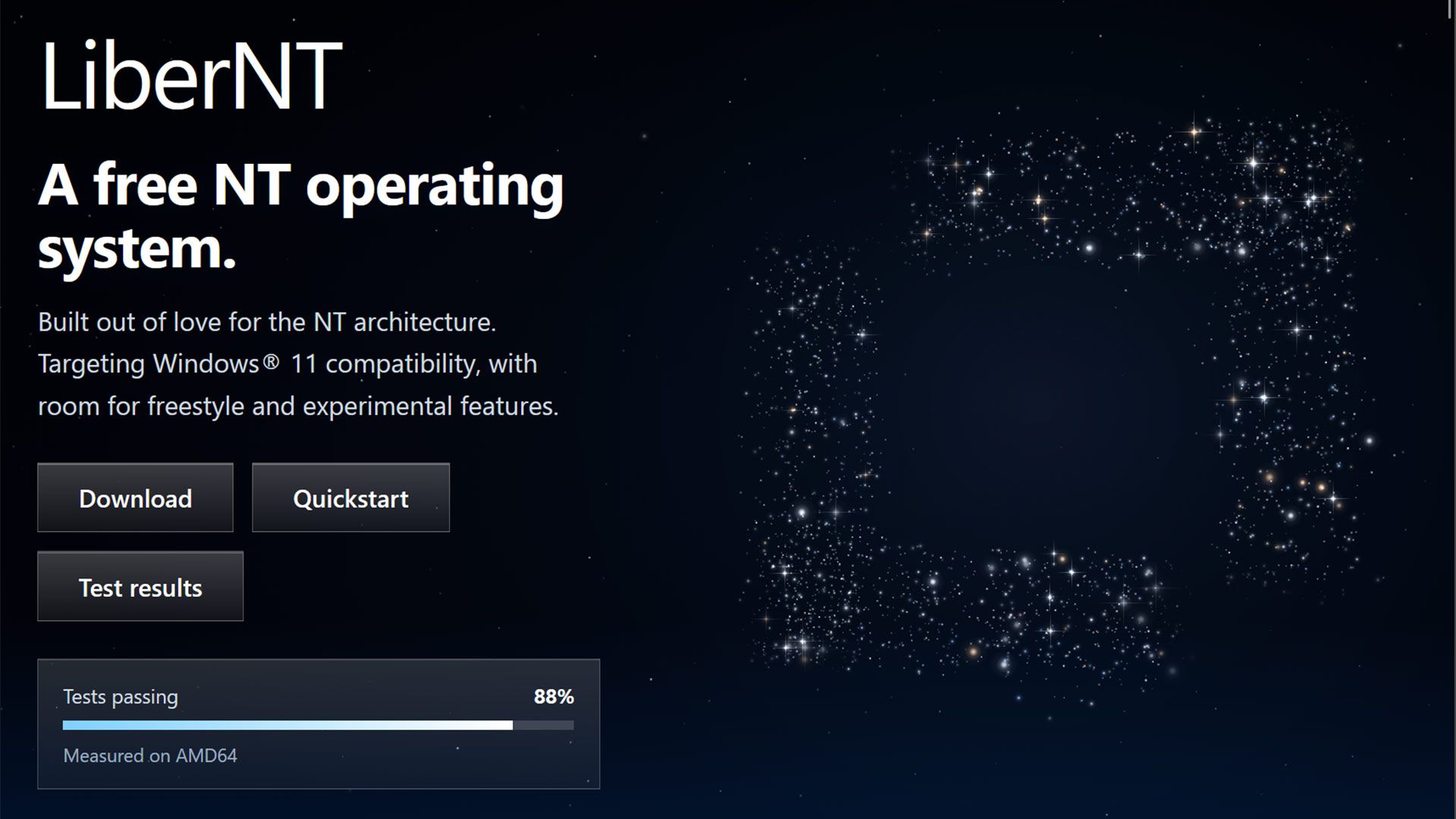
The third story, also from Tom's Hardware, is easy to treat as a curiosity: a developer vibe coding a Windows 11 alternative operating system called LiberNT, targeting amd64, arm64, and riscv64 hardware. It is worth taking seriously for what it signals rather than what it ships. A hobbyist operating system spanning three architectures is not a threat to Windows on the desktop. But its existence, and the fact that it is being discussed at all, reflects a segment of technical users who want an OS that is not mediated by compliance gates and lock-screen surface area.