The binding constraint on AI hardware is moving away from the chip itself. Faster accelerators are no longer sufficient on their own, because power, cooling, and the physical footprint of large clusters now set what can actually be built and run. The evidence on this beat points in one direction: the industry is being forced to redesign around energy and scale rather than simply buying its way past bottlenecks with newer silicon.
The chip is no longer the whole story
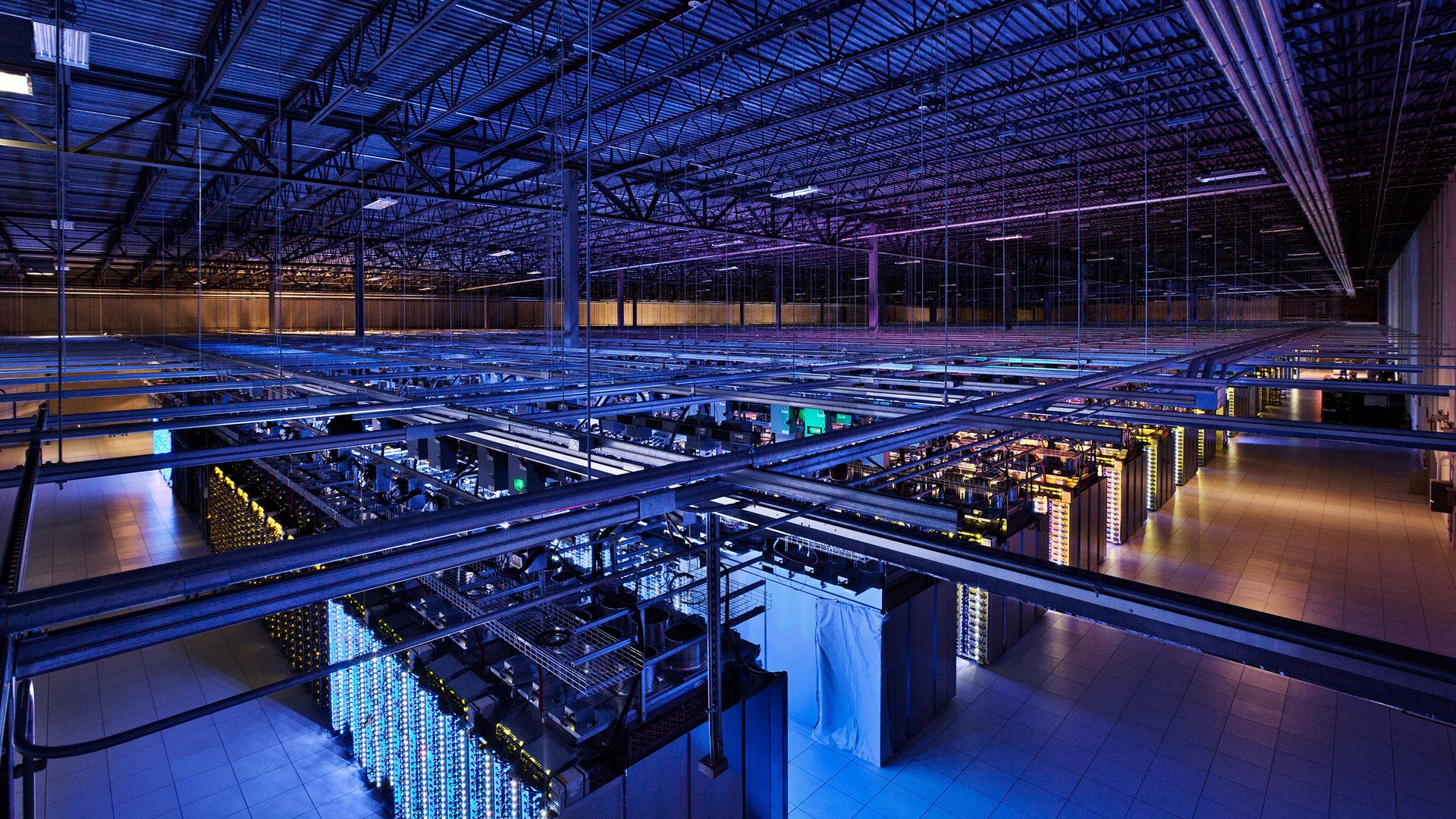
As Tom's Hardware reported, power constraints, network congestion, and communication overhead are pushing 100,000-plus accelerator AI clusters past the boundaries of single data centers. That is a structural statement about the hardware business. When a cluster outgrows one facility, the problem stops being a procurement question and becomes an infrastructure question: where the electricity comes from, how heat is removed, and how much of the system's time is lost to moving data between machines rather than computing on it.
That reframes what an AI hardware vendor is selling. A GPU's throughput figures matter less if the surrounding cluster cannot be powered or cooled at the density required, or if the interconnect cannot keep the accelerators fed. The Tom's Hardware framing is that communication overhead and network congestion are now first-order design constraints alongside raw compute. For US buyers planning large installations, the practical question is shifting from how many accelerators can be acquired to how many can be sited, powered, and kept busy.
Geothermal as a data center answer
The energy side of that problem has attracted a distinctly hardware-adjacent bet. As TechCrunch reported, new geothermal startups are betting they can leapfrog today's leaders to deliver terawatts of electricity nearly anywhere, with super-hot rock geothermal positioned as a potential end to data center energy woes. The relevance to this beat is direct: if the constraint is power, then the companies that can site generation near load become part of the AI hardware supply chain, not a separate energy story.
"Nearly anywhere" is the operative phrase. Large accelerator clusters have historically been pulled toward wherever power and cooling were cheapest and most available. Generation that can be placed close to the compute would loosen that geography, and geography is precisely what the multi-site cluster problem is about. The terawatt framing in the TechCrunch report is a statement of ambition from early-stage players, not an installed figure, and it should be read that way. But the direction of the bet is consistent with the Tom's Hardware constraint: the industry is treating electricity as the scarce input.
Efficiency pushes back at the rack level
The third signal runs the other way, and it matters for the same reason. As Tom's Hardware reported, a lawyer's private AI server built from 12 used Nvidia V100 GPUs now runs every DeepSeek V4.1 Flash expert at 4-bit NVFP4. This is a small deployment, but it is an instructive one. Older accelerators, aggressive quantization, and a mixture-of-experts model combine to put capable inference workload on hardware that a serious buyer might otherwise write off.
For the US market, that is a competitive signal. If quantized experts can run on used last-generation silicon in a private server, then a meaningful slice of AI serving does not require the newest, densest, most power-hungry hardware. That creates a second market beneath the frontier clusters: refurbished accelerators, efficiency-focused software, and small private installations. It also puts pressure on the economics of the largest builds, because the workloads that can be pushed down to older hardware are workloads that do not need to be sited in a 100,000-accelerator facility.