The recent run of news on this beat points to a single shift: the central processing unit is moving back to the center of the AI infrastructure story. Intel's 18A yields reaching 70% alongside a long-term Microsoft Xeon supply and EMIB agreement, Diamond Rapids Xeon silicon appearing in live server demonstrations at SC26, and Dell and AMD repositioning around CPU power budgets for agentic AI all describe the same thing. The processor is no longer the assumed background of the AI buildout; it is becoming the component that determines what gets deployed, at what power, and from which supplier.
Manufacturing Maturity Becomes the Selling Point
The most concrete signal is the Intel 18A yield figure. As Tom's Hardware reported, Intel's 18A process has reached 70% yields, a level that matters less as an engineering curiosity than as a commercial threshold. Yields at that level are what allow a foundry customer to commit to volume, and Microsoft's decision to sign a long-term Xeon supply deal alongside an EMIB usage agreement is exactly that kind of commitment. The pairing is telling: Microsoft is not simply buying processors, it is agreeing to use Intel's advanced packaging technology as well. That ties the customer to Intel at two layers of the stack at once, which is a materially stickier relationship than a single-generation chip purchase.
For US technology companies, this is the difference between a domestic advanced-manufacturing option that exists on a roadmap and one that exists in supply agreements. The yield milestone is the precondition; the Microsoft deal is the evidence that the precondition has been met. Neither fact stands alone. Read together, they suggest Intel's most important near-term product is not a chip but credibility with large US buyers who need a second source they can plan around.
The Roadmap Gets a Live Demonstration
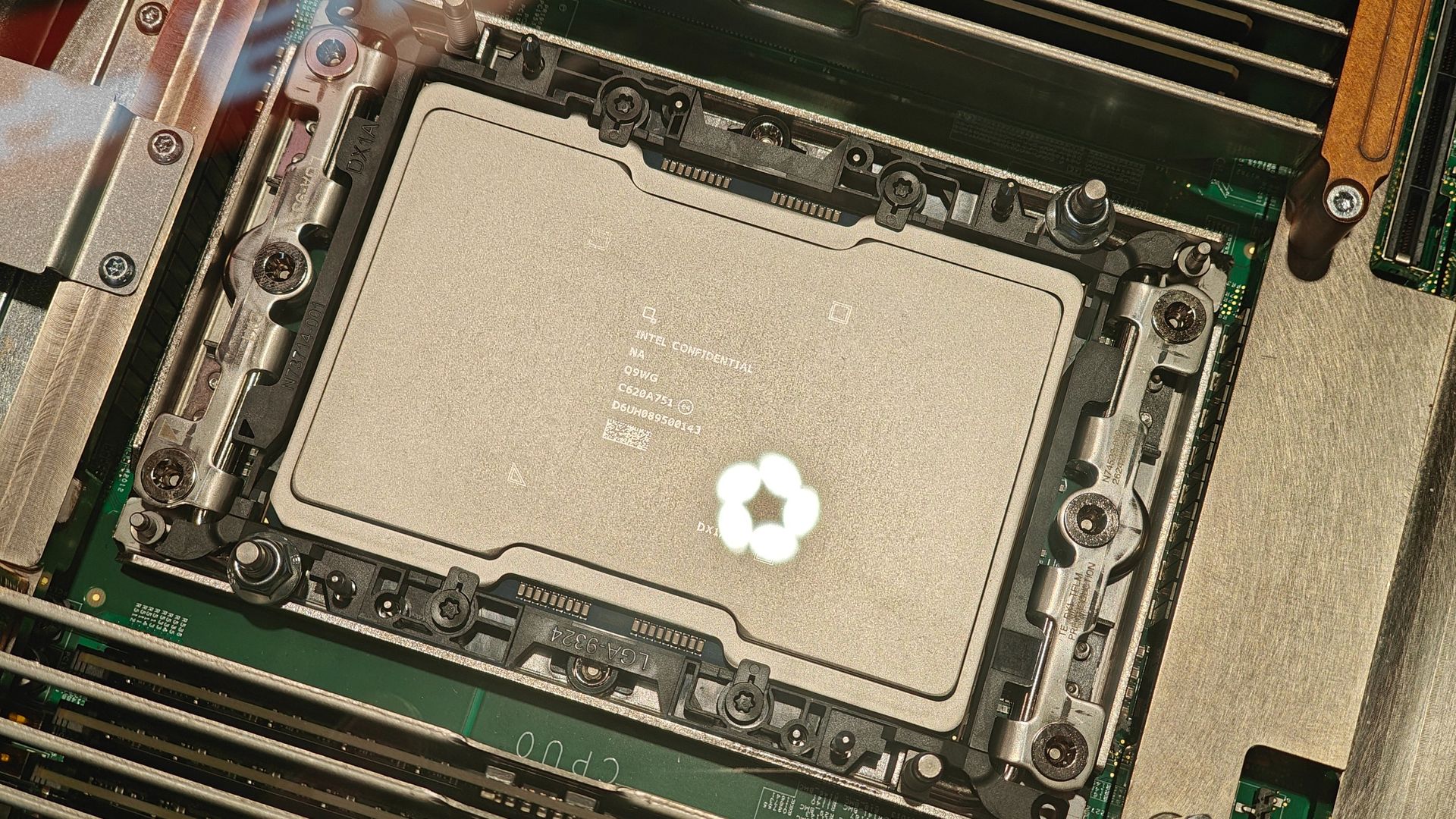
Intel's next-generation Xeon, Diamond Rapids, showed signs of life at SC26, appearing at two booths, one of which featured a running server. As Tom's Hardware noted, neither presence came directly from Intel. That detail is worth dwelling on rather than dismissing. A running server at a third-party booth is a different class of evidence than a slide, because it implies partners have working silicon and are willing to show it. The absence of a direct Intel booth cuts the other way, hinting that the company is not yet ready to stage the launch itself. The honest reading is that Diamond Rapids has moved from paper to partner hands, but not to general availability. On this beat, that is progress measured in stages, not a debut.
Power Budgets Favor the Processor
The demand-side argument comes from SiliconANGLE's reporting that agentic AI is putting the CPU back at center stage, with Dell and AMD chasing every watt as supercomputing and AI converge. The mechanism described is straightforward: graphics processing units still draw the headlines, but the next wave of demand lands on CPUs that must fit inside the power budgets data centers already have. That reframes the competitive problem. When power is the fixed constraint, the winner is not the part with the highest peak throughput but the part that delivers the most useful work per watt within an existing envelope.