Article

The Vulnerability Is Now the Tool, the System, and the Person

Three recent disclosures show the same pattern: the weakest point is increasingly the trusted component itself, whether an AI testing tool, a vendor key, or a human operator.

HemeswariNovember 20, 20264 min read

The thread: trust placed in the wrong layer

The three stories logged on this beat share a single shape. In each case, an asset that was supposed to reduce risk became the route to compromise: an AI tool built to find weaknesses was turned to that purpose against a live application, a hard-coded key intended to secure a management console opened it to attackers, and the human judgment behind AI systems proved exploitable through ordinary emotional manipulation. The pattern is that defenders keep securing the outer perimeter while the trusted component inside it becomes the attack surface.

When the testing tool becomes the weapon

As BleepingComputer reported, threat actors used the open-source AI penetration-testing framework Cairn to find a previously unknown vulnerability in a medical imaging application and take over a server. The significance is not that AI found a bug; automated fuzzing and scanning have done that for years. It is that an autonomous agent designed to reason about software weaknesses was pointed at production software by people with no interest in fixing it.

For US technology companies, this collapses a distinction they have relied on. Penetration-testing frameworks have traditionally been treated as defensive goods, published openly because the security community benefits from shared tooling. That norm assumed a meaningful gap between the skill needed to use a tool and the skill needed to cause harm. An agentic framework narrows that gap. A US vendor shipping a medical imaging application now has to assume that the same open tooling its own red team might use is available to an adversary who supplies only a target. The defensive benefit of open security tooling has not disappeared, but it now arrives bundled with an offensive capability that is cheaper to operate than before.

The key that was never a secret

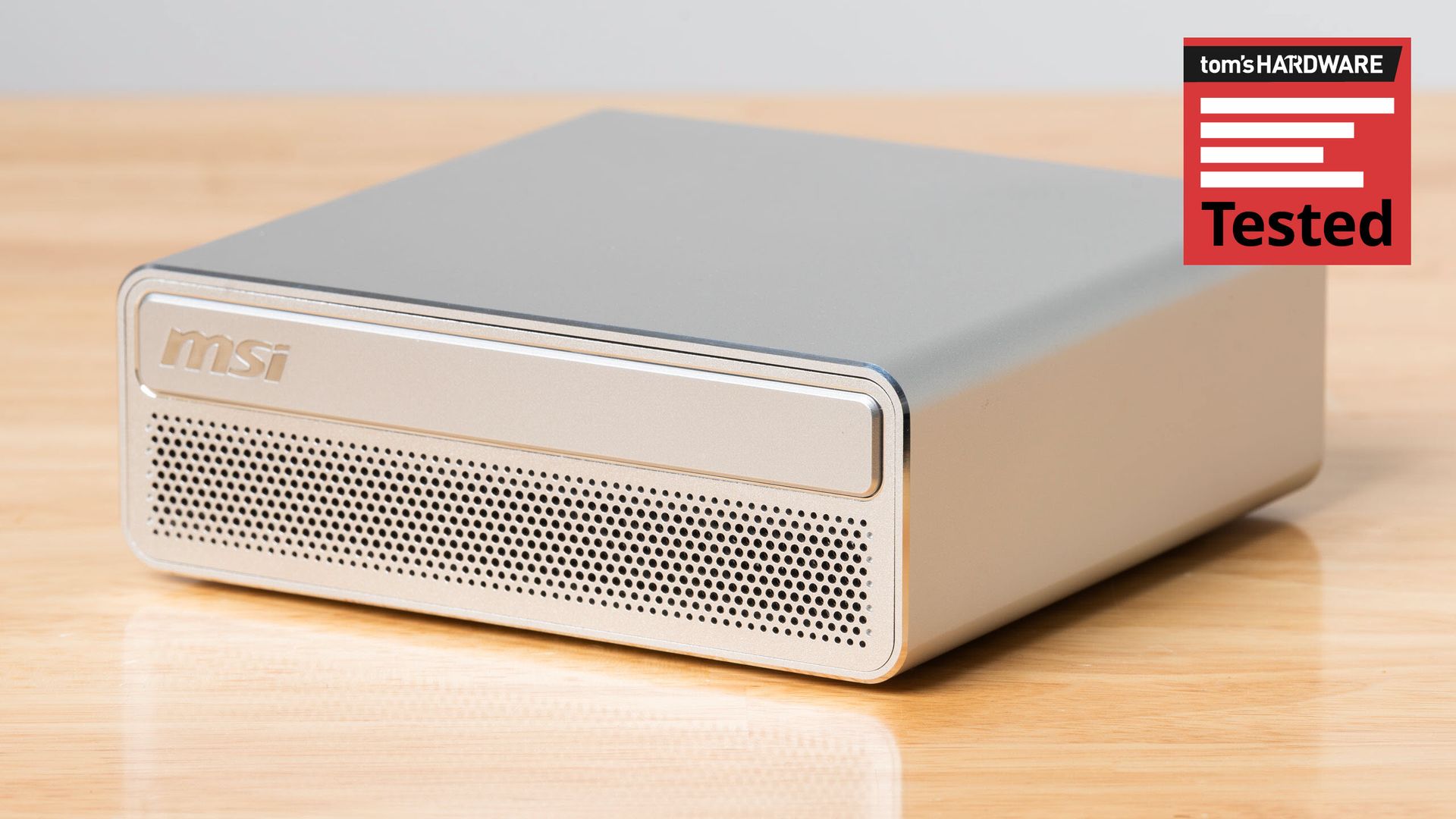
ASUS released Control Center Express v1.7.29 to fix three critical vulnerabilities, BleepingComputer reported, including a hard-coded key flaw that could let remote attackers gain administrative control of the management console and the devices it manages. A hard-coded key is a credential embedded in software and shipped to every customer. Once it is discovered, it is not a secret anywhere.

This is an old failure mode appearing in a consequential place. Management consoles are, by design, the place from which many devices are controlled at once. A flaw there does not compromise one machine; it compromises the administrator's reach. For US businesses running fleets of managed endpoints, the practical exposure is that the console becomes a single point of failure with a vendor-supplied weakness inside it. Patching is the right response and ASUS has issued one, but the structural lesson is that the components organizations trust to administer security deserve the same adversarial scrutiny as the endpoints they manage. A management console is not a neutral utility; it is a high-value target with an unusually wide blast radius.
The human in the loop is a component too

TechCrunch reported that experts warn nearly everyone in AI is susceptible to a honey trap scheme right now, framing the vulnerability as one that exploits people's hearts rather than their code. The phrasing is light, but the substance is not. People building and operating powerful systems remain people, with the same social susceptibilities as anyone else, and those susceptibilities can be reached through channels that no patch addresses.

For US AI companies, this sits awkwardly beside the industry's security posture. Considerable effort goes into model safety, access controls, and supply-chain integrity. Far less is institutionalized around the personal exposure of the engineers and executives who hold access to those systems. A honey trap is not a sophisticated technical exploit; it is a social one aimed at someone with privileged access. The organizations most exposed are precisely those whose staff hold the keys to sensitive systems and whose public profiles make them identifiable targets. As TechCrunch's framing suggests, this is not a narrow slice of the AI workforce; it is close to all of it.

Why these belong on one beat

The common thread is a category error in how vulnerabilities get prioritized. Organizations tend to fund defense against attackers coming from outside, and to treat tools, vendor credentials, and personnel as internal and therefore lower risk. Each of these stories shows that assumption failing. The AI agent was inside the security toolkit. The key was inside the shipped product. The person was inside the trusted circle.

For the US market, this has a competitive dimension. Companies that can demonstrate they treat tooling, vendor-supplied components, and personnel exposure as part of the attack surface will be better positioned with enterprise buyers who increasingly ask for evidence rather than assurances. Companies that treat these as somebody else's problem will keep discovering that the weakest link was the one they had already approved.

What to watch

Watch how vendors of open security tooling describe the intended-use boundaries of autonomous agents like Cairn, and whether those boundaries are technical or merely advisory. Watch whether ASUS's fix for Control Center Express is followed by guidance to customers on verifying that exposed consoles were not accessed before patching, since a hard-coded key flaw implies a window of exposure. And watch whether AI organizations begin treating personnel-focused social engineering as a security control area in its own right, as TechCrunch's reporting implies they should. None of these stories supplies a resolution; each supplies a question that US technology companies will be answering in public.

More on this beat: Cybersecurity on TechManNews.

#vulnerabilities#AI security#hard-coded credentials#social engineering#enterprise security#patch management

Newsletter

Get Tech News in Your Inbox

The latest AI, gadgets, software and startup stories from TechManNews, delivered every morning - free.