The Common Thread in This Month's Cyber Headlines Is Not the Hackers
Article

The Common Thread in This Month's Cyber Headlines Is Not the Hackers

Three recent stories point to the same conclusion: attackers are exploiting unpatched flaws and aging systems, while the loudest outages turn out to be ordinary failures.

NagiNovember 20, 20265 min read

Photo: BleepingComputer

The three stories on this beat in recent weeks look unrelated at first glance: a data theft at a medical group, a zero-day in VMware's vCenter, and a cluster of outages at federal agencies and major technology firms. The thread that runs through them is not a new class of attacker. It is that the incidents drawing the most attention are not always the incidents that matter, and the ones that matter keep coming from the same place: known flaws left unpatched and systems that were never designed to fail safely.

A Zero-Day With a Long Shelf Life

The clearest example is the VMware vCenter flaw. As BleepingComputer reported, Broadcom has released security updates for a critical authentication bypass in vCenter Server that Chinese-linked hackers have exploited in zero-day attacks since September 2026. Two details deserve attention. The first is the timeline: the exploitation window is measured in months, not hours. The second is the target. vCenter is management infrastructure. An authentication bypass there does not expose one application; it exposes the control plane that administrators use to run virtualized environments, which in turn underpin a great deal of enterprise and cloud infrastructure in the United States.

For US technology companies, the practical consequence is that patching vCenter is not a routine maintenance task. It is a decision about whether an adversary can reach the systems that manage everything else. Organizations that treat management appliances as low-priority because they are internal-facing are making a category error. These are exactly the systems attackers want, because compromising them yields access that is hard to detect and expensive to revoke. The fact that the flaw was exploited before a fix existed does not excuse slow remediation now that one is available. Zero-day exploitation explains how an intrusion starts; it does not explain why it persists.

Data Theft as the Default Outcome

The SBC Medical Group filing shows where many of these intrusions end. According to BleepingComputer, the company told the SEC that two cybersecurity incidents exposed sensitive customer and employee information, including personal data belonging to 1.6 million people. Two incidents, one disclosure, and a population larger than most US cities.

The pattern here is familiar and worth stating plainly: once an attacker is inside a network, the marginal cost of extracting records is low, and the records themselves are durable. Names, contact details and identity attributes do not expire. For US consumers, that means the harm from a breach like this is not a single fraudulent charge that can be reversed. It is a lasting exposure that surfaces in future identity verification, in phishing that carries real context, and in the slow accumulation of a personal data footprint the individual never chose to create.

For US companies, the SEC filing is itself part of the story. Disclosure obligations create a record of how many people were affected, which is useful, but they also create an incentive to characterize incidents carefully. The material fact in the SBC filing is not the number alone. It is that two separate incidents produced a single, large exposure, which suggests that containment and detection, not just perimeter defense, are where the gaps lie.

Outages Are Not Automatically Attacks

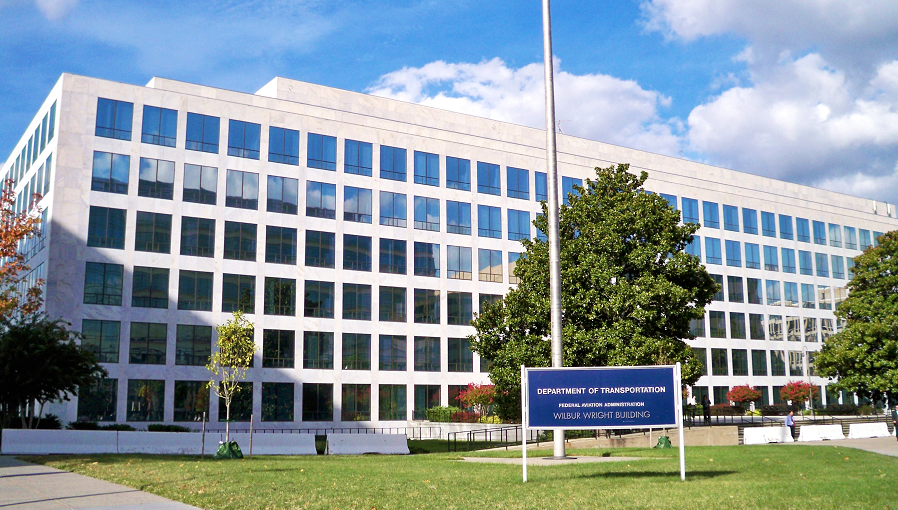
The third story cuts against the grain of a cyber-attacks beat, and that is precisely why it belongs here. As SiliconANGLE reported, US authorities do not believe the recent outages at federal agencies and top technology firms were caused by cyberattacks. The Federal Aviation Administration, United Airlines, Apple and Microsoft were among the affected organizations, and all four attributed the disruptions to technical issues rather than hackers. The report also noted that experts pointed to artificial intelligence models accelerating the discovery of software bugs.

This is the most useful item of the three, because it disciplines the other two. When a major airline or a platform provider goes down, the instinct in this beat is to assume intrusion. Often the correct answer is a defect. That distinction matters for US consumers, who bear real costs from outages regardless of cause, and for US technology companies, which face pressure to attribute every disruption to an adversary rather than to their own engineering.

The AI angle deserves care rather than alarm. Faster bug discovery is not inherently a security problem; finding defects sooner is generally how software improves. The complication is that discovery and remediation are different activities running at different speeds. If tooling surfaces vulnerabilities faster than organizations can test and deploy fixes, the result is a growing backlog of known weaknesses, which is exactly the condition that the vCenter exploitation window illustrates. The common thread across all three stories is not that attackers have become more capable. It is that the defender's remediation cycle remains the binding constraint.

Why This Matters for the US Market

Taken together, the stories describe a market in which security spending and security outcomes are drifting apart. Companies can buy detection, threat intelligence and incident response, and still be running management infrastructure with a months-old critical flaw. They can disclose a breach to the SEC with precision and still have exposed 1.6 million people across two incidents. They can absorb an outage and correctly identify it as a technical fault, while the underlying defect that caused it remains unaddressed elsewhere in the same estate.

For US consumers, the implication is that breach notices will keep arriving, and that the appropriate response is not resignation but attention to which organizations are repeatedly represented. For US technology companies, the implication is that the differentiator is not the sophistication of the threat but the speed and discipline of the fix. A zero-day exploited since September is a warning. A zero-day still unpatched in November is a choice.

What to Watch

The concrete items to track are narrow. First, remediation rates for the VMware vCenter authentication bypass, since the exploitation window reported by BleepingComputer has already run for roughly two and a half months and the patch's adoption is the variable that now determines exposure. Second, whether SBC Medical Group's two incidents produce further SEC filings that clarify scope beyond the 1.6 million people already disclosed. Third, whether the attribution of the recent outages to technical issues holds as investigations continue, and whether the AI-accelerated bug discovery cited by SiliconANGLE translates into faster patching or merely a longer list of known problems. The direction of that last question will say more about the state of cyber defense going into 2027 than any single intrusion disclosed this month.

More on this beat: Cybersecurity on TechManNews.

#cyber attacks#zero-day#data breach#VMware#outages#vulnerability management

Newsletter

Get Tech News in Your Inbox

The latest AI, gadgets, software and startup stories from TechManNews, delivered every morning - free.