๐Ÿ“ฃ

Advertisement

Google Ad - 970ร—90 Leaderboard ย TOP_LEADERBOARD_4

The Trusted Names Developers Reuse Are Turning Against Them

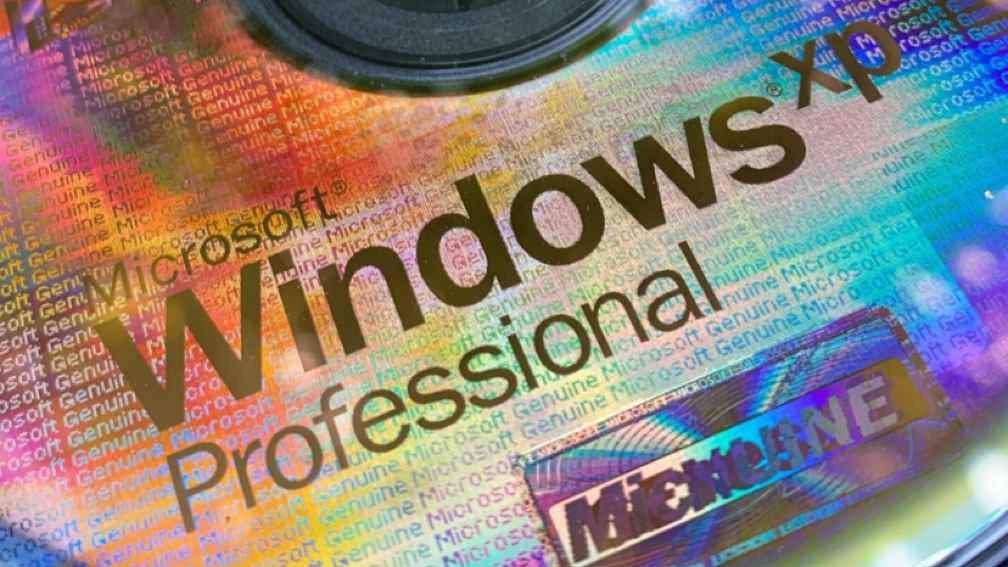
Photo: BleepingComputer

Article

The Trusted Names Developers Reuse Are Turning Against Them

BhavyaSeptember 24, 20265 min read
๐Ÿ“ฃ

Advertisement

Google Ad - 970ร—90 Leaderboard ย TOP_LEADERBOARD_4

Trust in reused defaults is the thread

The stories on this desk today share one thread: the software industry's dependence on names, channels and defaults that are trusted because they are familiar, and what happens when that trust is misplaced or misused. A development placeholder domain has become an attack vector, a Windows update has broken a VPN feature, and two vendors are selling automation and location features that implicitly ask users to trust outputs they cannot fully verify. Each is a different face of the same problem: the infrastructure of trust in software is thinner than the industry assumes, and the cost of that thinness falls on US companies and consumers.

A placeholder domain becomes a live threat

BleepingComputer reports that "third-party.com," a domain commonly used as a placeholder in developer documentation and code examples, is now serving a fake Cloudflare verification page. The page attempts to trick Windows users into executing PowerShell commands, a pattern known as ClickFix. The important detail is not the malware itself, which follows a well-worn social engineering script, but the choice of domain. Developers have spent years typing "third-party.com" into tutorials, configuration samples and code comments precisely because it was assumed to be inert. That assumption no longer holds.

The implication for US software companies is direct. Documentation is not a neutral artifact; it is a distribution channel. Code samples get copied into production, and placeholder domains get copied along with them. When an attacker buys or repurposes a domain that the developer community treats as a harmless stand-in, every unedited snippet becomes a potential entry point. The US market has spent a decade hardening build pipelines and dependency scanning, but the weakest link here is human habit: the expectation that a name used in a tutorial is safe because it always has been.

Updates that break what they protect

On the same day, BleepingComputer reported that Microsoft warned its September 2026 security updates may break Always On VPN connections on some Windows 11 systems. The failure mode is familiar: a patch shipped to close vulnerabilities introduces a regression in a connectivity feature that many US enterprises rely on for remote work. The story is not that Microsoft shipped a bad update, which happens, but that the update channel itself is a single point of failure for corporate networks.

For US technology companies, this is a reminder that patch cadence and operational continuity are in tension. Security teams are told to apply updates quickly; operations teams are told to avoid untested changes. When a monthly update can sever VPN connections across a fleet, the cost is measured in lost productivity, help-desk load and, in regulated industries, compliance exposure. The larger point is that trust in the update mechanism is itself an assumption. Enterprises treat "install the security update" as a safe default. The Always On VPN breakage shows that default is not always safe, and that the burden of validation lands on the customer.

Automation that asks for trust it cannot fully return

UiPath introduced more than a dozen new features for its automation platform at its FUSION conference in Las Vegas, as SiliconANGLE reported, spanning workflow automation and software testing. Many of the features are available today or will launch next month. The company's pitch is straightforward: save time for knowledge workers by letting AI agents handle repetitive tasks.

The analysis point is subtler. Automation and testing tools are, at bottom, trust-transfer mechanisms. A company that automates a workflow is asserting that the workflow is understood well enough to be delegated. A company that uses software testing features is asserting that the tests capture what matters. When the underlying platform relies on AI agents, the assertion becomes harder to audit. US enterprises adopting these tools face a governance question that vendors rarely frame directly: who is accountable when an automated workflow acts on stale or wrong data, or when a test passes because it was generated to match the system rather than the requirement?

Advertisement

๐Ÿ“ฃ

728x90

MID_CONTENT_2

None of this argues against automation. UiPath's features address real friction in US knowledge work. But the same week that a trusted placeholder domain turned hostile is a useful moment to note that automation expands the blast radius of any trust failure. An agent with access to internal systems does not need to be malicious to cause harm; it needs only to inherit an assumption that was never checked.

Familiar brands as trust shortcuts

Engadget reported that Apple has added podcast guides for select US landmarks within its Maps app, linking them to Hidden Histories podcast episodes that discuss the landmarks' histories and lesser-known stories. On its face this is a consumer feature, not a security story. But it belongs to the same pattern. Apple is leveraging the trust users place in Maps and in the Apple brand to route attention to editorial content. The trust is the product.

For US consumers, the arrangement is mostly benign, and for Apple it is a low-cost way to deepen engagement. The relevant question is whether the same mechanism could be turned to less benign ends. A maps application that recommends content is a recommendation system, and recommendation systems have been gamed before. The story is small, but it illustrates that trust shortcuts, whether a placeholder domain, an update channel or a familiar app icon, are valuable precisely because they are not scrutinized.

What the pattern means for the US market

Taken together, the four stories describe an industry that has optimized for convenience and speed while leaving trust assumptions unexamined. US enterprises get monthly patches that can break connectivity, developer documentation that can be weaponized, automation platforms that delegate judgment, and consumer apps that blend utility with editorial content. None of these is a scandal. The cumulative effect is a market where the cost of verification keeps rising, and where the party best positioned to verify is often not the party bearing the cost.

For US technology companies, the practical takeaway is that trust boundaries should be treated as product surfaces, not background assumptions. Placeholder domains should be owned or replaced. Update rollouts should include connectivity regression testing that reflects how enterprises actually work. Automation vendors should be asked where accountability sits when an agent errs. And consumer platforms should be transparent about when a familiar interface is also a recommendation channel.

What to watch

Three things are worth tracking, based on what the stories above actually say. First, whether the developer community moves away from "third-party.com" in documentation, and whether registrars or documentation platforms act on placeholder domains generally, following BleepingComputer's report. Second, whether Microsoft's September 2026 updates produce a fix or guidance for the Always On VPN breakage, and whether enterprises adjust their patch validation timelines in response. Third, whether UiPath's new features, detailed by SiliconANGLE, come with governance or audit capabilities that match the autonomy they grant, and whether US buyers demand them. The Apple Maps and Hidden Histories integration, reported by Engadget, offers a smaller signal: whether consumers notice, or care, when a trusted utility becomes a content channel. The through-line across all four is the same, and it will not resolve on its own. Trust that is assumed rather than verified is a liability waiting to be repriced.

More on this beat: Software on TechManNews.

Advertisement

๐Ÿ“ฃ

728x90

IN_ARTICLE_5

#software supply chain#cybersecurity#enterprise software#trust#automation#US market

Newsletter

Get Tech News in Your Inbox

The latest AI, gadgets, software and startup stories from TechManNews, delivered every morning - free.

The Trusted Names Developers Reuse Are Turning Against Them | TechManNews