The pattern in this week's raises
The funding logged on this beat over a single news cycle points to one thread: investors are putting money behind applied artificial intelligence that lands inside unglamorous, capital-heavy parts of the economy, rather than at the model layer. CADDi's $114 million for manufacturing AI, Rune's $40 million for solar-powered data center hardware, and Jack & Jill's $40 million for conversational hiring agents are three different bets, but all three fund companies selling AI into a specific operational bottleneck that already exists. As SiliconANGLE reported, all three closed within the same window. The common thread is not the technology but the destination: the factory floor, the power-constrained server site, and the hiring funnel.
The distinction matters for how US technology investors read this moment. A funding round for a model developer is a wager on capability and a future platform position. A funding round for a company that sells AI into engineering drawings, data center modules, or job applications is a wager on distribution into a market that is already spending money and already has a process to replace.
CADDi's industrial information problem
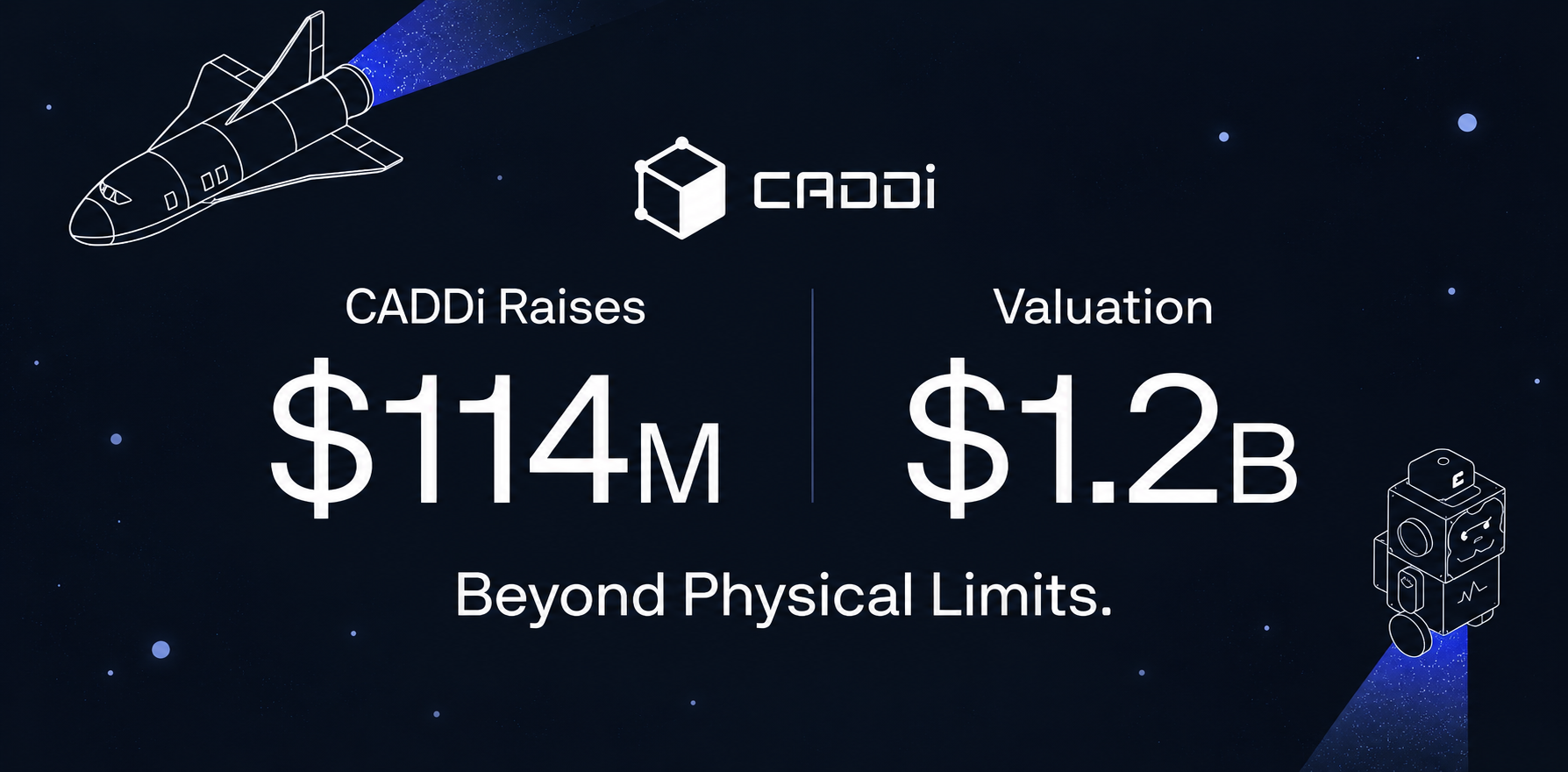
CADDi raised $114 million at a $1.2 billion valuation, with plans to use part of the money to expand in North America. The company's software is built around CADDi Drawer, which is designed to let manufacturers put the information locked inside engineering drawings to work, as SiliconANGLE reported. That is a precise description of a real pain point: drawings encode decades of design intent, and most manufacturers cannot search them.
The investment thesis here is not that AI is newly capable of reading a drawing. It is that a manufacturing customer will pay for software that turns an accumulated archive into an operational asset. The North American expansion is the notable part for US readers. It signals that the company sees the addressable spend in American manufacturing, not only in its home market, and that it believes the sale is repeatable across plants and suppliers.
Rune sells a physical constraint
Rune's $40 million round, led by Spark Capital, is paired with the debut of a product. RELIC, or Renewable Energy Linked Intelligent Compute, is a computing module optimized for artificial intelligence workloads and designed to be installed in modular, solar-powered data centers, according to SiliconANGLE. The company is incorporated as Liitto Technology Inc.
This is a hardware and infrastructure bet, and it is funding a constraint rather than an application. AI workloads require compute and power, and power availability is the harder of the two to expand quickly. A solar-linked module is a specific answer to a specific limit, and the funding is going toward building and installing physical units. For US technology companies, that means the funding flow is following the bottleneck backward from the model to the rack to the power source. It also means investors are willing to fund capital-intensive deployment, not only software margins.
Jack & Jill attacks the application layer
Jack & Jill, operated by Tinker Tailor Talent Ltd., raised $40 million in early funding for a hiring platform powered by conversational generative AI, with Air Street Capital leading, as SiliconANGLE reported. The company describes a job market in which people do not apply for jobs, because a pair of AI agents does the work instead.
That is the most consumer-facing of the three bets, and it is the most exposed to adoption behavior. Hiring is a market with entrenched intermediaries, strong incumbents, and candidates who are already fatigued by automated screening. A platform that promises to remove the application step is really promising to shift where the negotiation happens. The $40 million is early-stage capital for a company that must convince both sides of a two-sided market to change how they transact.