Three stories landed on the Big Tech beat this week that look unrelated: a private equity firm handing SpaceX stock to its own investors, the SEC carving out a five-year exemption for tokenized securities, and AMD shipping benchmarks aimed squarely at Nvidia. Read together, they describe one shift. The largest US technology companies and their financiers are increasingly competing by changing the rules of ownership, trading and benchmarking rather than by shipping a strictly better product. That is a strategic bet with real consequences for US companies, US markets and US consumers - and it carries risks the industry is not pricing.
Capital structure as product
Start with the SpaceX item. As TechCrunch reported, Valor Equity Partners, a long-time backer of Elon Musk's ventures, is handing SpaceX stock to its limited partners instead of returning cash. That is not a routine distribution. In private markets, the choice between cash and in-kind stock is a signal about liquidity, valuation and the level of confidence the sponsor has that a future exit will beat today's mark. Distributing shares passes the valuation question directly to the LPs, who must now decide whether to hold or find a buyer in a market with no public price.
For US technology companies, the read is that the private capital pipeline that fed the last decade of large-scale ventures is being forced to improvise. When sponsors cannot convert positions to cash on the schedule they planned, they convert them to stock. That keeps the narrative of paper gains intact while shifting the burden of proof to end investors. For US consumers, the effect is indirect but real: the firms raising this capital - launch, satellite, AI infrastructure - depend on it continuing to flow. Any interruption shows up downstream in pricing and in the pace of deployment.
The SEC opens a lane
Now the second story, and the most consequential. As SiliconANGLE reported, the SEC has announced a five-year exemption from securities laws that allows companies to facilitate trading of blockchain-based tokenized stocks and securities. The stated goal is to accelerate integration of digital assets into the financial economy. A five-year window is the important detail. It is long enough for infrastructure to be built and for market structure to settle, but short enough that it functions as a probationary regime rather than a permanent settlement.
The immediate beneficiaries are US exchanges, brokerages and custodians that have been building tokenization capacity without clear legal cover. They can now move from pilots to products. The larger significance is what tokenization does to the settlement and ownership layer that sits beneath every US public technology company. If shares can be represented and traded on-chain under an SEC exemption, the incumbent plumbing - clearing, transfer agents, market hours, the distinction between a share and a claim on a share - becomes a design choice rather than a given. That is precisely the kind of change that reshapes competitive position without any company shipping a new chip or a new model.
Benchmarking as a weapon
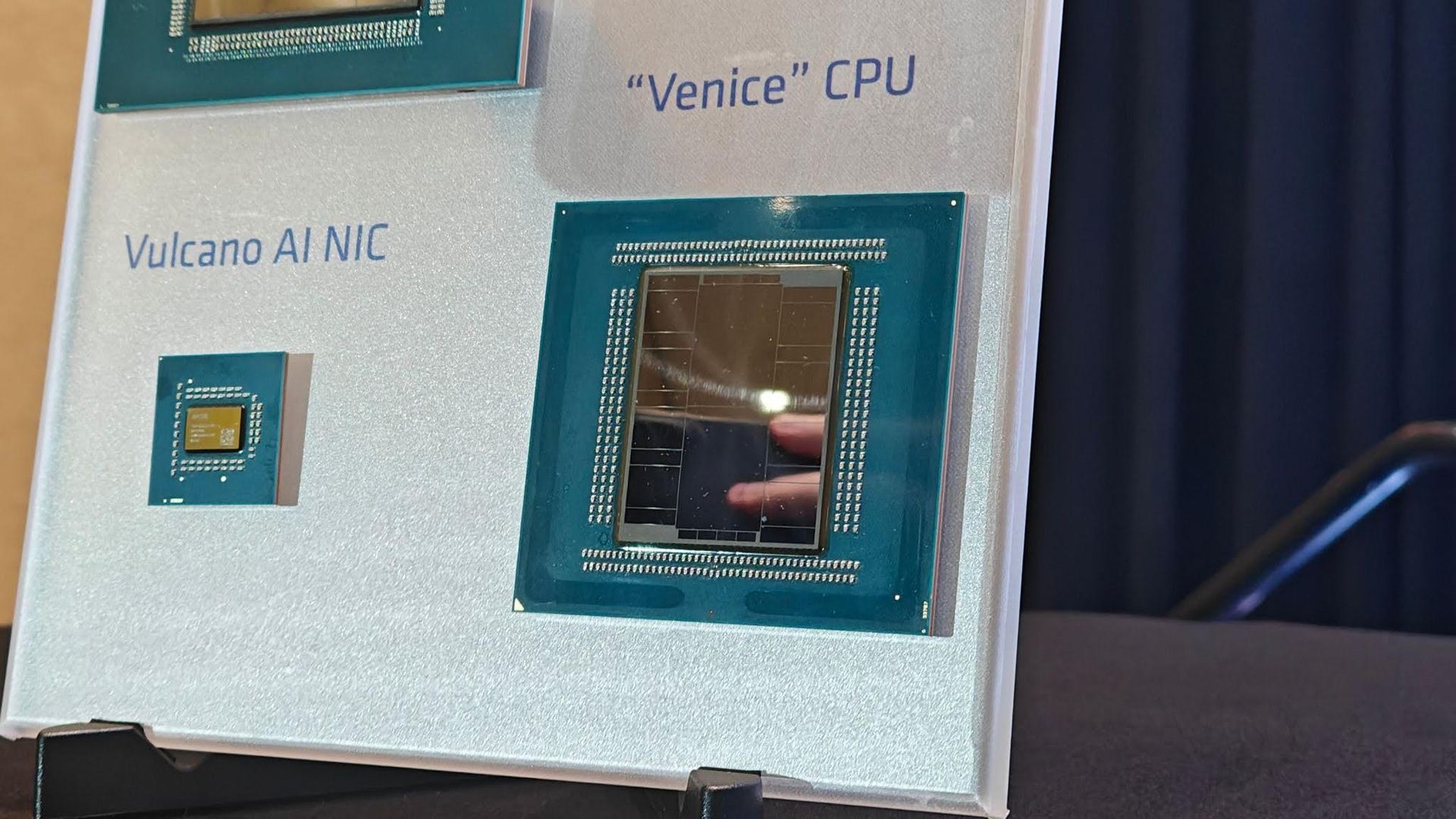
The third story looks like straightforward engineering competition, and partly is. AMD has released its first official benchmarks for EPYC 'Venice' CPUs, as Tom's Hardware reported, targeting Nvidia directly. AMD claims a 256-core chip is more than twice as fast as Nvidia's Vera, and a 96-core model is 20 percent faster per-core. These are vendor benchmarks, disclosed by the company making the claim, on workloads the company selected. That does not make them false. It makes them an argument rather than a measurement, and the argument is addressed as much to Wall Street and to procurement committees as to engineers.