The industry's core assumptions are being tested simultaneously, and the results are converging on the same correction. Software companies that sold investors on near-infinite scalability are being asked to prove their margins actually behave like software. Hardware companies that counted on frictionless global supply chains are discovering that policy now sits inside their product roadmaps. And the performance claims that tie the two layers together are being rewritten in real time.
The Labor Hiding Inside the Software
The sharpest version of this argument comes from Anurag Gurtu, co-founder and CEO of Airrived, in a guest commentary published by Crunchbase News. His thesis is that enterprise AI companies leaning on large teams of forward deployed engineers are disguising labor-intensive services as scalable software. The economics that follow are uncomfortable: recurring revenue gets inflated, valuations follow the inflated number, and the autonomy claims that justified the software multiple fall short of what customers actually receive. Gurtu's prescription is straightforward - buyers and investors should examine deployment costs and gross margins to separate sustainable software businesses from expensive staffing operations.
What makes this land now, rather than as generic skepticism about AI, is that it reframes the healthiest-sounding metric in enterprise software. Recurring revenue is supposed to signal durability and low marginal cost. If a meaningful share of that revenue requires a standing army of engineers embedded at each customer, then the recurring line item is describing a services relationship with better branding. The forward deployed engineer model has been treated as a competitive advantage - intimacy with the customer, faster time to value - and it may well deliver both. But those benefits are purchased with headcount, and headcount does not scale the way software licenses do.
For US enterprise buyers, the practical implication is that procurement is about to get more rigorous. Gurtu's advice amounts to a demand for disclosure: what does deployment actually cost, and what does the gross margin look like once the deployment team is fully loaded? Vendors that can answer cleanly will differentiate themselves. Vendors that cannot will face longer sales cycles and harder renewal conversations. For US investors, the question is which valuations were built on software multiples applied to services economics.
Hardware Is Now a Policy Product
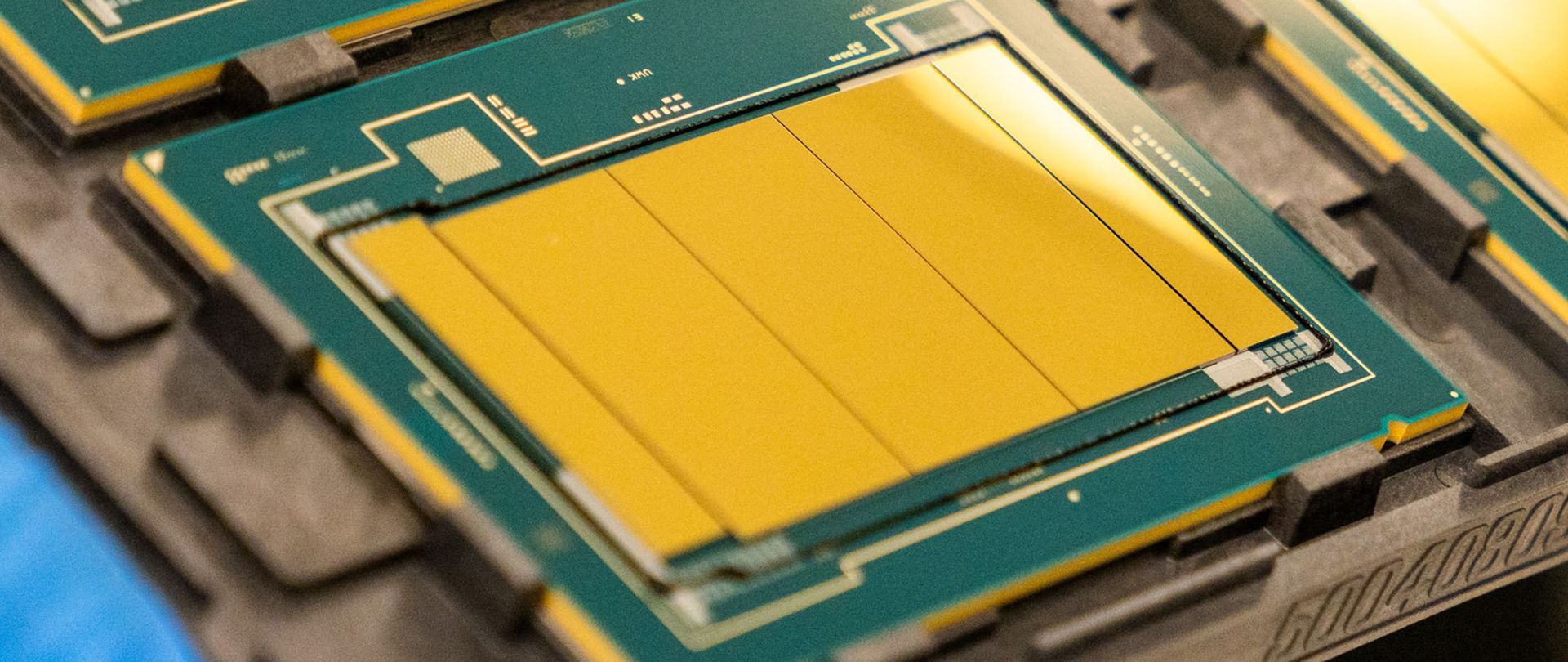
The second thread runs through Intel's request to the FCC, reported by Tom's Hardware. Intel is seeking a waiver from a sweeping ban on foreign-made robots, because the restriction could prevent it from updating or maintaining its fleet of automated guided vehicles. This is a striking example of industrial policy reaching all the way down into operational maintenance. A ban designed at the level of strategic technology categories turns out to govern whether a domestic chipmaker can service the robots inside its own facilities.
That is the pattern worth naming. For US technology companies, supply chain risk is no longer confined to component sourcing for products they sell. It now extends to the capital equipment and automation that keep fabs and logistics operations running. A maintenance refresh on an AGV fleet is not a strategic decision - until a rule turns it into one. Waiver processes introduce timing risk that factory planners are not accustomed to modeling, and the outcome of any single waiver request is not something a company can control.
Intel's situation also illustrates an asymmetry. Companies that have already invested in automation face the compliance burden of maintaining it under new rules, while the policy's intended effect is to reshape future procurement. The installed base becomes the awkward middle: too embedded to replace quickly, too foreign to leave untouched under a strict reading.