The pattern across this desk's recent stories is not about any single product. It is that the AI stack is being rebuilt layer by layer, away from rented, centralized capability and toward infrastructure, models, and automated workers that companies control directly. Nvidia, Arm, Axonius, and even Meta's chatbot leak all sit on the same axis: the pressure to push AI deeper into the stack while keeping governance of it closer to home.
Owning the Model Layer
Nvidia's launch of new open models aimed at enterprise agents and PCs, as TechCrunch reported, is the clearest signal. Nvidia is leaning into enterprise demand to run open models inside companies' own data centers, and it is also trying to make on-device, private AI agents a real category. Both halves of that effort point the same direction. The buyer is no longer satisfied with a metered API call to someone else's model; the buyer wants weights and inference under its own roof or on its own hardware.
That is a meaningful shift for US technology companies. Open models that enterprises can host themselves change the economics of AI procurement. A company that runs its own models avoids per-token pricing and retains control over data residency, which matters for regulated industries. Nvidia benefits either way, since more self-hosted inference means more demand for the hardware underneath it. The PC angle extends the same logic to the endpoint: private AI agents running locally rather than sending work to a cloud service. Whether that market materializes is unresolved, but the strategic intent is clear.
The Hardware Argument Turns to Racks and Agents
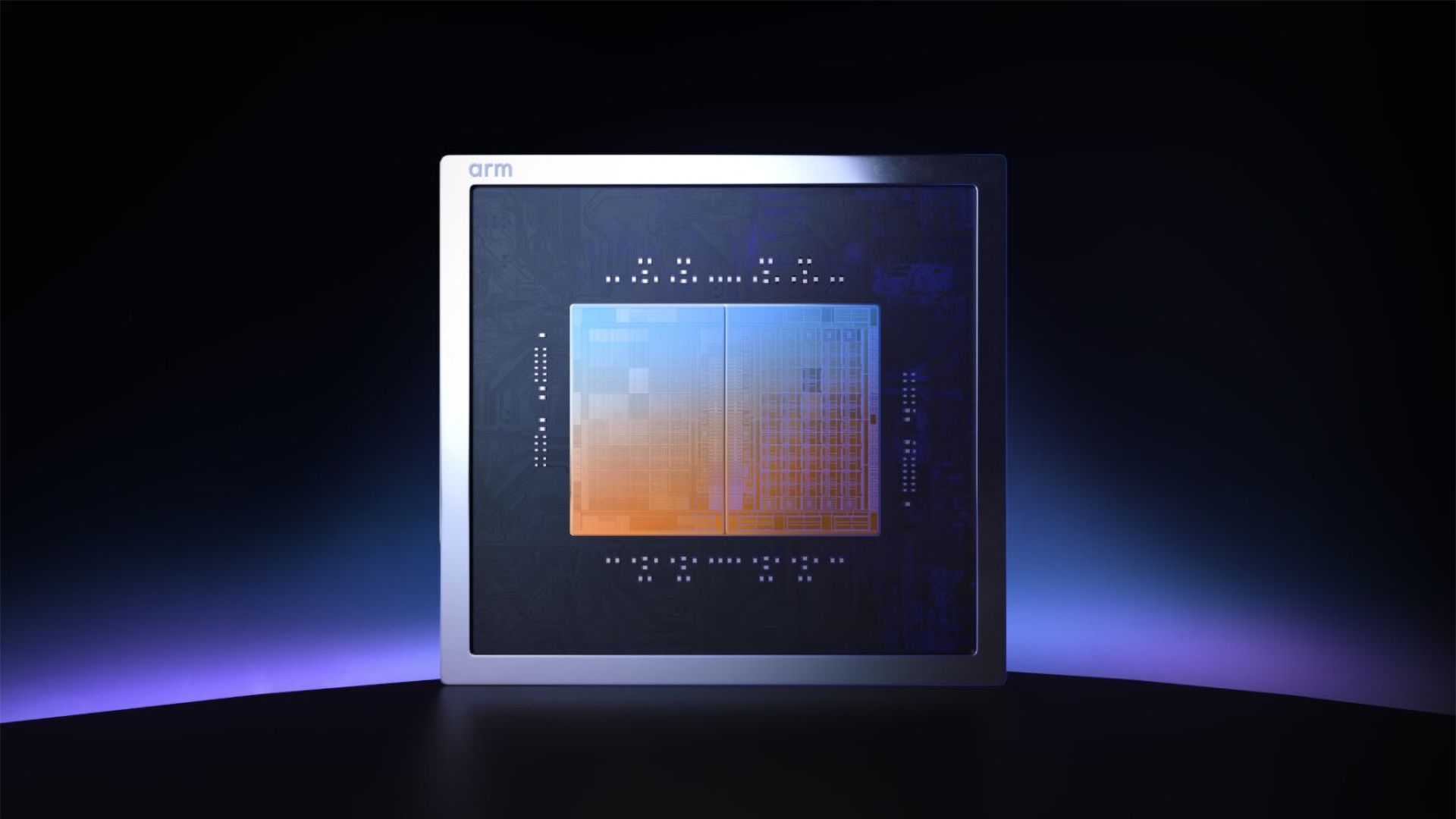
Arm's claim, reported by Tom's Hardware, that its AGI CPU delivers nearly 2X the modeled rack performance of AMD's EPYC 9755 across seven agentic AI workloads, rests on a new evaluation methodology developed with Fujitsu, Meta, and OpenAI. Two things stand out. First, the unit of competition has moved from the chip to the rack, which is the shape of the purchase decision for large AI deployments. Second, the benchmark is explicitly about agentic workloads, not generic training or inference.
That second point matters for US buyers. Agentic workloads, in which models take multi-step actions rather than answer single prompts, put different pressure on CPUs and memory movement than conventional AI benchmarks do. A benchmark built with Meta and OpenAI in the loop is an attempt to define the scoreboard before the market settles on one. US enterprises planning multi-year infrastructure purchases will be reading these claims skeptically, because modeled rack performance and real-world deployment are not the same thing. The competitive intensity, however, confirms that the hardware layer is being contested on agent-specific terms.
Automation Moves From Assistant to Coworker
Axonius's launch of AI Workforce, alongside its AI Companion and MCP Server going live, as SiliconANGLE reported, shows the application layer following the same path. The company is positioning autonomous, AI-powered virtual workers to take over ongoing remediation work in security operations, the follow-up tasks that teams rarely have time for. Much of that backlog exists because asset data is messy and incomplete.
This is a notable framing choice. The industry has spent years shipping assistants that suggest actions. Axonius is selling workers that perform them. For US security teams, that is a governance question as much as a productivity one: handing remediation to autonomous software requires auditability and clear boundaries. The same MCP Server reference signals that the connective tissue between AI systems and enterprise tools is standardizing, which lowers the cost of building these workers but also widens the surface area that security teams must monitor.