The stories logged on this desk share one thread: software is moving from answering to acting. Google's Gemini is reportedly poised to read any file on a Mac, launch apps, browse the web, and perform tasks without asking permission each time, as BleepingComputer reported. A free browser game, Taipei GTA, drew 1.2 million concurrent players within three days, per Tom's Hardware. A small app now pushes song lyrics onto Apple CarPlay, via Engadget. Even Wired's gift guide has gone digital. The connective tissue is that the interesting software of late 2026 does not wait for a prompt; it operates.
Permission Is the New Feature
Google's Gemini proposal matters less for what it can do than for how it does it. According to BleepingComputer, Gemini could soon access any file on a macOS device, open apps, browse the web, and carry out actions without asking for permission every time. That phrase, every time, is the whole story. The friction of per-action consent is what has kept AI assistants in a box marked novelty. Removing it turns an assistant into an agent, and an agent into something closer to an operating system layer.
The distinction matters for US consumers because the desktop is where the sensitive material lives: tax returns, medical records, family photos, work documents. An assistant that reads files on request is one thing; an assistant with standing access to the file system is another. Apple has historically kept tight control over macOS permissions, sealing off folders like Documents and Desktop behind explicit grants. A third-party AI layer that operates without repeated prompts would sit awkwardly against that design philosophy, and would likely invite scrutiny from privacy advocates and, potentially, regulators already attentive to large-platform behavior.
The Vibe-Coded Multiplayer Test
If permissions are one half of the agentic shift, the other is execution at speed. Tom's Hardware reports that developers AICodeWith vibe-coded and published a free browser-based game called Taipei GTA, and that it reached 1.2 million concurrent players in three days, reportedly costing $10,000 in tokens to reach that state.
Those numbers are worth pausing on without exaggeration. A million concurrent players is a serious load, the kind of spike that has historically strained infrastructure and required dedicated engineering. The reported cost, ten thousand dollars in tokens, is small relative to conventional development budgets, but it is not zero, and it says nothing about the ongoing inference cost of serving a live audience. What the story does show is that the distance between an idea and a functioning, multiplayer-capable product has collapsed for at least some builders. That has implications for US studios accustomed to multi-year cycles and for platform holders whose stores and browsers become the distribution channel for whatever emerges next.
Small Tools, Big Surfaces
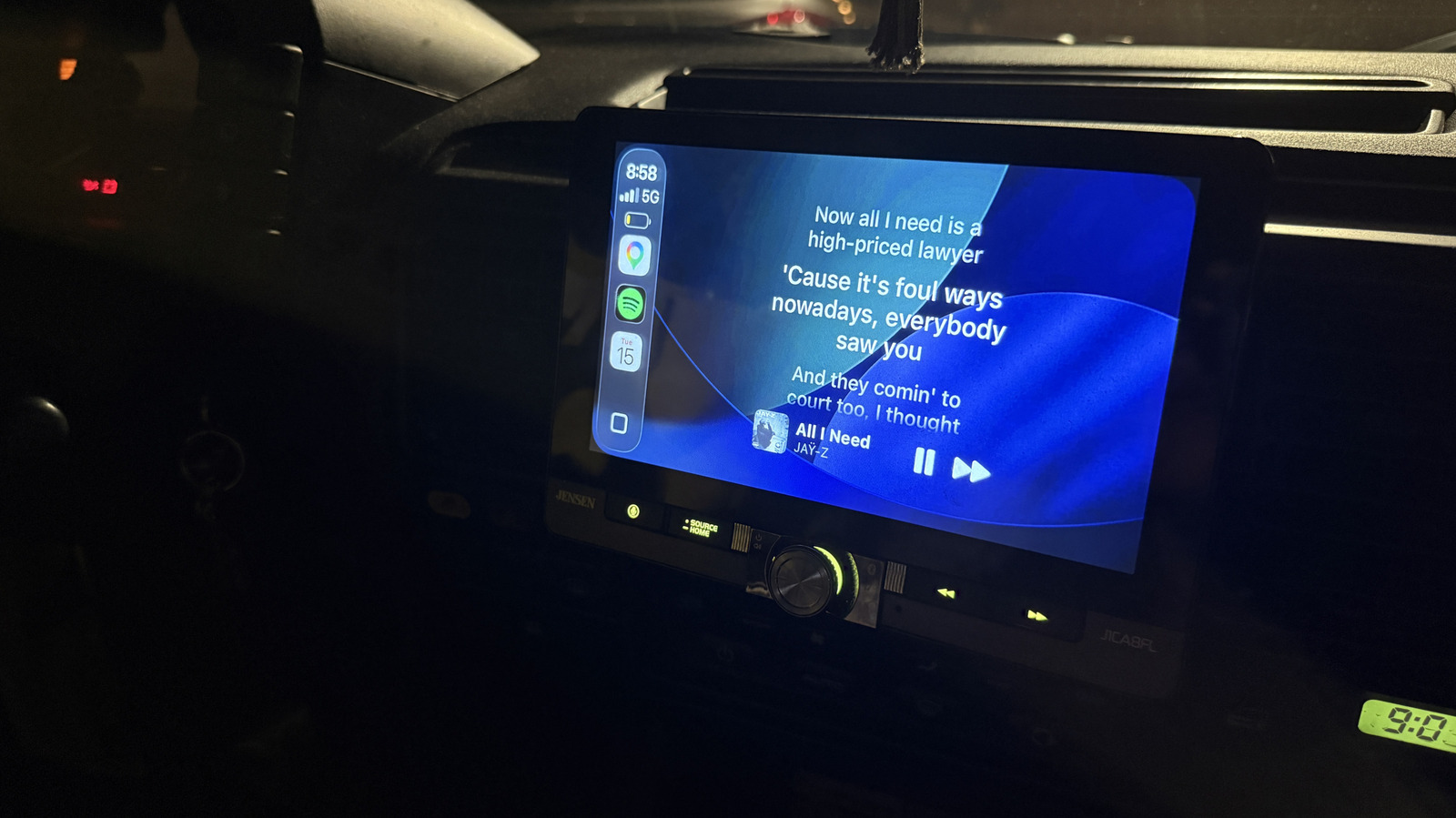
Not every story here is about autonomy at scale. Engadget reports that a little-known app lets users display song lyrics on Apple CarPlay through a Dynamic Lyrics widget. That is a modest feature, but it illustrates the same underlying pattern from the opposite direction: an outside developer reaching into a closed surface, in this case Apple's in-car interface, and adding capability the platform owner did not build.
Apple's CarPlay is a controlled environment. Third parties get in through defined frameworks, and the value of admission is access to a captive, safety-sensitive context. A lyrics widget is trivial on its face; it is also a reminder that the most valuable software positions in 2026 are the ones adjacent to where people already are. The same logic that makes CarPlay attractive to a tiny app developer makes macOS attractive to Gemini.