Three items logged on this beat point to a single shift in what it means to build software in 2026: the scarce input is no longer code or compute but access to data and to the interfaces that carry it. Reddit is ending RSS feeds and public API access because of AI bots, as TechCrunch reported. An open-source tool called ldraw-nova lets GPT-6 Astra and Claude Opus 5.5 design LEGO models as LDraw CAD files, per Tom's Hardware. Microsoft expanded its MAI family with a streaming transcription model and two text-to-speech models aimed at real-time voice agents, as SiliconANGLE reported. Each story is about a developer deciding what can be built on someone else's platform, and who controls the answer.
The Feed Closes
Reddit's decision, reported by TechCrunch, is the clearest signal. RSS is a decades-old, low-bandwidth syndication format. Ending it alongside public API access is not a technical upgrade; it is a boundary drawn around a corpus. The stated reason is AI bots, which frames the move as scraping defense rather than product strategy. For developers, the practical effect is that a class of lightweight integrations, readers, mirrors, and notification tools, loses its cheapest path to Reddit content. The change matters because it targets the lowest-friction access route, not the most abusive one. A developer who built a personal dashboard on RSS and a company that trained a model on bulk API pulls are treated under the same closed door.
The Reverse Case
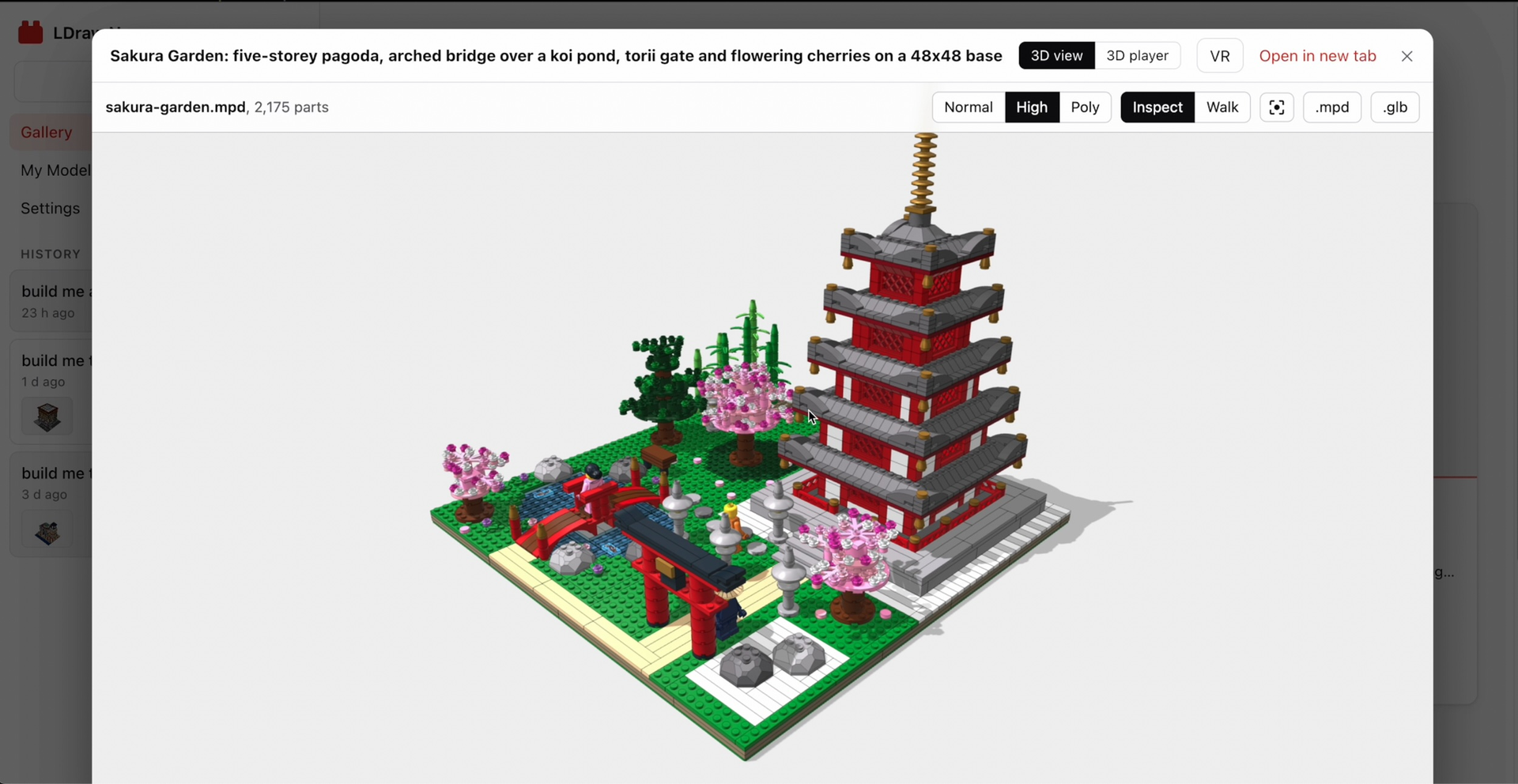
ldraw-nova runs the opposite way. Carlos Antelo's open-source project, covered by Tom's Hardware, lets GPT-6 Astra and Claude Opus 5.5 design LEGO builds with more than 2,000 real pieces, outputting LDraw CAD files. The data here, a parts catalog and a file format, is open and stable, so the models can be pointed at it without a platform negotiation. The novelty is not that a model can assemble bricks. It is that an open format and an open catalog make the model useful without anyone's permission. The contrast with Reddit is the argument: where the data layer is open, developer tooling composes freely; where it is closed, tooling dies at the gate.
Voice As a Gated Pipeline
Microsoft's MAI expansion, per SiliconANGLE, adds a streaming transcription model plus two text-to-speech models for developers building voice agents that listen and reply in near real time. This is infrastructure, and it is sold as a developer product. But it also illustrates the dependency pattern: the pipeline that turns speech into text, then text into speech, runs through a vendor's models. Microsoft is not closing a feed; it is opening a service. The two moves are the same business logic seen from different sides. A company that controls the model controls the integration surface, and developers who build on it inherit that control. The most consequential part, as SiliconANGLE framed it, is the streaming transcription model, because latency is what makes a voice agent feel human. Latency is also what makes switching costs high.