The last two days of gadget news look unrelated at first glance: a massive driver's license leak, a featherweight Acer laptop, a repairable Acer laptop, and Sony's new party speakers. But together, they reveal a single pattern that matters for US consumers and the companies that sell to them: the hardware business is no longer competing only on speed and screen quality. It is now competing on trust, on physical weight, and on the right to open a device and fix it. Each story points to a different stress point in the American market, but they all converge on the same conclusion - what a gadget weighs, how it protects your identity, and how long it can live are now the features that sell.
The Identity Leak Casts a Shadow Over Every Connected Device
The most serious story on the desk is not about a gadget at all. As Engadget reported, digital scans of more than 153 million driver's licenses have leaked to the dark web, with the source possibly being an ID verification service in Louisiana, and the FBI has opened an investigation. That number is staggering: 153 million is roughly half the adult population of the United States. For US consumers, this is not an abstract breach. A driver's license is the master key to a financial life - it is used to open bank accounts, rent apartments, apply for jobs, and verify age at a bar. When that scan appears on the dark web, the damage is not just identity theft in the classic sense; it is a permanent loss of control over a document that cannot be reissued with a new number.
For technology companies selling laptops, phones, and speakers, this leak is a warning. Every device that asks for a government ID to verify a purchase, a rental, or a login is now part of a chain of trust that has just been shown to be fragile. US consumers are likely to ask harder questions about where their biometric and document data goes. The Acer and Sony announcements do not address identity directly, but they exist in a market where the average buyer has just learned that their license might be floating around the dark web. The practical consequence: hardware makers that want to sell to Americans must now demonstrate that their devices do not become another vector for identity exposure. That means secure enclaves, local processing of verification documents, and transparent data retention policies. The leak is not a story about a single service; it is a story about the entire ecosystem of connected gadgets that ask for your ID.
Weight Is the New Spec Sheet
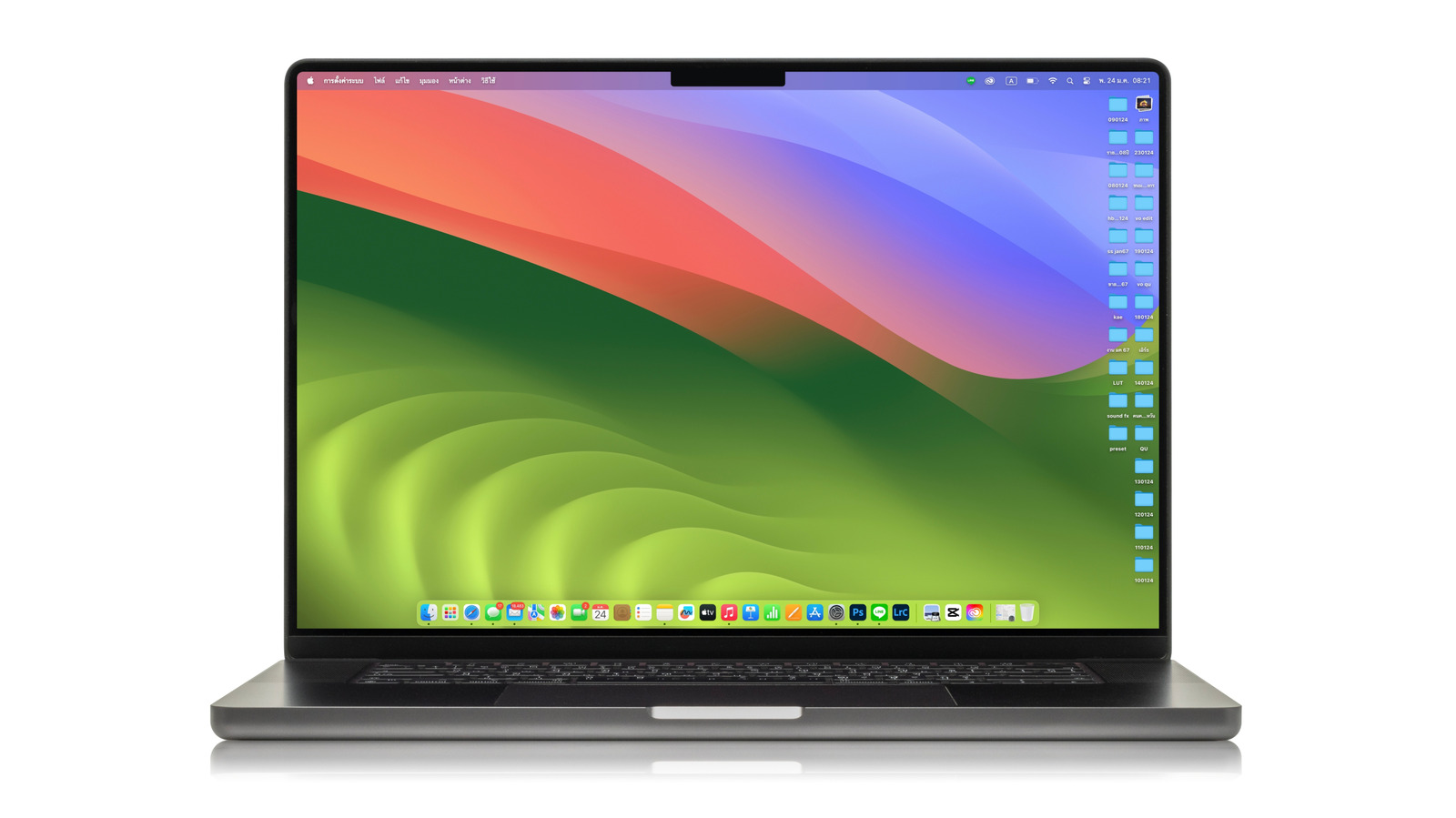
The second story, as The Verge reported, is that Acer’s new MacBook Air rival is nearly a pound lighter than Apple’s laptop. The Acer Swift Blade 14 weighs just 1.76 pounds (799g) and measures as little as 0.51 inches thick. For context, that is significantly lighter than the MacBook Air, which has long been the benchmark for ultraportable design. What is notable here is not just the number - it is the direction of the market. For years, US consumers were told that performance was the primary differentiator. Now, a laptop that weighs under two pounds is a headline. That signals a shift in what American buyers prioritize: carrying comfort, especially for commuters, students, and hybrid workers who haul their machines from coffee shop to office to couch.
But the name is also telling. Acer called it the Swift Blade 14, which The Verge notes could be confused with the Razer Blade 14. That confusion is not accidental. “Blade” has come to mean thin and light in the US laptop lexicon, thanks to Razer’s gaming brand. By adopting that name, Acer is signaling that thinness is no longer a premium gaming niche - it is a mainstream productivity feature. The MacBook Air dominated the ultraportable category for a decade, but at 1.76 pounds, Acer has leapfrogged Apple on the metric that matters most to the traveling professional. For US consumers, the implication is clear: the next laptop upgrade may not be about a faster chip but about how much lighter your bag feels on a Monday morning.
Repairability Is a Selling Point, Not a Legal Requirement
The third story, as CNET reported, is that Acer recommitted to repairability with its new Vero 16 laptop, while also unveiling a sleek new Swift and a Swift Air update at IFA 2026. The Vero line has long been Acer’s sustainability play, using recycled plastics and modular designs. But this recommitment comes at a time when US consumers are increasingly frustrated with glued-shut devices that are impossible to open. The right-to-repair movement has gained traction in state legislatures, but no federal law has passed. So Acer is making repairability a voluntary feature, not a compliance checkbox.
This matters because the American market has a unique problem: high device turnover and ewaste. When a laptop cannot be opened to replace a battery or SSD, consumers are forced to buy a new one. That is expensive and wasteful. By making the Vero 16 easier to open, Acer is speaking to a consumer who wants to own a device for five years instead of two. In the same announcement, Acer also unveiled a new Swift model that is presumably the lightest yet, and a Swift Air update. So the company is covering both ends of the spectrum: the ultraportable buyer who wants as little weight as possible, and the conscientious buyer who wants a device that can be repaired. That is a smart segmentation for the US market, where late-2026 inflation and a general sense of economic uncertainty make durability a more attractive feature than it was during the boom years.