Android's center of gravity is shifting away from the phone itself. Three recent developments logged on this beat, each from a different corner of the platform, show the operating system being stretched into spaces that were previously secondary or accidental: the car's dashboard, the living-room tablet, and the messaging inbox. The common thread is not any single product but a platform strategy that assumes Android should be present wherever a screen is, and that the software layer, not the hardware, is where the value now accumulates.
The Car Becomes a Screen Again
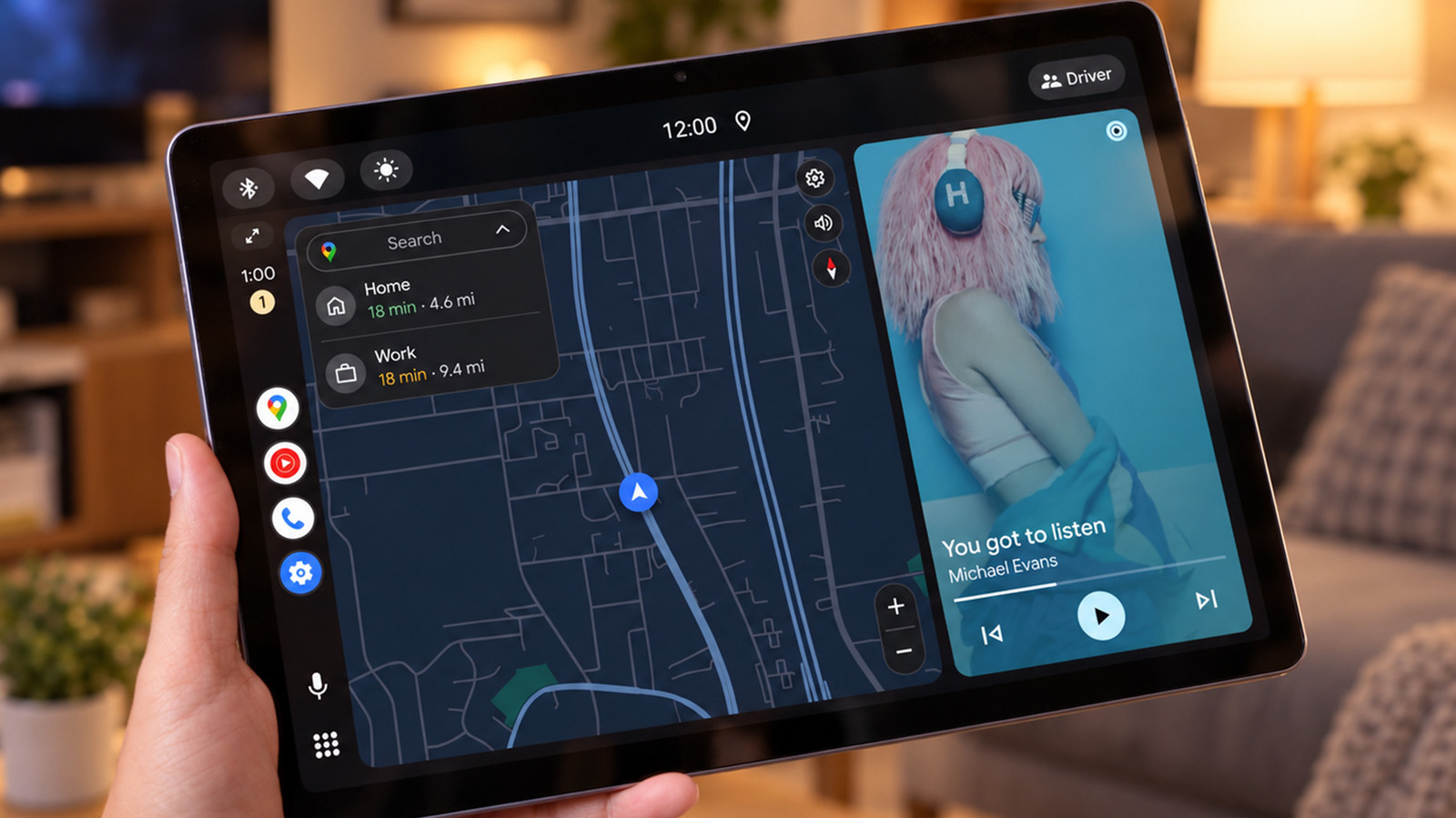
Engadget's report that Android Auto can be used outside a vehicle is easy to read as a curiosity. The outlet frames it around unexpected productivity benefits, which is a modest claim. But the significance is structural. Android Auto was designed as a projection system for a specific context, and using it elsewhere means the software can be divorced from the physical environment it was built for. That is the same move Google has made repeatedly with Android proper: separate the platform from any one form factor and let the interface follow the user.
For US consumers, the practical effect is that the car's software stack and the desktop or tablet experience begin to blur. A driver who already relies on Android Auto in a vehicle can carry familiar controls and behaviors into other settings. For US technology companies, this matters because the automotive cabin has become a contested software surface. If Android Auto's interface can live outside the car, the cost of building a competing in-car platform rises, because the incumbent software is no longer confined to the vehicle.
The Tablet as a Test Case
The Verge's review of the Alexa Tablet 12 Pro makes a point of leading with the screen: a 12-inch, 2800 x 1840 panel using a technology Amazon calls "Nanomatte," intended to cut glare and make content feel more tangible. The review's framing, that the screen is the first thing you notice and maybe the only thing that matters, is a useful signal about where differentiation is being sought. Amazon is not a conventional Android tablet maker, and its presence in this category is itself notable. The review describes the device as almost the Android tablet that was needed, a phrase that concedes both progress and a gap.
The operating-system significance is that Android's tablet story has long been uneven, and the hardware partners who build Android tablets have struggled to distinguish their products. When a company whose core business is not tablets enters with a display-first pitch, it pressures the rest of the Android tablet market to compete on panel quality and software integration rather than on price alone. For US consumers, that competition is welcome; for US device makers, it means the tablet segment now has another well-resourced entrant whose software platform, not its hardware pedigree, is the thing to beat.
Messaging as a Security Layer
The Verge's report on Android's new scam defenses is the third strand. Android is introducing features aimed at helping users avoid mobile fraud, including bolstered protection in Google Messages. Building on the Scam Detection feature, an "enhanced protection" setting will roll out in the coming weeks and taps into cloud-based capabilities. The detail that the protection is cloud-based is the important one. It means the operating system's defenses are no longer purely on-device; they depend on a backend that can be updated continuously and that sees patterns across many users.