The processor beat is no longer a single narrative about clock speeds and core counts. Recent coverage shows the market splitting along two tracks at once: a long-horizon push into quantum processors with aggressive scaling targets, and a very present-tense fight over conventional CPUs and the systems built around them. For US technology companies and consumers, the practical question is not which track wins, but how the industry funds both while the desktop side remains the volume business.
Quantum Moves on a Multi-Year Clock
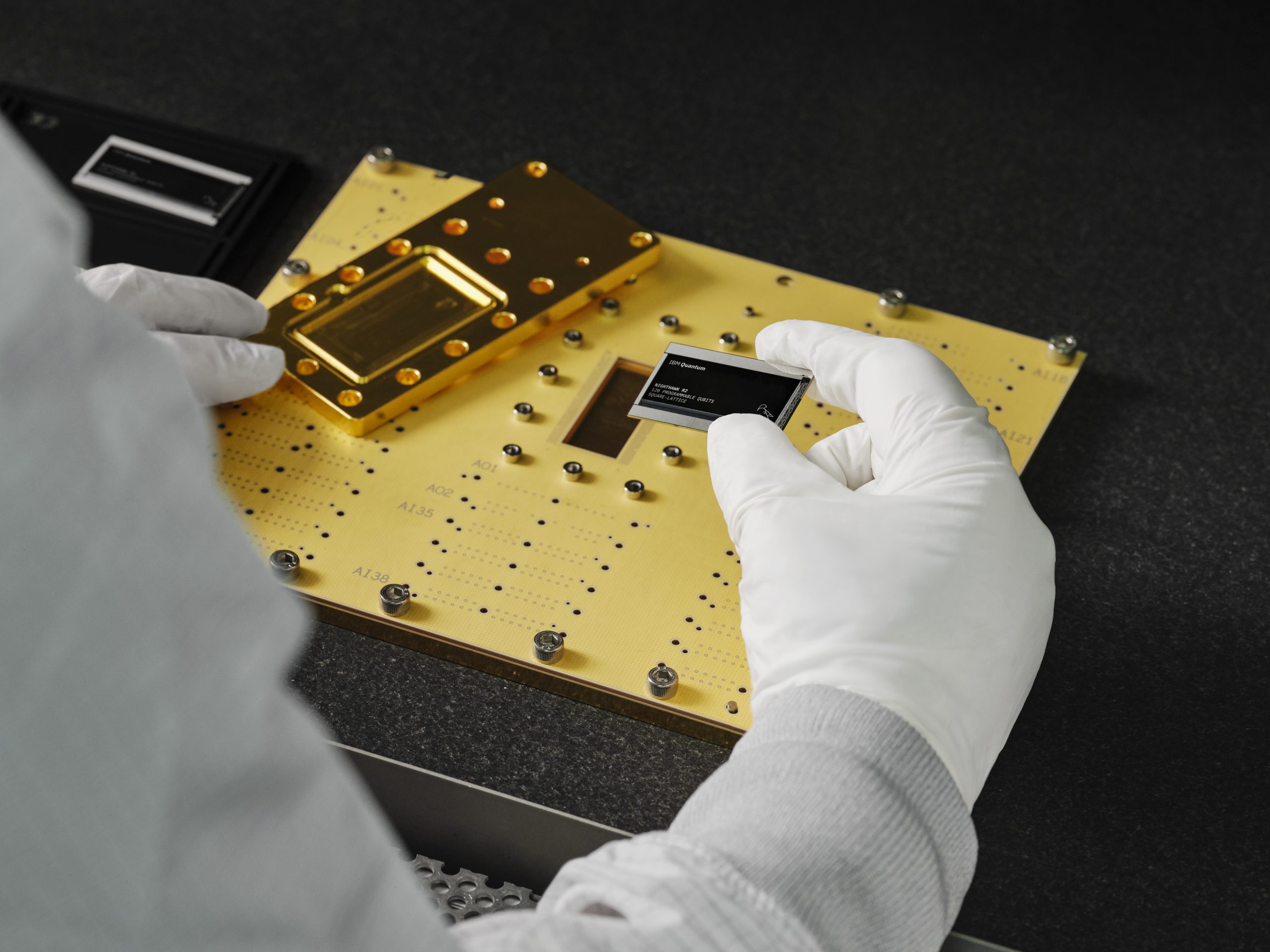
IBM Corp. used the week to announce the Quantum Nighthawk r3, described by SiliconANGLE as its next-generation processor designed to tackle larger, more complex computations at high speed while maintaining quality. The detail that matters for planning is the roadmap: IBM said that in 2027 it plans to link two r3 quantum processors into a single system capable of running up to 10,000 quantum operations, scaling to more than that figure over time. None of this is a product a US consumer will buy, and none of it runs the software most businesses depend on today. But it is a reminder that the largest US hardware vendors are willing to commit publicly to multi-year processor architectures whose returns are years away. The r3 announcement is a statement about manufacturing and systems integration as much as about qubits: linking two processors into one system is the same scaling problem conventional CPU designers have wrestled with for decades, just at a different physical layer.
The Desktop Side Still Sets the Volume
The same window of coverage included a very different kind of processor story. As Tom's Hardware reported, a pre-built ABS Flux II Aqua gaming PC with a 20-core Intel CPU, an Nvidia GeForce RTX 5070, a 1TB SSD and 32GB of DDR5 RAM is now selling for $1,999.99, a $300 saving. That configuration is the mainstream high end of the US desktop market, and it is where processor makers actually book volume. A 20-core CPU in a sub-$2,000 system would have been an exotic specification not long ago; today it is a promotional bundle. The lesson is not that hardware is cheap in some abstract sense, but that core counts and memory capacity keep migrating down the price ladder, which puts pressure on Intel and its competitors to differentiate on something other than raw specifications.
Documentation as an Industry Asset
The third story is easy to overlook and worth taking seriously. A CPU enthusiast has assembled a visual database of 357 detailed processor die shots spanning 1971 to 2024, as Tom's Hardware reported. This is not a product launch, and no company commissioned it. It is nonetheless part of how the processor industry understands itself: die photography is how engineers, historians and hobbyists verify what vendors claim about transistor budgets, cache layouts and process nodes. For US chip companies, that kind of independent record has real value as a reference and a check. It also illustrates a pattern specific to this beat: because processors are physical objects with long lives, the archival work around them compounds, while product cycles churn.