The AI chip story has quietly shifted from who builds the fastest processor to who can find a rack, a megawatt, and a credible backer. Three recent pieces on this beat point to the same underlying pattern: the semiconductor industry's AI demand is increasingly constrained by physical infrastructure and concentrated personal influence rather than by chip design alone. For US chipmakers, that means the boom's durability depends on factors largely outside their control.
Inference Demand Outruns Data Centers
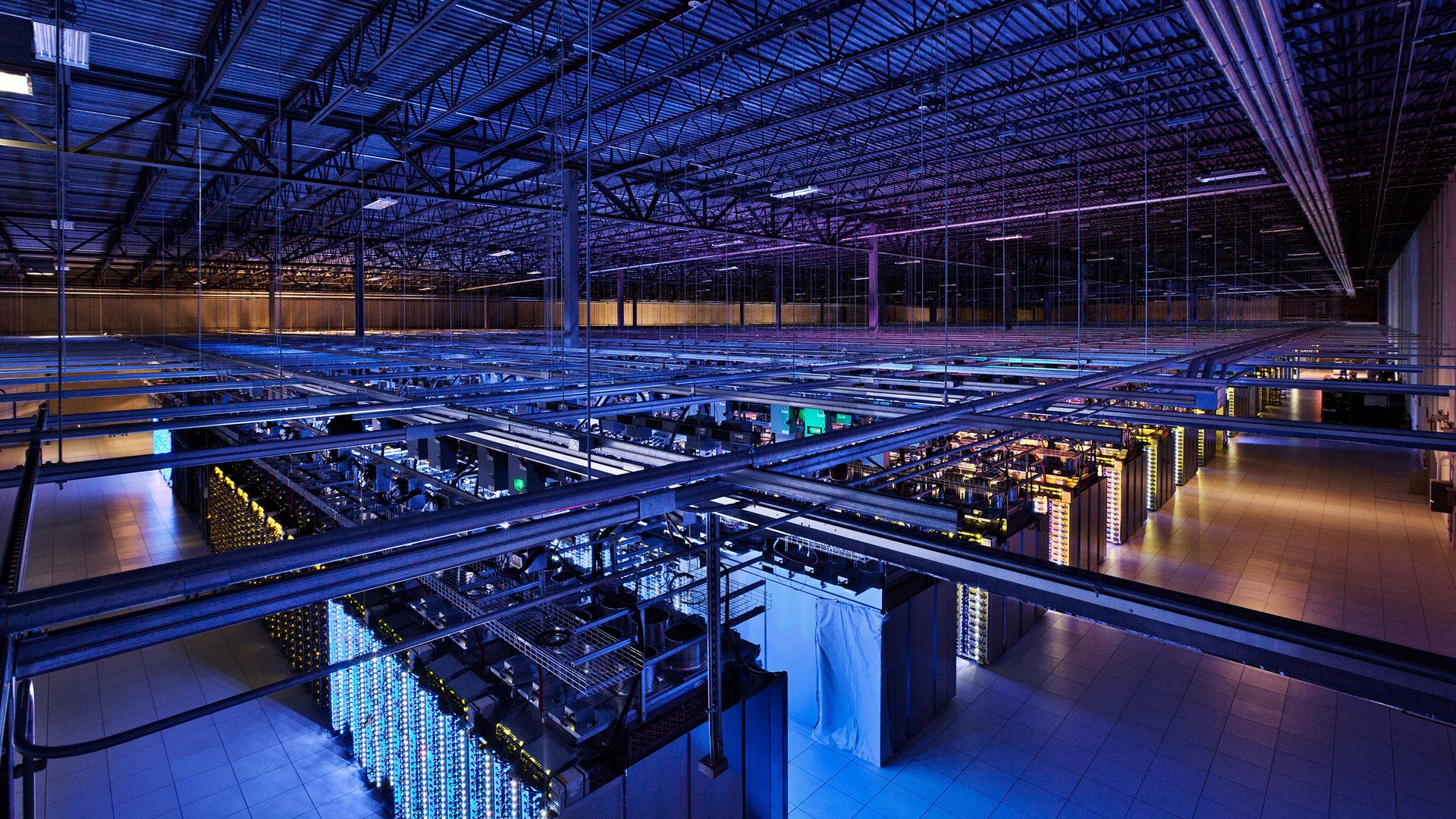
SiliconANGLE reported that demand for inference is outrunning the construction of new AI data centers. Power constraints, capital costs, and permitting delays are pushing fresh capacity further out. That gap is sending chipmakers hunting for room in existing facilities, including older telco and colocation sites that have the space and power but, in many cases, cannot accommodate today's dense, liquid-cooled GPU racks. The implication for US chip companies is direct: the addressable market for inference silicon is now shaped as much by real estate and utility interconnection timelines as by benchmark performance. A chipmaker that cannot get its accelerators into power-ready facilities sells fewer units, regardless of how good the silicon is. That pushes US vendors toward partnerships with colocation operators and telcos, and it raises the value of chip designs that fit within older power envelopes rather than only those optimized for new-build hyperscale halls.
The Retrofit Problem Is a Silicon Problem
The SiliconANGLE report notes that many older facilities cannot take dense, liquid-cooled GPU racks. That is not merely a facilities issue; it is a specification issue that US chip designers must now engineer around. If the available physical footprint skews toward legacy sites, then power efficiency, cooling tolerance, and rack density become competitive differentiators alongside raw throughput. This is a shift in the buyer's calculus. For years, US semiconductor firms competed on peak performance for greenfield hyperscale deployments. If capacity growth stalls in new construction, the installed base of older facilities becomes the next frontier, and chips that require extensive retrofits to deploy will face longer sales cycles. The companies that adapt their roadmaps to existing power and cooling constraints stand to capture inference demand that would otherwise wait for new data centers that are not yet being built.
The Founder-Dependence Question
The Verge's piece on Nvidia asks what the company looks like without its high-profile leader in charge, noting that chunks of Silicon Valley now insist he is indispensable, and referencing Elon Musk's comments on the matter. Whatever one makes of that framing, it identifies a second fragility in the current chip boom: the market's confidence is tied to individual figures as much as to product roadmaps. For US semiconductor companies, this cuts in two directions. On one hand, a charismatic leader can rally customers, suppliers, and investors around a platform, which has real commercial value when a company is trying to establish an ecosystem standard. On the other hand, when demand concentration and infrastructure commitments are justified partly by confidence in a single person, the sector's valuation and ordering patterns become sensitive to personnel and succession questions that have little to do with transistor density. The Verge frames this as a question about whether AI is as robust as assumed; for the chips beat, the practical version is whether order books and capacity commitments are as durable as the technology they support.