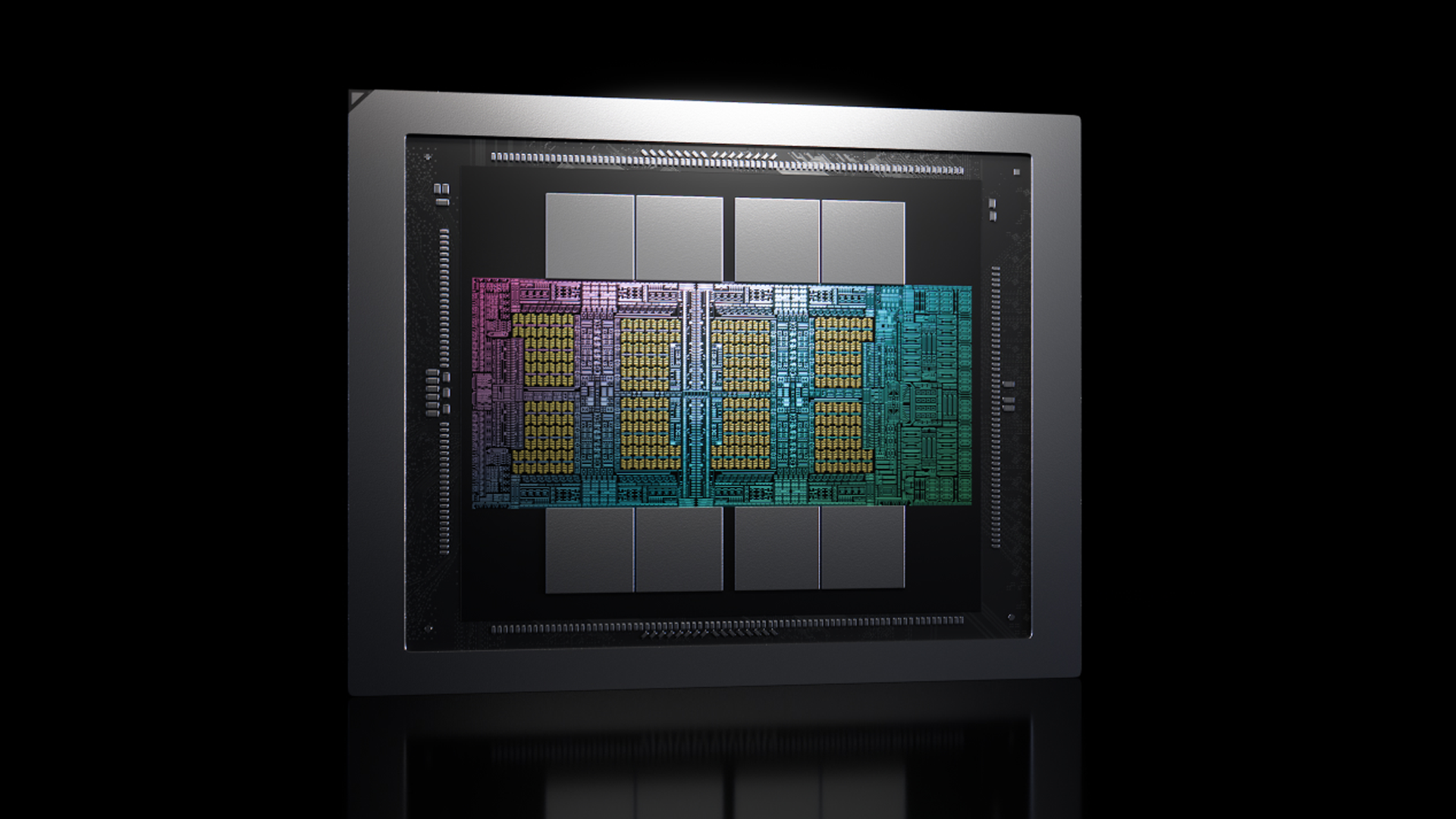
The GPU beat's most recent news is not really about any single chip. Nvidia's Rubin HPC GPU, Anthropic's work on AMD's MI355X, and Washington's tightened export rule all describe the same pressure from different angles: the industry is being reorganized around how quickly, and under whose control, raw GPU capacity becomes usable compute. Silicon still matters, but the binding constraints are increasingly software onboarding, deployment timelines, and geopolitical licensing.
Nvidia's Answer Is Still More GPU
At Supercomputing 2026, Nvidia took the wraps off its Rubin HPC GPU, which the company says carries a "record number of CUDA cores" - over 50,000 - aimed at agentic HPC workloads when it arrives in 2028, as Tom's Hardware reported. For US technology companies, the pitch is continuity: the CUDA programming model remains the default for scientific and engineering software, and Rubin extends that ecosystem onto yet another generation of hardware. The date matters as much as the core count. A 2028 arrival means buyers planning today's HPC refreshes will be weighing current-generation parts against a future Rubin transition, and software teams will start anticipating its capabilities well before they can order one. Building for CUDA in 2026 is still, in effect, building for Rubin.
The Real Bottleneck Was Never the Transistor
The more telling story is Anthropic's. According to Tom's Hardware, Anthropic says its Claude Mythos Preview cut prompt processing onboarding for one model on AMD Instinct MI355X GPUs from as much as 12 months to around three days. That is not a chip announcement; it is a statement about the cost of making a chip useful. For years, the practical moat around Nvidia had as much to do with software maturity as with hardware - a new accelerator arrives with theoretical performance, but customers need kernels, libraries, and debugging before production workloads run. An AI system compressing that work from a year to a few days attacks the moat directly. If onboarding an AMD GPU becomes a matter of days rather than months, the economics of switching change, and so does the leverage of every US cloud operator and lab that has wanted a second supplier without paying a year of engineering time for it. The claim covers one model and one part, and should be read as a proof point rather than a general law. But proof points are how procurement teams decide what to pilot.
Export Policy Moves Up the Stack
Meanwhile, the US is tightening AI chip export controls. TechCrunch reported that under an interim rule, firms will need licenses to export AI chips if they may provide compute to China or other restricted countries. The significant word is "compute." The rule targets the service as much as the box, which acknowledges something the other two stories make obvious: capability no longer lives only in a packaged part. If a model can be brought up on new hardware in days, and if that hardware is available outside the United States, then the practical question for regulators is who can reach the resulting compute, wherever it sits. For US chipmakers and cloud providers, this adds licensing friction and compliance overhead to deals that were already scrutinized. For US buyers, it reinforces a domestic market where supply and access are shaped by policy as much as by fabrication capacity.