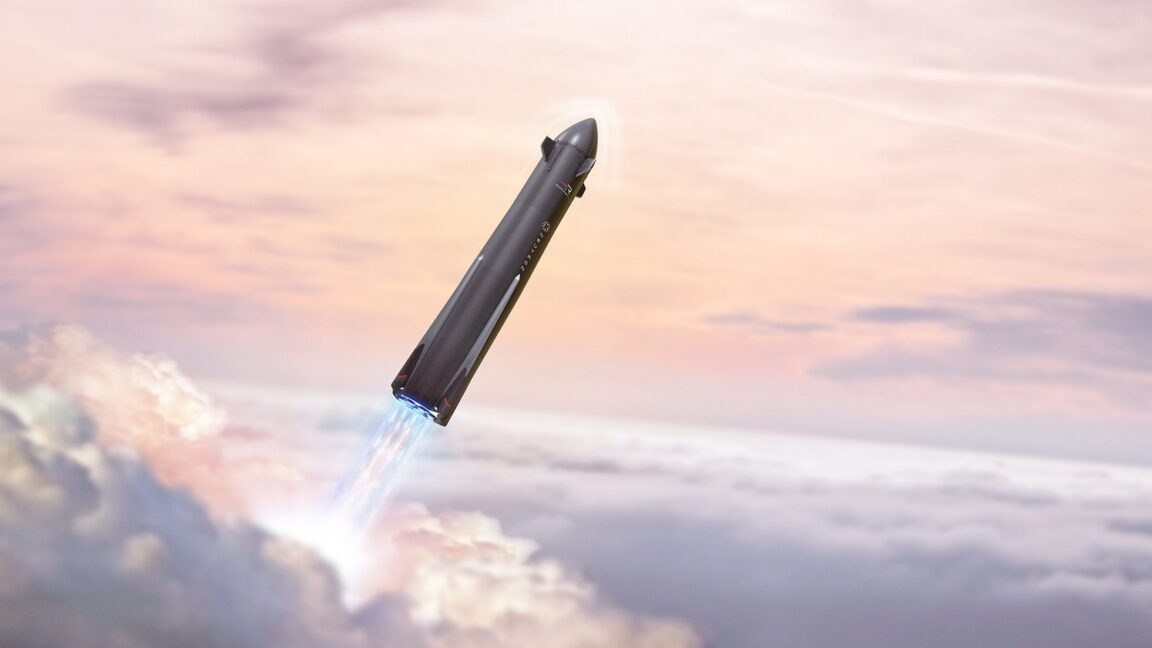
Rocket Lab has pushed the first launch of its Neutron rocket into next year after finding a manufacturing defect in the booster stage, the company said Wednesday. The medium-lift vehicle had most recently been slated to reach its launch pad at Wallops Island, Virginia, before the end of this year, according to an August update from the company. That schedule would have almost certainly moved the first flight into 2027 even before the latest slip.
Chief Executive Peter Beck attributed the delay to voids, or air pockets, discovered between the layers of carbon fiber in the dome sections that cap the ends of the first stage's propellant tanks. The company said inspections of a newly cured forward dome found the defects, which could affect the structure's strength, durability and reliability. Beck said the voids do not necessarily mean the dome would fail in flight, but that Rocket Lab proceeds only when it believes a system carries the appropriate margins.
According to Rocket Lab, the problem traces back to a design change made to strengthen the rocket after a Neutron propellant tank ruptured unexpectedly during a hydrostatic pressure test in January. That failure was blamed on a manufacturing defect at a critical join in the tank, which officials said was built by a third-party contractor using a manual hand-lay process. The company has since brought an automated fiber placement machine online, removed joints in the first stage tank structure and increased the thickness of some carbon composite sections.
Rocket Lab said it modified its manufacturing process again and that an aft propellant dome built with the updated procedure passed inspection. Beck said the company has solved the problem and has confidence to move forward with a new forward dome, but that the combined production and investigation time pushed the first launch to next year. The first stage still needs final qualification, as does the methane-fueled Archimedes engine that will power the booster.
Neutron is far larger than Rocket Lab's carbon-fiber Electron rocket, measuring 23 feet across at its widest against Electron's 3.9 feet. The company completed qualification testing on Neutron's expendable second stage and payload fairing last year. In its unusual design, the upper stage and payload ride inside the first stage's nose cone, which opens after liftoff to release them and then closes before the booster lands on an offshore platform.
Rocket Lab announced Neutron in 2021 with a target of flying in 2024, a timeline that has now doubled. Beck has said the program remains on an ambitious schedule and that the company aims to reach orbit on the first attempt rather than claim success for merely clearing the pad. Neutron is intended to let Rocket Lab compete for US military launches and satellite megaconstellation contracts, with a lift capability to low-Earth orbit of nearly 29,000 pounds.
More technology news from TechManNews.