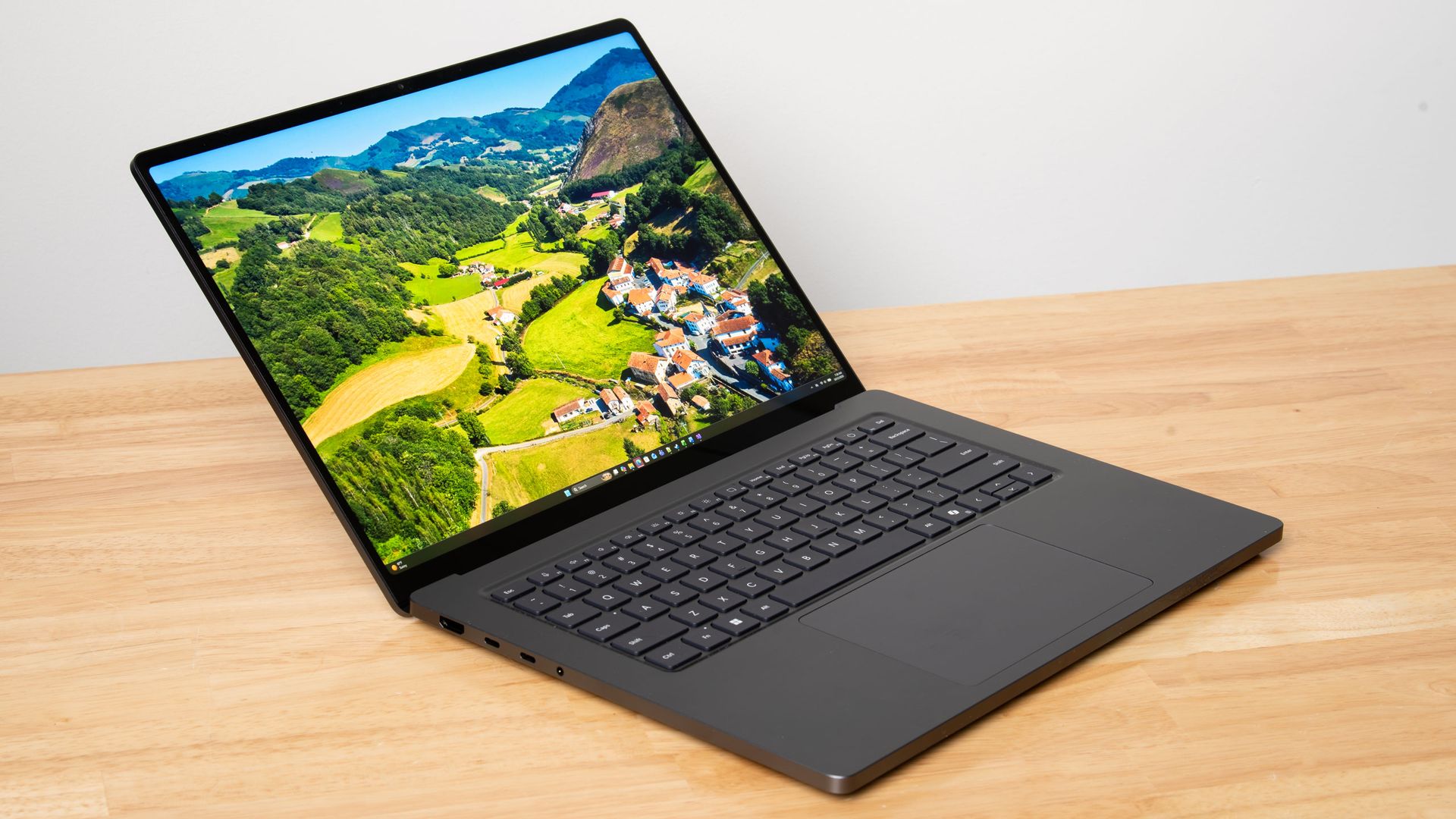
The laptop is no longer just a productivity appliance. Three stories logged on this beat point to the same shift: the PC is being re-engineered as an always-on sensing and inference platform, and the same capabilities that make it useful to enterprises are making it useful to states, security vendors, and everyone in between. The common thread is not AI as a feature but AI as the reason the hardware exists.
The agentic AI pitch is now the laptop's core spec
Nvidia's RTX Spark Superchip, tested inside Microsoft's Surface Laptop Ultra, is being framed by Tom's Hardware as laying the foundation for "the reinvention of the PC in the agentic AI era." That framing matters more than the benchmark numbers. For two decades the Windows laptop's differentiation ran through CPU generations, battery life, and display quality. The Spark Superchip's strength, per the same review, is local AI, with gaming explicitly not its strong suit. A chip that is excellent at inference and mediocre at gaming is a signal about intended use. The buyer Nvidia and Microsoft have in mind is running models on the device, not rendering frames.
That has direct consequences for US consumers and IT buyers. Local inference changes the security and privacy calculus, because prompts and data need not leave the machine, and it changes the cost structure, because the compute is purchased up front rather than metered by a cloud provider. It also resets upgrade cycles: if the reason to buy a new laptop is on-device AI throughput, then last year's machine is not just slower, it is incapable of the feature. On the Windows on Arm side, Microsoft and Nvidia are effectively asking US enterprises to re-evaluate their x86 assumptions on the strength of an AI workload rather than a general-purpose one.
Remote work created a hardware supply chain worth policing
The second thread is what happens when the laptop becomes the point of contact between an employer and a worker. The U.S. Department of Justice disrupted the Famous Chollima threat group's operations, arresting two suspects, charging 14 individuals, and seizing nearly 187 laptops used in North Korean remote IT worker schemes, as BleepingComputer reported. The FBI raids on laptop farms in Texas are not a story about software vulnerabilities. They are a story about logistics: fleets of ordinary business laptops, provisioned and shipped, used to place foreign workers inside US companies under false identities.
The detail that nearly 187 laptops were seized is the part laptop buyers should sit with. This was not one compromised device. It was an inventory-scale operation built on the same procurement channels that US companies use every day. For US technology companies, the implication is that device-level identity and attestation stop being compliance checkboxes and become operational controls. If a laptop can be shipped to a farm, assigned to a fictitious contractor, and connected to a corporate network, then the device itself is the weakest link in hiring verification. For US consumers, the knock-on effect is familiar: tighter device management, more aggressive endpoint controls, and more friction on the machines their employers issue.
The same silicon that runs agents can run surveillance
The third story sits further from the laptop but completes the pattern. Mosqitter, per TechCrunch, is turning its mosquito-trapping hardware into an AI-powered surveillance network designed to identify species, monitor populations, and provide earlier warnings of mosquito-borne disease risks. This is a company taking a physical device and layering on AI classification and networked monitoring. The hardware did not change category. Its purpose did, because inference became cheap enough to attach to it.