Coding Tools Become the New Front Door for Enterprise Data
Article

Coding Tools Become the New Front Door for Enterprise Data

Three recent moves show developer tools increasingly act as brokers between AI agents, production systems and the businesses that own them.

JaysuryaOctober 15, 20264 min read

Photo: SiliconANGLE

The common thread in this week's developer news is not funding or platform politics but positioning: tools that sit closest to code are becoming the routing layer for business data, production incidents and even corporate ethics. Scuba's launch, groundcover's agent handoff and House House's Xbox decision all describe the same shift from the developer's perspective, where the coding surface now decides which agents, clouds and customers get access to what.

Funding Follows the Workflow

Scuba arrived with $34 million across two rounds, led by Accel and co-led by IVP, with BoxGroup, Conviction, Homebrew and Scribble Ventures participating, as SiliconANGLE reported. The company pitches a productivity service for managing business data, explicitly framed around both teams and AI agents. That framing matters more than the dollar figure. A business-data product that names AI agents as users is conceding that the buyer is no longer only a human analyst or a developer clicking through a dashboard. The workflow has expanded to include software that reads, writes and reconciles records on its own, and investors are willing to fund the plumbing that makes that legible to the teams accountable for it. For US technology companies, this is a signal about where enterprise budgets are heading: toward tools that treat agents as first-class operators rather than as experiments bolted onto existing seats.

The Handoff Problem After Code Ships

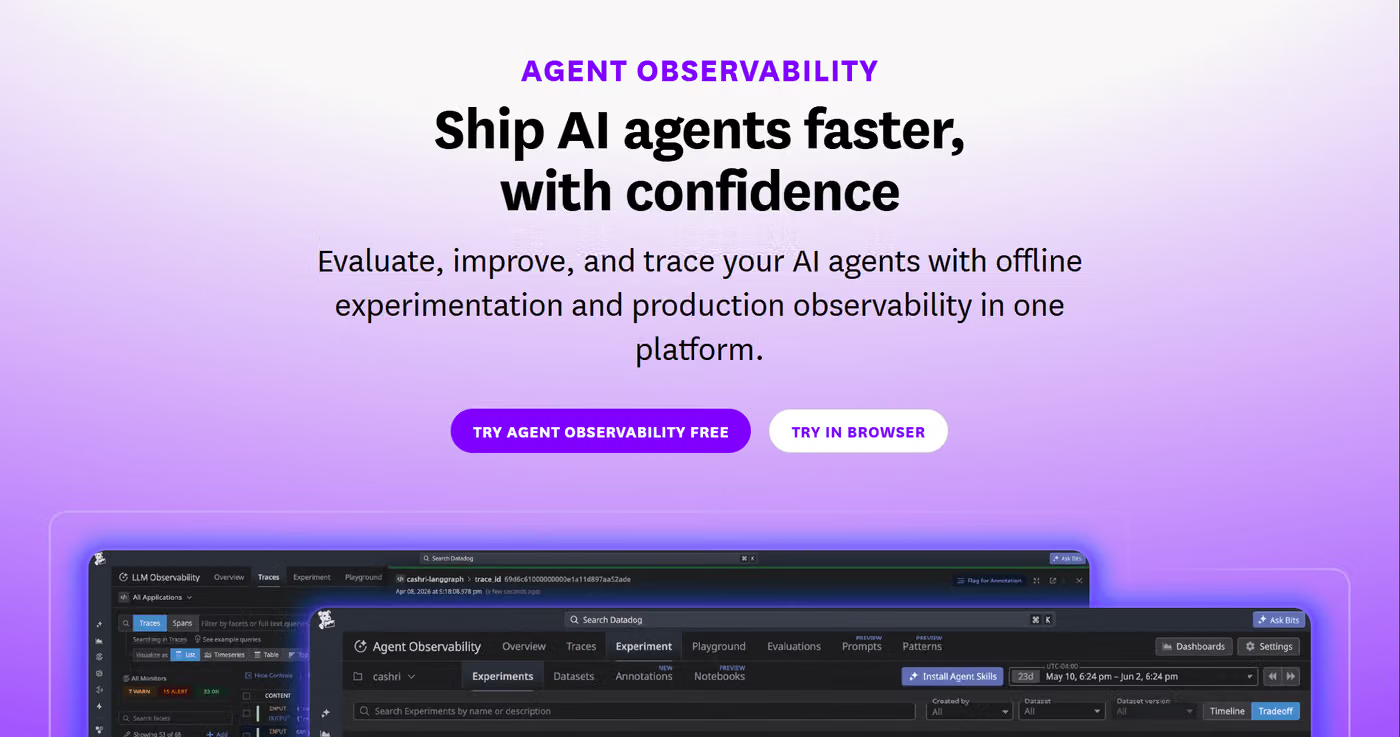
Groundcover's launch of what it calls agent-to-agent observability is the sharpest illustration of the gap. As SiliconANGLE reported, the company is giving outside coding agents such as Anthropic's Claude and OpenAI's Codex a way to hand production investigations to its own observability agent. The pitch is aimed squarely at what happens after code ships, a moment that has historically been a wall between the people who write software and the systems that tell them it broke. Coding agents already review code, but reviewing and operating are different jobs. Groundcover is betting that the value lies in the seam between them, where an agent that wrote or reviewed a change can pass context to an agent that watches production. If that works, the practical effect for US engineering organizations is fewer handoffs to human on-call staff for routine investigation, and a new dependency on whichever vendor owns the receiving agent.

Two Kinds of Control Over the Same Surface

Scuba and groundcover sit at opposite ends of the same pipeline. Scuba manages business data for teams and agents; groundcover manages production investigations for agents and engineers. Both are attempts to own the interface where automated actors meet accountable humans. That is a competitive position with real leverage, because the party that controls the handoff can define what context travels, what gets logged, and which models are allowed to participate. For US enterprise buyers, the risk is not that these tools fail but that they succeed unevenly, leaving some organizations with agents that can act but cannot explain, and others with audit trails that no one reads until something goes wrong.


The Ethics Layer Lands on Developers

The third story moves the same logic from architecture to conscience. House House said in a blog post that it chose not to release Big Walk on Xbox consoles in accordance with the Palestinian-led call for a boycott, as The Verge reported. The co-op multiplayer game launched in August and has proved popular, but the studio accepted the cost of excluding a console audience. Read alongside the other two items, this is not a stray culture-war story on the developer beat. It is a reminder that the distribution decisions developers make are increasingly treated as statements, and that the platforms they build on are not neutral ground. The same developers now wiring agents into production systems are also being asked, explicitly, which platforms and partners they will and will not work with. That pressure does not disappear when the work becomes more automated; if anything, it intensifies, because the choices are baked into tooling rather than made case by case.

What US Buyers Should Notice

For US technology companies, the through-line is a shift in where accountability sits. When agents can query business data, receive production investigations and act on both, the developer toolchain becomes a governance surface whether or not anyone calls it that. Procurement questions that used to be about features and seat counts are becoming questions about which external models are permitted, what context leaves the boundary, and who owns the record when an agent is wrong. Scuba's funding suggests investors see a market for making that manageable. Groundcover's launch suggests vendors see the handoff as the place to compete. Neither answers the harder question of who is responsible when an agent's investigation concludes incorrectly.

What to Watch

The concrete things to track are narrow. Watch whether agent-to-agent observability produces records that satisfy the same auditors who currently read incident reports, because that determines whether the groundcover approach spreads beyond early adopters. Watch whether Scuba's framing of agents as users of business data translates into controls that US enterprises can actually deploy under existing compliance regimes. And watch whether platform-exclusion decisions like House House's remain individual studio choices or become a recognized factor in how developers evaluate distribution partners. None of these outcomes is settled today, and the material above supports only the observation that the developer toolchain is where each of them will be decided.

Sources: SiliconANGLE, The Verge.

More on this beat: Software on TechManNews.

#developer tools#AI agents#observability#enterprise software#platform policy

Newsletter

Get Tech News in Your Inbox

The latest AI, gadgets, software and startup stories from TechManNews, delivered every morning - free.