๐Ÿ“ฃ

Advertisement

Google Ad - 970ร—90 Leaderboard ย TOP_LEADERBOARD_4

The Trust Boundary Is Now the Attack Surface
Article

The Trust Boundary Is Now the Attack Surface

Four 2026 disclosures show attackers are bypassing fixes, authentication, and physical security by exploiting trust in vendors, users, and rooms.

Arjun NairSeptember 4, 20267 min read

Photo: BleepingComputer

๐Ÿ“ฃ

Advertisement

Google Ad - 970ร—90 Leaderboard ย TOP_LEADERBOARD_4

The Thread: Trust Itself Is the Vulnerability

Across four unrelated disclosures in late summer 2026, a single pattern emerges: the most damaging attacks no longer break cryptography or exploit missing patches. Instead, they compromise the trust boundaries that security products, authentication systems, and even physical security rely upon. A Chrome zero-day in Google's V8 engine, a CrowdStrike Falcon privilege-escalation exploit, 39 documented methods for undermining passkey authentication, and a Chinese state-linked operation that backdoored executives' laptops via hotel-room USB access all share one theme. In each case, the victim had deployed a modern control - a patched browser, an endpoint agent, a passwordless system, or a locked room - and the attacker did not defeat the control. The attacker defeated the assumption that the control could be trusted.

For US technology companies and consumers, this shift is meaningful. The industry has spent a decade consolidating security into a few trusted vendors and a few trusted protocols. The stories logged in the last two days suggest that trust is now the primary attack surface, and the vendors, standards, and physical procedures built to protect users are themselves being turned into vectors.

The Vendor as a Target: CrowdStrike's FalconFlank

The most direct illustration is the CrowdStrike Falcon zero-day exploit, disclosed by an anonymous researcher using the handle Nightmare Eclipse and reported by BleepingComputer. The exploit, named FalconFlank, grants SYSTEM privileges on up-to-date Windows systems when CrowdStrike Falcon is installed. This is not a flaw in an obscure utility or a neglected library. Falcon is a leading endpoint detection and response product, deployed on millions of enterprise endpoints across the US. The attack does not require the victim to click a link or open a file. It requires the presence of the very software that is meant to prevent privilege escalation.

The implication for US companies is uncomfortable. They have consolidated security around a few large vendors because those vendors offer visibility, integration, and management. But consolidation also creates a single point of failure. When a flaw in a trusted agent allows an attacker to gain SYSTEM privileges - the highest level of access on Windows - the security product becomes the attack path. This is not a new idea, but the ease of the exploit and the fact that it works on fully patched systems, as BleepingComputer reported, underscores that vendor trust is a binary proposition: either the agent is flawless or it becomes a liability. The anonymous researcher's choice to release the exploit publicly, rather than through a coordinated disclosure, adds another layer of turbulence for US security teams that must now assume their endpoint agents may be hostile.

The Authentication Layer: When Passkeys Are Not Enough

A second story, reported by BleepingComputer, documents 39 methods that compromise passkey authentication. Passkeys are designed to be resistant to phishing, credential theft, and replay attacks because they rely on FIDO2 public-key cryptography. The cryptographic signatures themselves are not broken; the methods instead attack the surrounding trust boundaries: authentication prompts, synced credentials, enrollment, recovery, and other processes that are supposed to bridge the gap between a cryptographic key and a human user.

This matters directly to US consumers, who have been encouraged by Apple, Google, and Microsoft to adopt passkeys as the end of password pain. The reality, as the research shows, is that the passwordless future has inherited all the weaknesses of the identity layer that surrounds it. An attacker can trick a user into approving a prompt on the wrong device, or exploit a flaw in how credentials sync between a phone and a laptop, or abuse a recovery flow that trusts a recovery email that is itself compromised. None of these attacks require breaking FIDO2. They require breaking trust in the device, the sync provider, or the recovery process.

For US enterprises, the lesson is that migrating off passwords does not eliminate account compromise. It moves the problem upstream. Security teams that spent 2025 and 2026 deploying passkeys as a silver bullet must now inventory their enrollment and recovery flows as carefully as they once inventoried password resets. The 39 methods are a checklist against a new class of identity attacks, not a reason to abandon passkeys, but they are evidence that authentication is only as strong as the least-trusted part of its lifecycle.

The Physical Boundary: USB, Hotel Rooms, and the Fix Left Unused

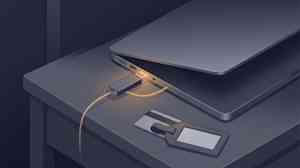
The most operationally dramatic story, reported by VentureBeat based on CrowdStrike's 2026 Threat Hunting Report, involves a Chinese state-linked group tracked as OVERCAST PANDA. At an agricultural industry conference on Hainan Island this spring, the group compromised executive laptops by physically breaking into hotel rooms while the executives were at dinner. An intruder entered one room around 8 p.m. and a second room by 9:57 p.m., booted the machines from a USB stick, and wrote a backdoor.

Advertisement

๐Ÿ“ฃ

728x90

MID_CONTENT_2

What makes this story notable is not the USB technique itself - that is decades old. It is that the operation exploited a fix that companies had but were not using. CrowdStrike's report, as presented in the VentureBeat interview, indicates that the laptops could have been protected by full-disk encryption or by a policy that disabled boot from external media. That fix existed, but the executives' machines were configured in a way that allowed a USB boot. The attack did not require a zero-day in the operating system or a sophisticated exploit chain. It required a physical intrusion, a hotel room key, and a misconfiguration.

For US companies that send executives to international conferences, the implication is stark: the security layer is not just software. It is the physical environment, the travel policy, and the device configuration. A laptop that is encrypted when off and requires a firmware password to boot from USB is a different target than one that is set to boot from external media by default. The OVERCAST PANDA operation shows that state-linked adversaries will invest in the low-tech path - breaking into a room at dinner time - when the software path is too hard. That is a trust boundary issue: the company trusted the hotel room to be secure, and it trusted that its laptop, once closed, was safe. Both assumptions were wrong.

The Browser Baseline: Google's Zero-Day and the Race to Patch

The fourth story, also from BleepingComputer, is Google warning of a new Chrome zero-day in the V8 engine that is being actively exploited. Google updated Chrome to address the flaw alongside 11 other vulnerabilities. For US consumers, Chrome is the browser of choice for a large plurality, and V8 is the JavaScript engine at the core of the web. The fact that a zero-day is actively exploited means that, between the time attackers discovered the flaw and Google's patch, any US user who visited a malicious page was at risk.

The pattern here is that even the most widely used, most aggressively patched software has a window of exposure. The trust boundary is the update interval. Google's rollout is fast, but it is not instantaneous. For US companies, this creates a recurring problem: they must decide whether to allow automatic updates, which can break internal applications, or hold back updates, which extends the zero-day window. The Chrome flaw is not a failure of Google's security team; it is a structural feature of a web ecosystem built on a single dominant browser engine. When that engine has a flaw, the entire US web economy is exposed simultaneously.

The Common Pattern: Security Controls Are Assumptions

What unites these four stories is that each attack did not violate the security control's primary promise. FalconFlank did not require disabling CrowdStrike; it uses the agent itself. The 39 methods do not break FIDO2; they abuse the surrounding processes. OVERCAST PANDA did not need a network exploit; it needed a USB boot. The Chrome zero-day did not defeat patching; it exploited the gap between discovery and patch.

In each case, the security control was a trust assumption: the agent will do no harm, the authentication will be trusted, the closed laptop is safe, the patched browser is current. Attackers are now systematically identifying those assumptions and building attacks against them. The result is that US technology companies and consumers face a security landscape where having the right product is not enough. The product itself, and every process around it, is now a potential attack vector.

What to Watch

The near-term watch items, grounded in these stories, are threefold. First, how CrowdStrike and its customers respond to FalconFlank - specifically whether the company can issue a fix before the public exploit spreads, and whether enterprises will begin to treat endpoint agents as attack surfaces in their own threat models. Second, whether the passkey ecosystem adopts mitigations for the 39 methods, particularly around enrollment and recovery, which are the most likely trust boundaries for attackers to target. Third, whether US companies update travel and device policies for executives attending international events, given the OVERCAST PANDA operation's demonstration that physical intrusion plus a misconfigured laptop can bypass software defenses entirely. None of these watch items offers a simple solution, but each points in the same direction: the next generation of security must spend as much energy defending the trust boundaries around its tools as it does building the tools themselves.

More on this beat: Cybersecurity on TechManNews.

Advertisement

๐Ÿ“ฃ

728x90

IN_ARTICLE_5

#zero-day#privilege escalation#passkeys#supply chain#physical security#CrowdStrike

Newsletter

Get Tech News in Your Inbox

The latest AI, gadgets, software and startup stories from TechManNews, delivered every morning - free.