The money moving through this week's funding logs points in one direction: investors are paying up for the layers beneath artificial intelligence, not the products built on it. A $750 million round, a $125 million round and a $42 million round, each logged by a different outlet, land on compute infrastructure and the security tooling that surrounds it. The common thread is not AI enthusiasm in the abstract but a willingness to write very large checks to the vendors that supply capacity and protection to everyone else.
Size and Purpose Move Together
The clearest signal comes from Modal Labs Inc., which announced $750 million in funding at a $15.75 billion valuation, as SiliconANGLE reported. Accel led the Series D, joined by Kleiner Perkins and a half-dozen existing investors, and the company said the valuation is more than triple what it carried after its last round. That multiple is the number worth dwelling on. A startup can triple its private valuation in a single step when buyers believe it sits on a scarce input, and AI infrastructure is the scarcest input in the current market.
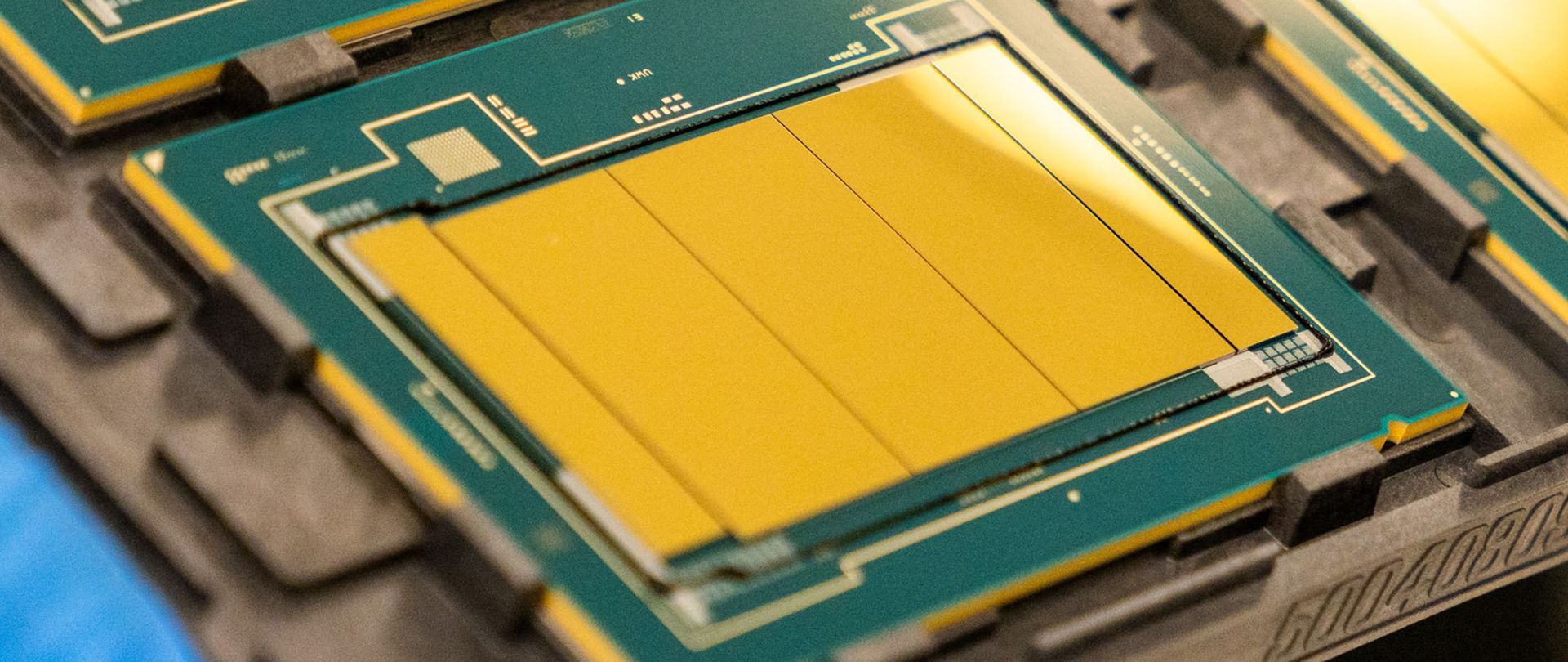
Salience Labs Inc. follows the same logic at a smaller scale, raising $125 million in a Series B after showcasing what SiliconANGLE described as the world's most advanced fully optical circuit-switching technology. Bullhound Capital led, and Intel Capital and AMD Ventures participated through their investment arms, alongside SBI Group. The presence of two chipmaking giants' venture operations is not incidental. It indicates that the strategic buyers of this technology see it as complementary to their own roadmaps rather than competitive with them.
Pluto Security's $42 million round, reported by TechCrunch with Jump Capital, TLV Partners, Ansa Capital and angel investors, is an order of magnitude smaller but belongs to the same story. The premise of that raise, as TechCrunch framed it, is that AI is giving enterprise security teams a new headache. Spending on that headache is a direct derivative of AI adoption, not a bet on any single AI product.
The Application Layer Is Not Where the Checks Are
The pattern across the three deals is a flight to the picks-and-shovels tier. Two of the raises are explicitly infrastructure: cloud capacity in Modal's case, optical switching in Salience's. The third is a control function that becomes more valuable as AI systems proliferate inside enterprises. None of the three is a consumer application, a vertical software product or a model developer. Investors are funding the conditions under which AI workloads run, and the safeguards around them, rather than wagering on which application wins.
That allocation choice has a cost for the rest of the market. Capital concentrated at the infrastructure layer raises the bar for startups selling directly to enterprises, because their prospective customers are increasingly buying compute and security capacity first. A company that cannot demonstrate it sits on a defensible piece of the stack faces a harder conversation with investors than a company that can point to switching technology or cloud capacity.
Strategic Capital Is Doing the Picking
The Salience round is the most instructive on governance. Intel Capital and AMD Ventures participating alongside a lead financial investor suggests the chipmakers want visibility into optical circuit-switching before it becomes central to how AI workloads are moved around data centers. Strategic participation of this kind is common in semiconductor-adjacent rounds, but it carries an implicit claim on future direction. For US technology companies, it means the supply chain for AI infrastructure is being shaped partly by the incumbents that already dominate compute, not solely by independent financiers.
Modal's round shows the financial version of the same dynamic. Accel leading with Kleiner Perkins and existing investors is a concentrated bet by a small group of firms with prior exposure to the company. The valuation step-up rewards insiders as much as it validates the business, which is typical of late-stage rounds in capital-intensive categories.