The operating systems beat has spent a decade treating software and hardware as separate businesses. Three recent stories suggest that split is closing, and that the OS is becoming the thing that absorbs the silicon, the AI, and the interface conventions around it.
Google puts the model inside the machine
Google's experimental note-taking app, Google AI Edge Foresight, transcribes meetings and audio files entirely offline, as TechCrunch reported and The Verge noted. It runs on macOS using the company's on-device EmbeddingGemma 2 model, and it is free to use. The salient detail is not that Google shipped a note-taker in a category already crowded by Granola and Wispr Flow. It is where the computation happens. An offline transcription stack is an operating-system-scale claim: the OS, or the app stack sitting on it, is now expected to carry a capable model locally rather than hand the work to a server.
That matters for US consumers because it changes the default bargain of the personal computer. If transcription and summarization can run locally, the value of the machine is increasingly measured by what its processor and memory can do without a network. It matters for US technology companies because the company with the strongest local inference story can differentiate a platform without owning the cloud bill. For Google, a free offline app on macOS is a way to prove on-device competence on someone else's operating system before bringing the same capability home.
Android muscle memory reappears on the keyboard
The Verge's report on Googlebooks is a reminder that interface conventions do not stay in the lane where they were born. The piece corrects a common misconception that the Quick Insert and Google logo keys are new; they first appeared on some Chromebooks a couple of years ago. What is genuinely new is a row of physical navigation keys ripped straight from Android phones circa 2014, with the F1, F2 and related keys taking on that role on every Googlebook keyboard.
That is a small hardware change with a large platform signal. Physical navigation buttons were an Android convention that software gestures largely retired on phones. Their return on a laptop keyboard suggests the company is treating the Android interaction vocabulary as portable across form factors, and treating the keyboard as a place to reinforce it. For US consumers, the practical effect is that muscle memory built on a phone may transfer to a laptop. For US competitors, it is a reminder that the fight over operating systems now includes the fight over which physical controls feel native.
Microsoft and NVIDIA share a stage
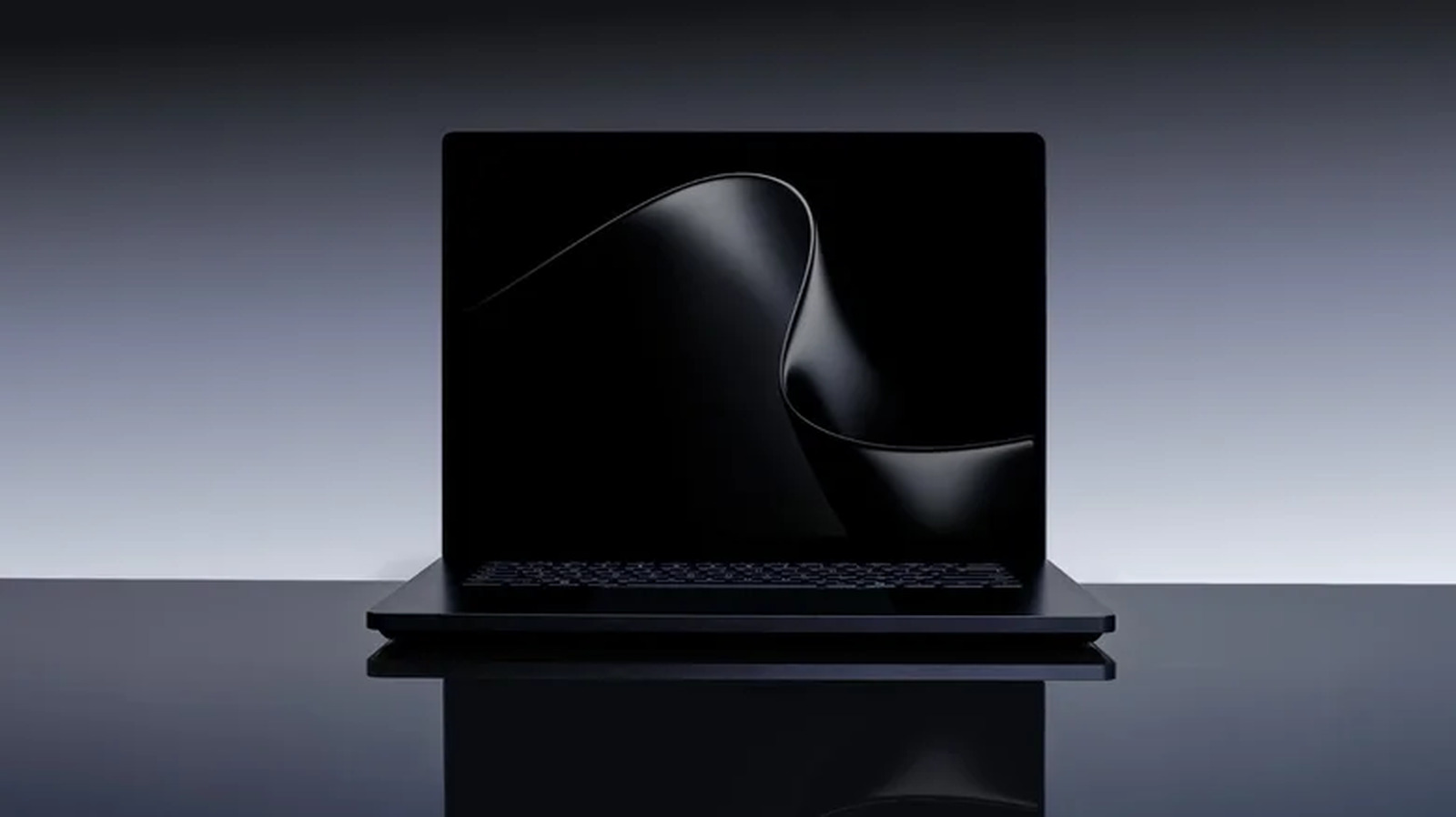
The third story is the most direct expression of the pattern. Microsoft's Windows and Surface event is being covered live by Engadget, with Satya Nadella and Jensen Huang taking the stage and more details expected on the Surface Laptop Ultra and NVIDIA RTX Spark. The pairing is the point. A Windows event that puts a chip designer's chief executive alongside the software chief executive is not a product launch in the ordinary sense; it is a statement that the operating system and the silicon are being planned together.
For US technology companies, this is the competitive logic of the moment. If local AI workloads are the differentiator, then the OS vendor and the accelerator vendor have a shared interest in making that combination legible to buyers. For US consumers, the consequence is that the specification sheet and the operating system become harder to evaluate separately. A laptop is increasingly sold as a bundle of OS features that only exist because a particular class of chip is underneath.