Chip Makers Are Splitting the PC Market Into Two Tiers
Article

Chip Makers Are Splitting the PC Market Into Two Tiers

Microsoft's $2,599 Surface Laptop Ultra and AMD's EPYC Verano socket point to a processor market where premium silicon and server parts diverge from the mainstream.

JaysuryaOctober 12, 20264 min read

Photo: Tom's Hardware

The processor market is separating into two distinct tiers, and the split is now visible in the products shipping this month. On one side sits a small number of expensive, specialized machines built around cutting-edge CPU-and-accelerator combinations; on the other, mainstream hardware that no longer commands the same attention from chip designers. Three recent stories from the CPUs and processors beat illustrate how this division is reshaping what US buyers can expect.

A Premium Laptop With a Premium Price

Microsoft's Surface Laptop Ultra, as The Verge reported, now has a release date of October 16th and a starting price of $2,599. The base configuration pairs an 18-core CPU with Nvidia's RTX Spark and 24GB of RAM, alongside 512GB of storage and a 15-inch HDR touchscreen.

The key detail for the processor beat is not the screen or the storage. It is the pairing of a high-core-count CPU with a discrete accelerator from Nvidia inside a mainstream-brand laptop. That combination has historically been reserved for workstations or gaming machines. Putting it in a Surface device at a $2,599 entry point signals that Microsoft sees a customer willing to pay for local AI and graphics capability in a portable form factor.

For US consumers, the practical effect is a widening gap between the laptop they can afford and the laptop that runs the newest workloads well. An 18-core CPU was, until recently, a specification associated with desktop replacements or small servers. As the entry point for this class of device, it sets a floor that most mainstream buyers will not cross.

AMD's Server Socket Turns Toward AI Hosts

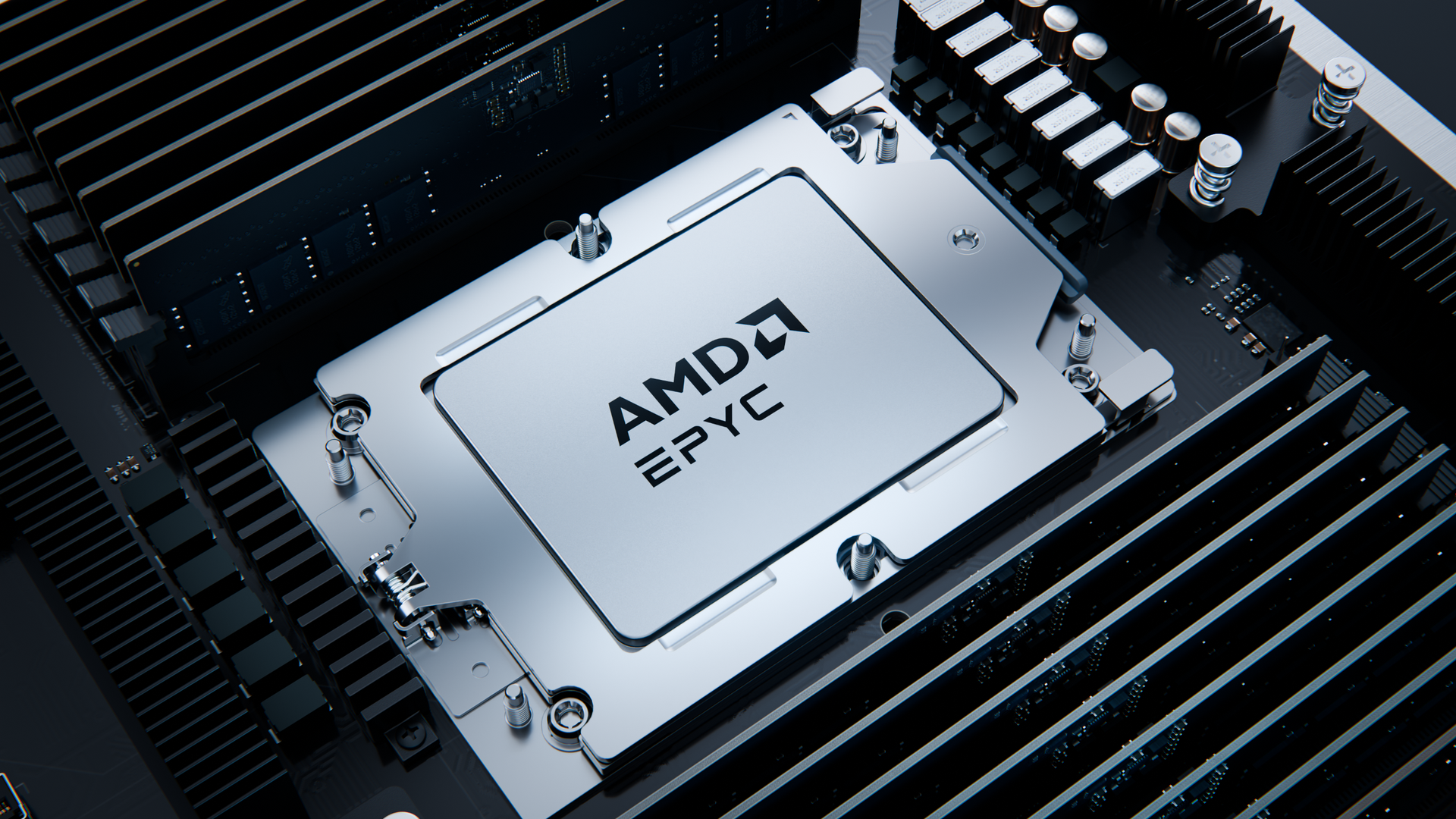
AMD's EPYC Verano is taking a different path to the same destination. According to Tom's Hardware, the chip will reportedly use a special SB1 socket, and Dynatron has quietly unveiled an air cooler for EPYC Verano CPUs aimed at AI servers.

The appearance of a dedicated cooling product from a third-party vendor is a useful signal. Air coolers are not typically announced for chips that vendors expect to sell in tiny volumes. Dynatron's move suggests that AMD and its partners anticipate real deployment of Verano as an AI host processor, the general-purpose CPU that feeds work to accelerators in a server rack.

The SB1 socket is the more consequential detail. A special socket means system builders cannot simply drop Verano into existing EPYC infrastructure. That raises switching costs for data center operators and gives AMD a way to define a distinct platform around AI hosting. It also means the supply chain, from motherboards to cooling, must build specifically for this part.

The Common Thread: Silicon Built for Specific Jobs

What links the Surface Laptop Ultra and EPYC Verano is that neither is a general-purpose upgrade. The Surface configuration is aimed at buyers who need local acceleration. Verano is aimed at operators who need a host CPU tuned for AI servers. Both are specialized, and both carry costs that reflect that specialization.

The third story in the beat, the OnePlus 16 launch, sits outside the US market entirely. As The Verge reported, OnePlus launched the phone in China after quitting both the US and European markets this summer. Its Snapdragon 8 Elite Extreme Gen positioning around performance is familiar, but the device is not available to US consumers. Its relevance here is as a contrast: the mobile chip market continues to serve a global audience with relatively uniform flagship silicon, while the PC and server processor market fragments into tiers defined by price and workload.

What It Means for US Buyers and US Firms

For US consumers, the immediate consequence is that the most capable processors are moving further out of reach. A $2,599 starting price for a Surface Laptop Ultra is not an anomaly if the underlying silicon is an 18-core CPU paired with RTX Spark. It is a reflection of what that combination costs to build and what Microsoft believes the market will bear.

For US technology companies, the split creates strategic choices. Firms that build laptops, servers, and cooling must decide whether to design for the premium tier, where volumes are lower but margins are higher, or the mainstream tier, where competition is intense and differentiation is harder. Dynatron's air cooler for Verano shows one vendor choosing the premium server path. Microsoft's Surface pricing shows another choosing the premium client path.

For US data center operators, the SB1 socket is the detail to watch. A new socket means new motherboards, new cooling, and new qualification cycles. Those costs are manageable for large operators but can be prohibitive for smaller ones, which could concentrate AI server deployments among a handful of well-capitalized firms.

The Supply Chain Follows the Silicon

A less obvious effect is on the component ecosystem. Air coolers, sockets, and motherboards are built to match specific processor designs. When AMD introduces a special socket for Verano, cooler makers like Dynatron must tool up for it. When Microsoft specifies an 18-core CPU and RTX Spark in a thin laptop, thermal designers must solve problems that did not exist in lower-power machines.

That ecosystem response is often the clearest evidence that a chip is real and shipping, not merely announced. Tom's Hardware's report that Dynatron quietly unveiled a cooler is the kind of unglamorous signal that matters more than a press release.

What to Watch

The next data points are already visible in the stories above. The Surface Laptop Ultra launches on October 16th, and its reception will show whether US buyers accept a $2,599 floor for a mainstream-brand laptop with an 18-core CPU and RTX Spark. AMD's EPYC Verano will be judged by how quickly system builders adopt the SB1 socket and how many cooling vendors follow Dynatron. And the OnePlus 16's China-only launch is a reminder that not every performance story reaches US shores, which makes the domestic tier split all the more consequential for American buyers. The thread to follow is not any single chip, but whether the premium tier keeps pulling away from the mainstream.

More on this beat: Hardware on TechManNews.

#CPUs#AMD EPYC#Microsoft Surface#Nvidia RTX#PC market#AI servers

Newsletter

Get Tech News in Your Inbox

The latest AI, gadgets, software and startup stories from TechManNews, delivered every morning - free.