Three unrelated items on the operating systems beat this week share one thread: the platform is increasingly a delivery channel for vendor services and vendor models, sitting on hardware the user owns, with the exit door quietly narrowed. A mapping beta arrives inside Android Auto, an open-source tool exists specifically to claw back 12GB of Apple Intelligence data on macOS, and Microsoft is about to start blocking MSIX attachments in Outlook. Each is a small story. Together they describe an operating system layer that is accumulating dependencies faster than it is accumulating controls.
Features Arrive Uninvited
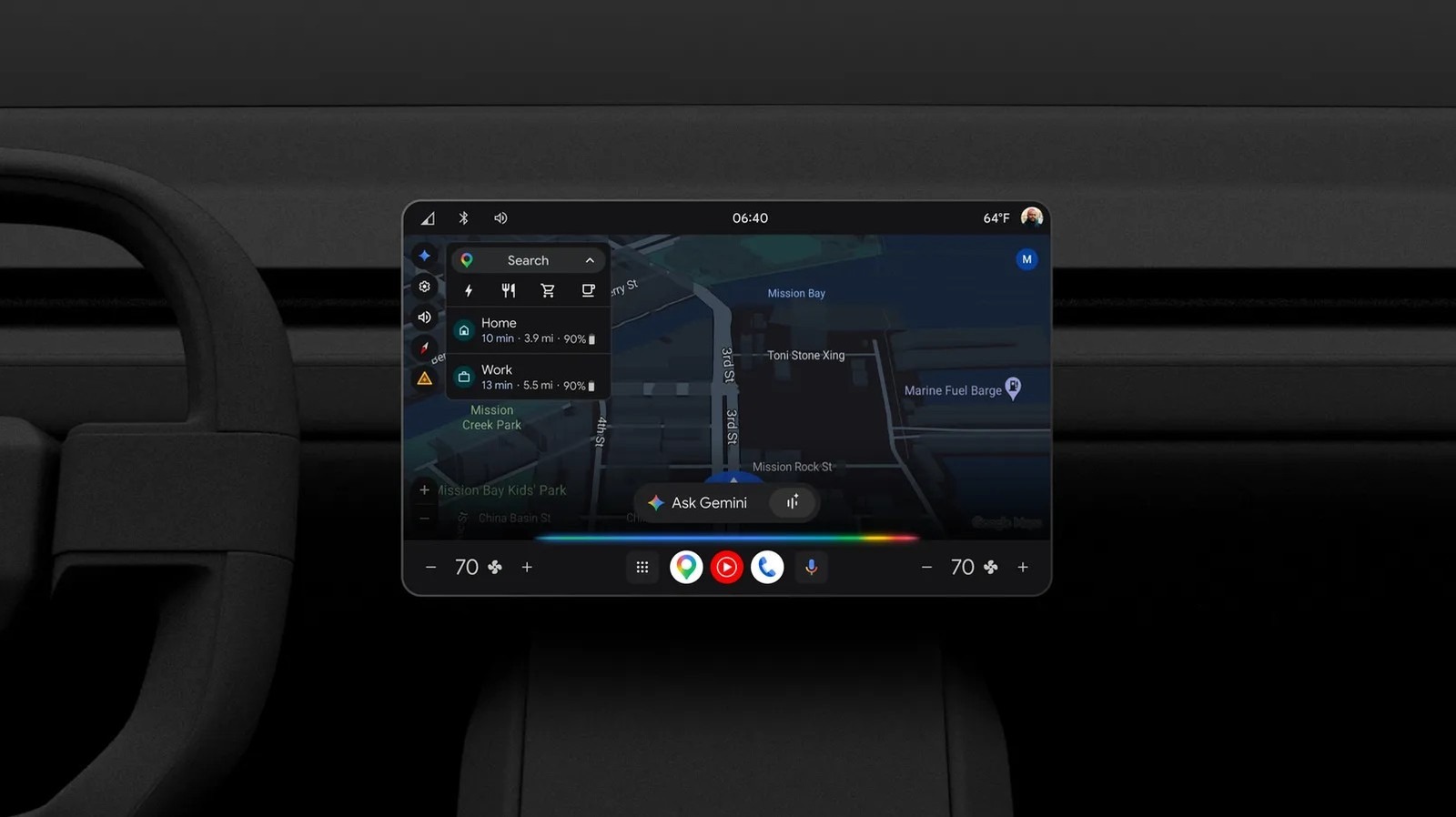
The Android Auto mapping beta reported by Engadget is the least dramatic case, and that makes it the clearest. A user with Android Auto simply gains a beta mapping service as an option. Nothing is forced. But it illustrates the direction of travel: mapping, navigation, and increasingly AI assistance are being delivered as operating system surfaces rather than as applications the user chooses to install. When a capability lives inside the OS shell, the user's relationship to it changes. It is not a product they selected; it is a surface that appeared in the interface they already use every day. The default becomes the vendor's service, and the alternative becomes the thing you go find.
That matters for American consumers because the car is one of the last places where a platform decision is effectively permanent. A phone can be replaced in a weekend. A head unit cannot. When the mapping layer of an in-car experience is shaped by the OS vendor, the switching cost moves from software to hardware.
The Model That Will Not Leave
The macOS case is where the thread becomes visible. As The Verge reported, there used to be a single Settings toggle for disabling Apple Intelligence, and that toggle was removed in macOS 27. The models stay on disk. A new open-source command line tool called RemoveMacAI exists to delete roughly 12GB of that Apple Intelligence data, and that is now the practical route to reclaiming the space.
Consider what has to be true for that tool to be worth writing. The operating system no longer offers the user a supported way to make the feature go away, so a third party has to reach past the OS to do it. That is a governance story, not a storage story. An operating system that installs multi-gigabyte models and then declines to provide a supported removal path has made a decision about who controls the disk. On a Mac, that disk is often sold at a premium, and 12GB is not trivial on a base configuration.
This is also where the pattern connects to the American market specifically. US consumers buy Macs with fixed storage tiers, and the space consumed by vendor AI features is not subtracted from the price. The cost of the vendor's AI strategy is paid in storage the customer purchased. Removing it requires comfort with a command line tool, which excludes most buyers.
The Attachment Door Closing
Microsoft's Outlook change, reported by BleepingComputer, looks like a security story and partly is. Adding .msix and .msixbundle to the blocked attachment list in Outlook Web and the new Outlook Windows client, starting next month, closes a delivery path for installable Windows packages.
But note what MSIX is: the modern Windows packaging format, the successor to older installer types, and the format Microsoft has spent years positioning as the cleaner, more controlled way to distribute Windows software. Blocking it as an email attachment is defensible. It is also the platform owner deciding which distribution channels remain viable for the packaging format it promotes. The block applies to Outlook Web and the new Outlook Windows client, which is to say the surfaces Microsoft is steering users toward.
For US software vendors, this is a distribution consideration. An installer format that cannot travel by email is a format that must travel through a store, a signed download, or an enterprise management tool. Each of those has a gatekeeper. The gatekeeper on Windows is Microsoft.