📣

Advertisement

Google Ad - 970×90 Leaderboard  TOP_LEADERBOARD_4

Tech's New Playbook: Consolidate, Monetize, Expand the Base
Article

Tech's New Playbook: Consolidate, Monetize, Expand the Base

From Cognex's acquisition of RealSense to Waymo's teen riders, the week's deals show mature tech seeking revenue beyond the early-adopter core.

HemeswariSeptember 23, 20265 min read

Photo: Wired

📣

Advertisement

Google Ad - 970×90 Leaderboard  TOP_LEADERBOARD_4

The Thread: Maturity, Not Disruption

The stories logged on this desk this week share a single thread: mature technology companies are shifting from building novel capability to wringing revenue out of what they already have. Consolidation, monetization of settled disputes, and expansion into new customer bases are the moves of companies that have moved past the growth-at-all-costs phase. The evidence is scattered across four different sectors, but the logic is consistent.

Cognex Buys What Intel Shed

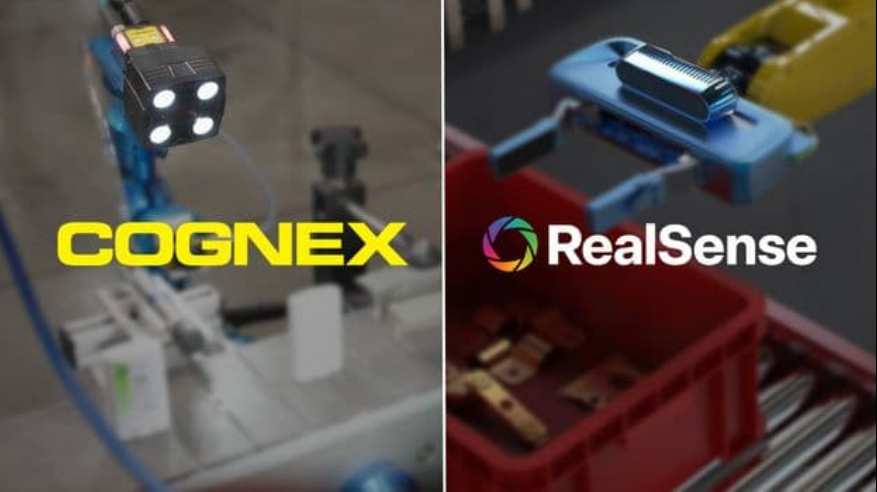
The clearest example is Cognex's $600 million deal for RealSense, the robotics and computer vision startup spun out of Intel 14 months earlier, as SiliconANGLE reported. The structure matters: roughly $500 million in cash, with additional consideration stretched over three years. That is not a growth-stage bet on an unproven category. It is an established U.S. machine vision company buying a capability it can fold into an existing business, paying mostly in cash, and structuring the rest to keep the acquired team aligned.

Intel's decision to spin RealSense out and Cognex's decision to buy it 14 months later tell the same story from opposite ends. For Intel, computer vision for robotics was adjacent to its core. For Cognex, it is the core. The transaction is a reallocation of an asset from a company that could not prioritize it to one that can. SiliconANGLE's report frames the deal as Cognex building out machine vision; the deeper point is that the market for industrial automation assets is now mature enough to have a secondary market, where spin-offs find homes with strategic buyers rather than staying inside sprawling parents.

Cyera's Extension Round and the Security Premium

Cyera's $400 million extension from Goldman Sachs, reported by SiliconANGLE, fits the same pattern from the capital side. The company closed a Series G in June that valued it at $12 billion; this extension comes from a single investment bank and pushes the stated valuation to "over $12 billion." The stated rationale is AI agent security, a category that barely existed as a commercial concern a few years ago and now commands nine-figure checks.

What is notable is the form of the raise. An extension to a round that closed three months earlier is not a company desperate for capital or a market rewarding speculative growth. It is a company with momentum taking advantage of continued investor appetite to add runway on favorable terms. Goldman Sachs writing the check is itself a signal: investment banks do not typically lead venture extensions unless the unit economics and the strategic fit are legible. For U.S. enterprise buyers, the implication is that security budgets will keep shifting toward vendors that can claim AI-agent coverage, whether or not the threat models are fully settled.

Waymo's Teen Experiment

Waymo's decision to open its robotaxi service to riders aged 13 to 17 in Nashville, reported by TechCrunch, is the most consumer-facing example of the same pattern. It is the company's second city to offer rides to minors. Expanding the eligible rider base is what a service does when the technology works well enough that the constraint is demand, not capability.
Advertisement

📣

728x90

MID_CONTENT_2

The choice of teenagers as the next cohort is not arbitrary. Teens are a household's most mobility-constrained members and often the reason families maintain a second car or shuttle children themselves. If a robotaxi service can credibly serve them, it inserts itself into a family's routine rather than serving as an occasional alternative to driving. For U.S. consumers, that is the moment a novelty becomes infrastructure. It also raises questions regulators and parents will eventually have to answer, but the expansion itself is a statement about operational confidence.

Apple's Settlement and the Value of Settled Claims

Apple's proposed $250 million Siri settlement, reported by Wired, completes the picture. Eligible iPhone buyers who felt misled about Siri's release can claim up to $95, with a December 21 deadline. This is a company closing out a chapter by converting a legal liability into a defined, capped payment and moving on.

Settlements of this kind are routine, but they are also a marker of a product category reaching middle age. The dispute was about marketing claims versus delivery timing, not about whether the underlying technology works. Paying to resolve it lets Apple remove an overhang and focus attention on current products. For consumers, the practical effect is a small payment and a deadline; for the company, it is one less distraction.

What These Moves Have in Common

Put the four together and the pattern is clear. A machine vision company buys a spin-off to deepen its core. A security startup raises more capital on the strength of an emerging category. A robotaxi operator widens its addressable riders. A platform company settles an old marketing dispute. None of these are moonshots. All of them are about converting existing capability and position into durable revenue and reduced friction.

That is what a mature technology sector looks like. The frontier stories still get the headlines, but the deals that move markets are increasingly about consolidation, customer base expansion, and closing liabilities. For U.S. technology companies, the competitive question in 2026 is less about who invents the next category and more about who can efficiently absorb, serve, and monetize what already exists. The companies above are answering that question in different ways, but they are answering the same question.

What to Watch

Several concrete items follow from these stories. Cognex's deal for RealSense is valued at around $600 million with about $500 million in cash and three-year terms, per SiliconANGLE, so watch how the integration is structured and whether other industrial buyers follow with similar spin-off acquisitions. Cyera's valuation now sits at over $12 billion after the Goldman Sachs extension, so watch whether that capital goes toward product or toward acquiring smaller security players. Waymo's Nashville teen service is its second such city, per TechCrunch, so watch whether the model spreads and how state regulators respond. And the Apple settlement has a December 21 claims deadline, per Wired, so watch the participation rate as a rough measure of how many buyers believe they were affected. None of these are predictions; they are the next data points that will show whether the pattern holds.

More on this beat: Companies on TechManNews.

Advertisement

📣

728x90

IN_ARTICLE_5

#M&A#AI#Robotics#Autonomous Vehicles#Cybersecurity#Consumer Tech

Newsletter

Get Tech News in Your Inbox

The latest AI, gadgets, software and startup stories from TechManNews, delivered every morning - free.