๐Ÿ“ฃ

Advertisement

Google Ad - 970ร—90 Leaderboard ย TOP_LEADERBOARD_4

Software's New Default Is Doing Less, Quietly
Article

Software's New Default Is Doing Less, Quietly

Four unrelated stories from the past two days point to the same shift: successful software is becoming quieter, smaller, and less likely to ask for your attention.

Arjun NairSeptember 19, 20266 min read

Photo: Wired

๐Ÿ“ฃ

Advertisement

Google Ad - 970ร—90 Leaderboard ย TOP_LEADERBOARD_4

The most interesting software stories this week are not about new capabilities. They are about subtraction. A macOS task app that is only a text file, a carmaker rearranging its infotainment screen so no single app dominates it, a routine manual update path for Android Auto, and a malware framework that hides its traffic inside a lightweight messaging protocol all describe the same movement: software is being judged by what it refuses to do, by how little it occupies, and by how invisibly it operates. That is a real change in the US market, and it has consequences for the companies that build and sell software here.

The appeal of the deliberately small app

Wired's coverage of Tasks.txt describes a free macOS app that substitutes elegance for features and, in the publication's framing, makes up for missing functionality with sheer elegance. That is a striking value proposition in a category where the standard move has been to add boards, calendars, reminders, integrations, and notification systems until the tool itself becomes a second job. Tasks.txt is not competing on the feature matrix. It is competing on the absence of one.

For US software companies, this is a familiar but uncomfortable dynamic. Feature depth has long been the justification for subscription pricing, and subscriptions are how most American productivity businesses survive. An app whose entire product is a text document undermines that argument at the low end. It also sets an expectation among buyers: if the essential job can be done this plainly, the burden of proof shifts to anyone charging monthly for more.

The counterargument is equally real. Text files do not sync reliably across devices without infrastructure, do not collaborate well, and do not generate the data that enterprise buyers increasingly want. Tasks.txt is a useful provocation, not a business model. The relevant point is not that small apps will replace large ones. It is that a visible, well-received example of doing less raises the perceived cost of doing more, especially among individual American users who pay for software out of pocket.

Infotainment learns to share the screen

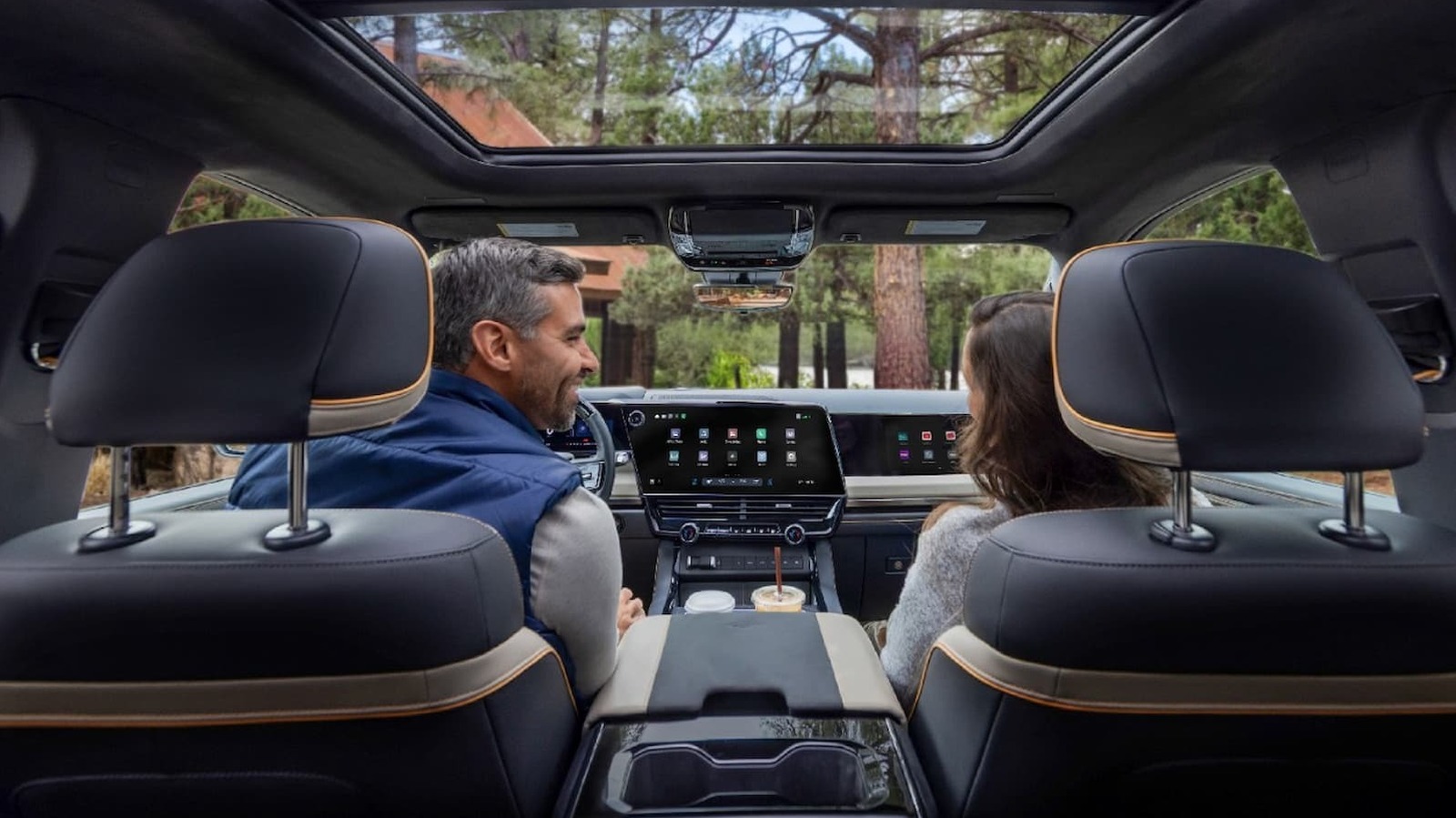
Engadget reports that GM has found a splitscreen solution for CarPlay and Android Auto, specifically so these systems stop hogging all the important screen real estate. Read that as an admission about the previous decade of in-car interface design. When phone projection arrived, it effectively took over the display, and automakers spent years watching their own climate, vehicle, and safety controls get pushed to the margins of hardware they built and sold.

The splitscreen fix is a compromise, and compromises are where the US market is heading. American drivers have made clear they want their phones in the car, and automakers cannot easily reverse that. What they can do is negotiate screen space. The result is a dashboard that belongs to no single vendor, which is a meaningful change for the companies whose platforms were previously allowed to own the whole display.

For US technology companies, the lesson is that the phone's reach into physical products is now subject to limits set by the manufacturers of those products. Apple and Google both benefit from projection, but neither controls the dashboard. GM's solution is a reminder that the vehicle is a contested surface, not a captured one, and that the terms are written by whoever ships the hardware.

Updating the things we no longer think about

Engadget's guidance on manually updating Android Auto, and on what it might mean if the update cannot be completed, points at a quieter problem. Android Auto lives in the Play Store, so the update path is ordinary. The interesting word in that story is "manually." Consumers are being asked, occasionally, to intervene in software they treat as part of the car rather than part of their phone.

That gap matters in the US, where a large share of daily driving depends on a projection layer that most drivers never consciously installed. When automatic updates fail, the failure is invisible until something stops working. The story offers no dramatic vulnerability and no urgent warning. It simply documents that a critical layer of the driving experience is maintained through the same app store mechanics as a game, and that a single missed update can leave a user stuck without an obvious explanation.


Advertisement

๐Ÿ“ฃ

728x90

MID_CONTENT_2

This is the unglamorous side of the same pattern. Software that succeeds by becoming invisible also becomes harder to diagnose when it misbehaves, because users have no mental model of it as a discrete product. Small footprint and low salience are not the same thing, but in practice they tend to arrive together.

When invisibility becomes the attack surface

BleepingComputer's reporting on BambooToken describes a previously unknown malware framework, active since at least 2023, that now uses MQTT to communicate with Windows and Linux systems. MQTT is a lightweight messaging protocol designed for constrained devices and unreliable networks. It is efficient, widely deployed, and unremarkable in traffic. That is precisely what makes it attractive to an intruder.

The pattern is consistent with everything above. The protocol was not chosen for power but for inconspicuousness. Security teams that have spent years instrumenting louder channels can find themselves looking past traffic that resembles ordinary telemetry. The framework's use of MQTT to reach both Windows and Linux systems also reflects a practical targeting logic: cover the endpoints that American enterprises and infrastructure operators actually run, without building separate tooling for each.

For US companies, the implication is that the shrinking of software's visible surface is not purely a virtue. The same qualities that make a design feel elegant, a small protocol feel efficient, and an unassuming app feel harmless are the qualities that make certain activity hard to notice. A market that rewards quiet software will also, inevitably, reward quiet misuse of it. That is not an argument against minimalism. It is an argument for treating visibility as an engineering requirement rather than a byproduct of complexity.

What quiet software asks of buyers

The four stories sit on different desks, but they share a premise: the value of a piece of software increasingly lies in how little attention it demands. Tasks.txt is not the first minimal app and will not be the last. GM's splitscreen arrangement will be copied or rejected by other automakers. Android Auto's manual update path is ordinary app store plumbing. BambooToken is a reminder that the same low-profile channels carry both convenience and intrusion.

The common thread for US technology companies is that the era of winning by adding is under pressure. Buyers are tired, screens are full, and protocols that do less travel further. The firms that adapt will be the ones that can be small on the surface while remaining accountable underneath, which is a harder engineering problem than shipping another feature.

What to watch

The material supports only a few concrete things to monitor. Whether the minimal-app approach that Wired describes in Tasks.txt spreads beyond macOS is an open question, and the answer will show up in what paid productivity vendors choose to remove rather than add. Whether other automakers follow GM's splitscreen approach will indicate how much screen authority carmakers believe they have retained. Whether manual Android Auto updates remain a normal part of ownership, as Engadget describes, will say something about how reliable the automatic path actually is. And whether MQTT-based intrusions like BambooToken become a broader pattern, as BleepingComputer reports they now are, will determine how quickly defenders adjust their expectations about what suspicious traffic looks like. None of these stories predicts the others. Together, they suggest that the quietest software is where both the best and the worst outcomes will be decided.

More on this beat: Software on TechManNews.

Advertisement

๐Ÿ“ฃ

728x90

IN_ARTICLE_5

#software design#automotive tech#cybersecurity#productivity apps#mobile platforms#US technology market

Newsletter

Get Tech News in Your Inbox

The latest AI, gadgets, software and startup stories from TechManNews, delivered every morning - free.