Article

Public Money, Private Control: The New Factory Floor

Across four recent deals, American technology firms are taking government and investor capital while insisting on keeping decisions in private hands.

BhavyaOctober 7, 20264 min read

Four stories logged this week by the TechManNews desk look unrelated: a CIA officer pleading guilty to stealing more than $190 million with a fake top secret program, a Detroit startup raising $3.6 million to become the 'Alibaba' of American manufacturing, a hospital AI company raising $38 million, and Elon Musk pushing back on rumors that TSMC will take over his Terafab project while Intel reaffirms its 14A node deal. The common thread is not fraud, chips, or healthcare. It is that capital keeps flowing toward private actors promising to fix public-scale problems, and those actors keep insisting that accountability and control stay on their side of the line.

The Public Purse With Private Hands

Consider the extremes first. As TechCrunch reported, David Rush, a CIA officer who worked on highly sensitive intelligence programs, admitted to creating a fake top secret government program to siphon more than $190 million, including gold bars. This is not a case of a rogue contractor exploiting a loophole. It is a case of a trusted insider using the secrecy that protects legitimate government work to shield an entirely invented one. The mechanism only works because the program was designed to be opaque by default. When oversight is treated as a risk to be managed rather than a function to be performed, even the most sensitive institutions become vulnerable to the people who understand their blind spots best.

Manufacturing's Missing Middle

At the other end of the spectrum, Bloom, a Detroit startup, raised $3.6 million to become what TechCrunch describes as the 'Alibaba' of American manufacturing. The company has widened its scope beyond mobility to help drone and robotics companies find U.S.-based manufacturers, shippers, and more. The premise is that American industrial capacity exists but is fragmented, hard to discover, and poorly matched to the needs of newer hardware companies. That is a coordination problem, the kind that public industrial policy has historically tried to solve with portals, grants, and matchmaking programs. Bloom's investors are betting that a private intermediary can do it faster and more accurately. The question is whether a $3.6 million startup can carry a function that the U.S. manufacturing base now expects, and whether the companies relying on it will have any recourse if it fails.

Hospital AI and the Data Bargain

Healthleap raised $38 million for AI that flags hospital patients who may need a closer look, as TechCrunch reported. The financing includes an $8 million seed round co-led by Sequoia Capital and First Round Capital, and a $30 million Series A led by Hummingbird Ventures. The clinical promise is real: earlier attention for deteriorating patients. The structural issue is familiar. Hospitals are being asked to route sensitive patient data through a private model in exchange for better triage. The regulatory framework for that bargain is still catching up, and the company's investors will expect returns that come from scaling across health systems, not from a single pilot. That scaling impulse is exactly where questions about liability, bias, and data reuse tend to surface.

Chips, Ego, and the Sublease

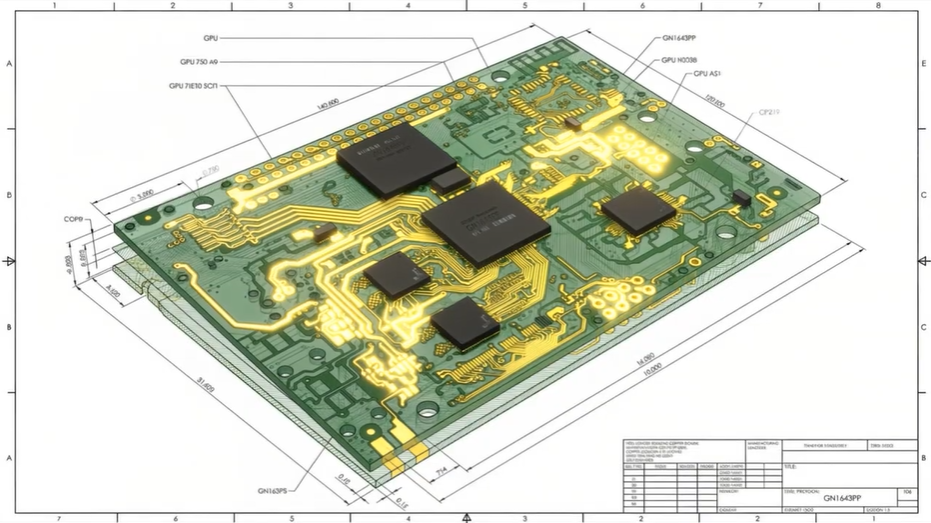
Then there is Terafab. As Tom's Hardware reported, Musk rejected rumors of a TSMC takeover of Terafab, Intel's Lip-Bu Tan said Intel will remain part of the project, and Musk floated the idea of having TSMC sublease part of the facility. The details are less important than the posture. A private industrial project of enormous strategic significance is being negotiated in public through rumor and denial, with a leading chipmaker and a leading fab operator both positioning themselves around one founder's preferences. Semiconductor manufacturing sits at the intersection of national security, trade policy, and private capital. The sublease idea, if it proceeds, would mean a foreign-headquartered foundry operating inside a U.S. facility built around a private project. That is a novel arrangement, and it is being discussed before any public framework exists for what it would mean for supply chain control, export rules, or taxpayer exposure.

Why This Pattern Matters for U.S. Tech

The unifying risk is not that any one of these actors is acting in bad faith. It is that the U.S. technology ecosystem increasingly asks private entities to perform quasi-public functions, from intelligence contracting to manufacturing coordination to clinical triage to semiconductor capacity, while the accountability structures around them remain private, contractual, and uneven. Fraud at the CIA is an extreme case, but the enabling condition is the same one that lets a startup become the assumed interface for American manufacturing or a founder negotiate fab access through press statements. When the public stakes are high and the decision rights are private, the public learns about problems late.

For U.S. technology companies, this pattern cuts both ways. It creates opportunity, because private intermediaries can move faster than public programs. It also creates concentration risk, because a handful of investors and founders end up holding functions that entire industries depend on. For U.S. consumers, the effects are indirect but real: the reliability of hospital triage, the resilience of hardware supply chains, and the integrity of government programs all shape daily life, even when the relevant decisions are made in boardrooms and group chats.

What to Watch

The material points to a few concrete things worth tracking. First, whether Bloom's $3.6 million is enough to build a durable manufacturing marketplace, or whether it becomes a thin layer atop existing suppliers. Second, how Healthleap's $38 million in financing translates into clinical deployment, and whether hospitals and regulators impose data terms before scale. Third, whether the Terafab arrangement clarifies into a formal structure involving Intel and TSMC, or remains a set of public signals without a signed framework. Fourth, whether the Rush case prompts any visible change in how sensitive government programs are audited. None of these stories, on its own, proves a trend. Together, they describe a system that keeps delegating public-scale problems to private actors, and keeps learning about the results after the fact.

More on this beat: Companies on TechManNews.

#public-private#manufacturing#semiconductors#healthcare-ai#accountability#venture-capital

Newsletter

Get Tech News in Your Inbox

The latest AI, gadgets, software and startup stories from TechManNews, delivered every morning - free.