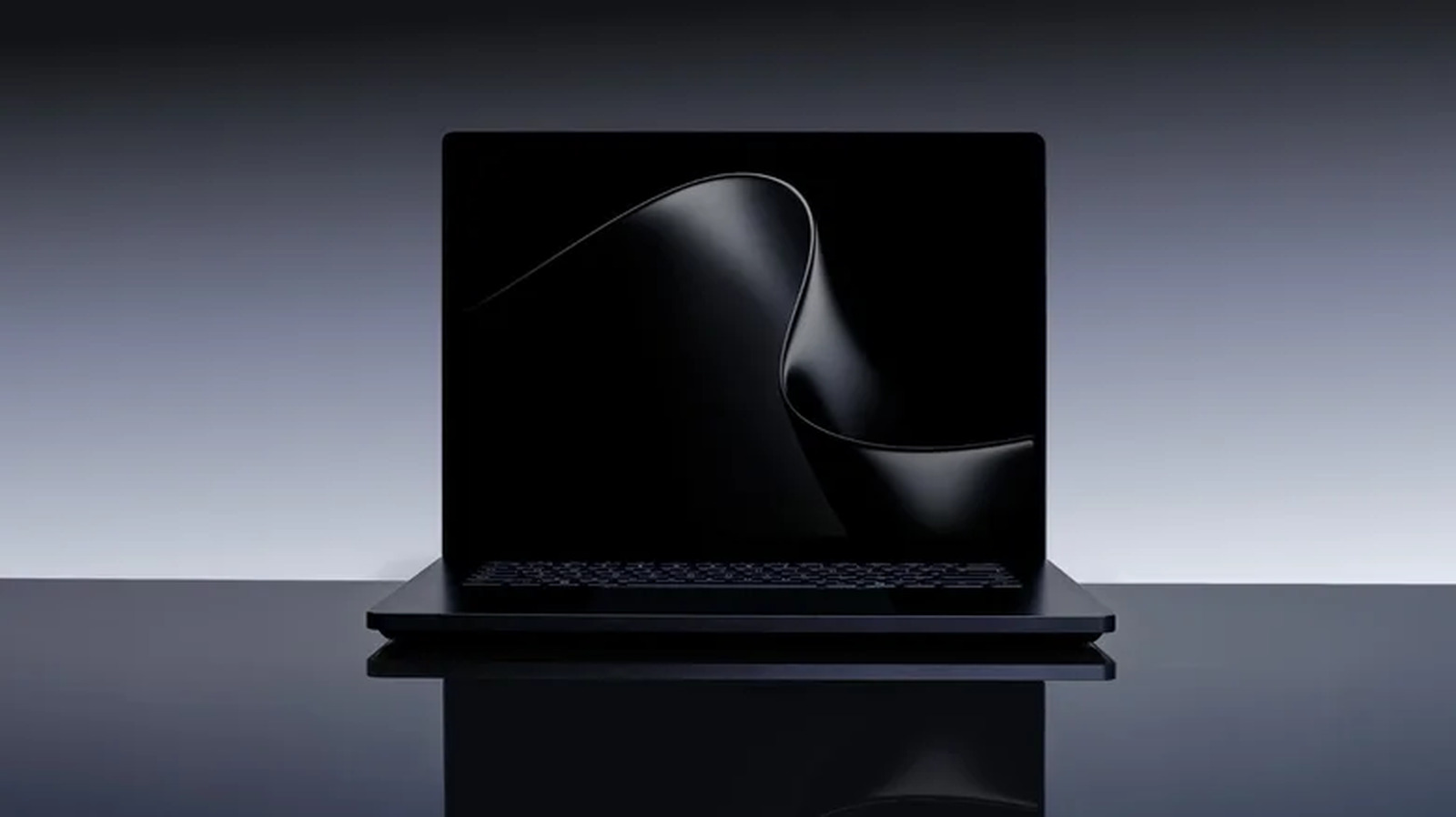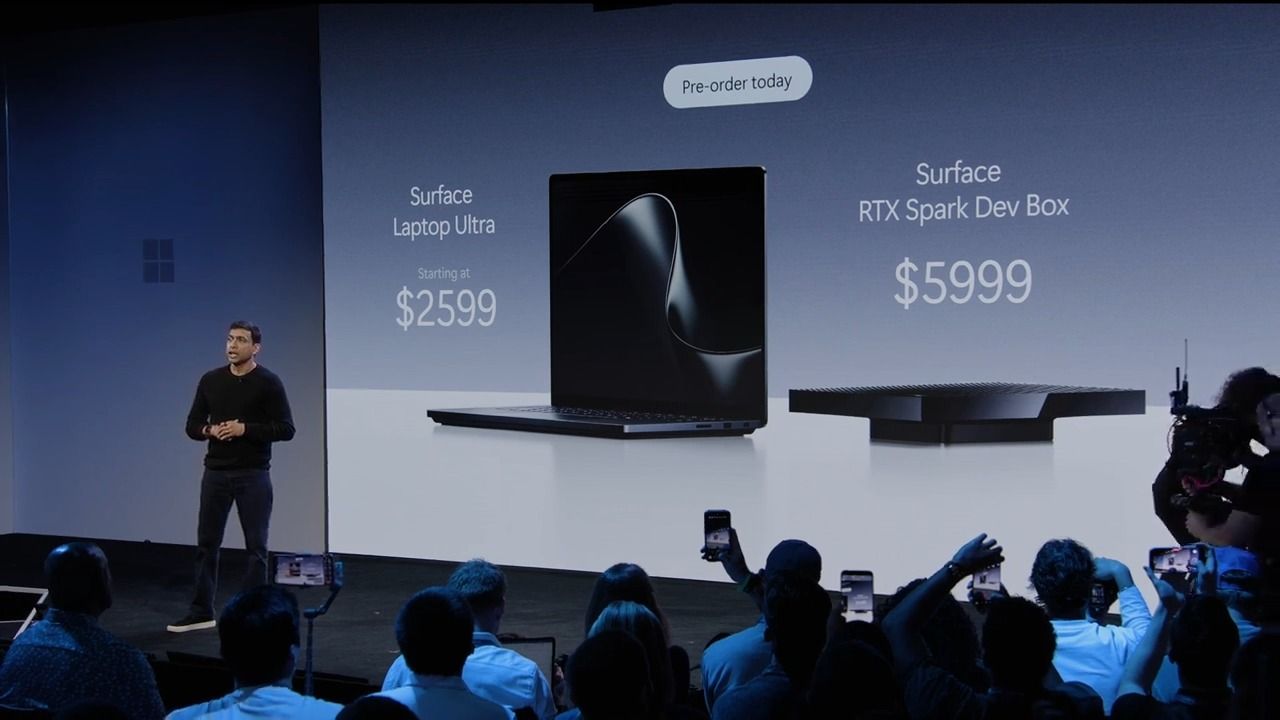
Microsoft and Nvidia have introduced the Surface Laptop Ultra with RTX Spark, with Surface chief Davuluri presenting the device as part of a broader push toward what CEO Nadella called a "frontier ecosystem" built around Agent 365, Microsoft IQ, and Copilot. The Surface Laptop Ultra starts at $2,599, while the Surface RTX Spark Dev Box starts at $5,999, and both are up for pre-order. The machines, along with PCs from Asus, Dell, Lenovo, HP, and MSI, are scheduled to ship next Friday, Oct. 16.
Davuluri said Windows 11 is the most secure platform for AI agents, pointing to containment measures for agents. On stage, he ran GitHub Copilot on the Surface Laptop Ultra and played Gears of War: E-Day at 60 frames per second. He said hundreds of AAA titles and indies will be available on day one, and that Call of Duty will arrive on RTX Spark in 2027.
The 4.5-pound laptop carries what Davuluri described as the brightest peak HDR available on a laptop. It also uses a magnetic USB-C charger branded "magnetic connect," which attaches the way Apple's MagSafe and the older Surface Connect ports do but relies on a standard port. Microsoft compared the Spark to the M5 Pro in a MacBook Pro, claiming up to 2.1 times faster time to first token, 4.3 times faster image generation, and 6.2 times faster video generation.
Windows 11 will gain new quick actions in the Taskbar's Search menu, letting users change settings, take screenshots, or arrange windows through natural language. The Taskbar will launch Copilot when a request calls for it, and users can move from Search into Copilot. Davuluri also said local models from other vendors, including Hermes, OpenClaw, and Perplexity, will run on the platform, demonstrated with Perplexity Computer, and that Meta's Muse is coming to Windows. A new setup is planned to make Windows AI agents easier to configure.
Davuluri announced DGX Spark and Station for Windows, described as a supercomputer that brings last quarter's frontier to the desktop, with HP and Dell desktops arriving later this year after being exclusive to Linux until now. Microsoft's Jacob Andreou detailed the recent Copilot launch, which now reaches local files and local models and can act on a user's behalf, still using cloud models but switching to local ones when privacy requires it. In one example, the system gathered tax data by searching, renaming, and zipping documents, then drafted an email for the user's approval, features Andreou said are coming over the next few months.
On the technical side, Davuluri said Microsoft Execution Containers, sandboxes integrated with the OS that decide what data agents can see, are moving to general availability. Windows will require agents to attribute their actions to themselves, and enterprises will get IT controls to set agentic rules once across a device fleet. Microsoft's Divya Venkataramu demonstrated the system, showing she retained access to documents that agents did not. Davuluri also described hybrid intelligence, mixing local and cloud agents to cut token budgets, with Microsoft's HydraFusion moving from GitHub to Windows on October 15 for GitHub Copilot, the CLI, and VS Code, using new models including MAI Code 1.1 Flash and Nvidia's Nemotron. Using advanced quantization, DeepSeek V4 Flash can run locally at 1.6 bits in 60GB of memory, he said.
Windows ML will serve as the runtime for deploying models across GPU, NPU, and CPU, and Llama.cpp is coming to Windows ML so developers can experiment with new models at launch. Microsoft's Kayla Cinnamon demonstrated hybrid intelligence on a Surface RTX Dev Box by having GitHub Copilot find unused code, packages, and feature flags for cleanup. An Efficiency mode has Copilot pick a model automatically based on task complexity; a more complex prompt used GPT-6 Luna while separate sub-agents ran locally.
More gadget news from TechManNews.