The three stories on this beat share one thread: the CPU's role is shifting from the part that does the computing to the part that governs it. In AI racks, CPUs host accelerators and manage data movement; in gaming PCs, a processor now carries a persistent hardware identity that platforms police; in data-center economics, processors appear as one component in a system measured by tokens and power. Across all three, the processor is where control, attribution and integration happen.
Hosts, Not Heroes
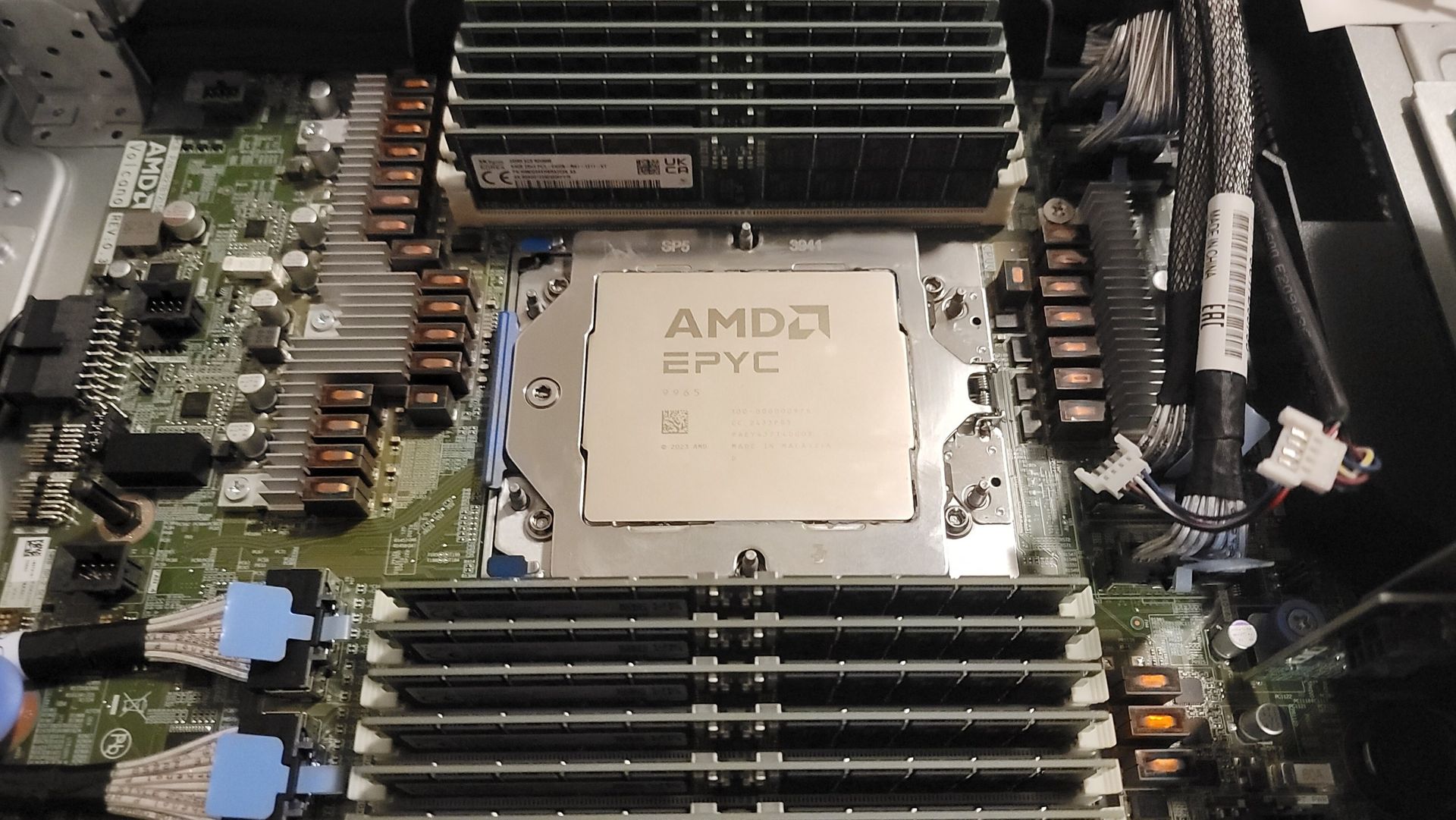
The clearest evidence comes from OpenAI's deployment of its Jalapeño ASICs, which, as Tom's Hardware reported, are being paired with AMD EPYC 'Turin' CPUs as hosts rather than with Nvidia's Vera. The choice is telling for what it says about where value is settling. Rack-scale AI systems need a general-purpose processor to orchestrate the accelerator fleet, feed it data and keep the whole rack coherent. The headline chip is the ASIC, but the CPU is the rack's air-traffic controller.
That framing matters for US chipmakers. Nvidia's Vera belongs to the wave of high-performance agentic chips, and its absence from this particular OpenAI deployment does not mean Nvidia is sidelined. It means the host-CPU slot is a separate competition with different requirements, and AMD won this one at a hyperscaler-scale customer. For American enterprise buyers planning AI capacity, the practical lesson is that accelerator selection and host-CPU selection are now distinct decisions, and the host decision has architectural consequences for memory bandwidth, PCIe topology and power budgeting across the rack.
The Processor as Identity
A second story pushes the CPU's role in a different direction. As Tom's Hardware reported, a Reddit user bought a used CPU whose previous owner had apparently used it to cheat in Valorant, and the hardware ID had been flagged by Riot's Vanguard anti-cheat system. When the buyer installed it, their own Valorant account was banned.
The incident is usually told as a cautionary tale about secondhand shopping. The more durable implication is that the processor has become a durable identity token. Enforcement no longer stops at the account; it travels with the silicon. That is a significant change for the US market in used PC components, which has historically traded on the assumption that hardware is fungible and anonymous once it leaves the original owner.
For US consumers, the practical risks are asymmetric. A buyer has no reliable way to query whether a given CPU has been flagged by any anti-cheat vendor before purchase, and no clear path to appeal if a ban transfers. For US platform operators, the model is effective but blunt, because it can penalize a party that did nothing wrong. Both effects follow from the same design choice: treating the processor as an enforcement endpoint rather than a neutral component.
Integration Beats the Part
The third story reframes what buyers are actually purchasing. As SiliconANGLE reported, Nvidia is tying AI factory economics to tokens and power efficiency, arguing that as agentic systems draw on multiple models, databases and tools, the entire data center must work as one computing system. That shifts attention from individual chips to the infrastructure that turns computing capacity into useful intelligence, with networking, storage and processors named among the components.
The CPU's place in that framing is structural rather than glamorous. If the unit of value is a usable token rather than a peak benchmark, then the processors that schedule work, move data between memory tiers and keep accelerators fed become a first-order variable in efficiency. A rack that wins on FLOPS but starves its accelerators, or wastes power on idle orchestration, loses on the metric that Nvidia says now governs the economics.