The recent hardware news cycle looks scattered, but a single thread runs through it. Companies that preserve room to change course are gaining ground on those that committed early to one supplier, one instruction set, or one design assumption. Optionality, once a footnote in product strategy, is becoming the headline itself.
Nvidia's Shadow and the Cost of Dependence
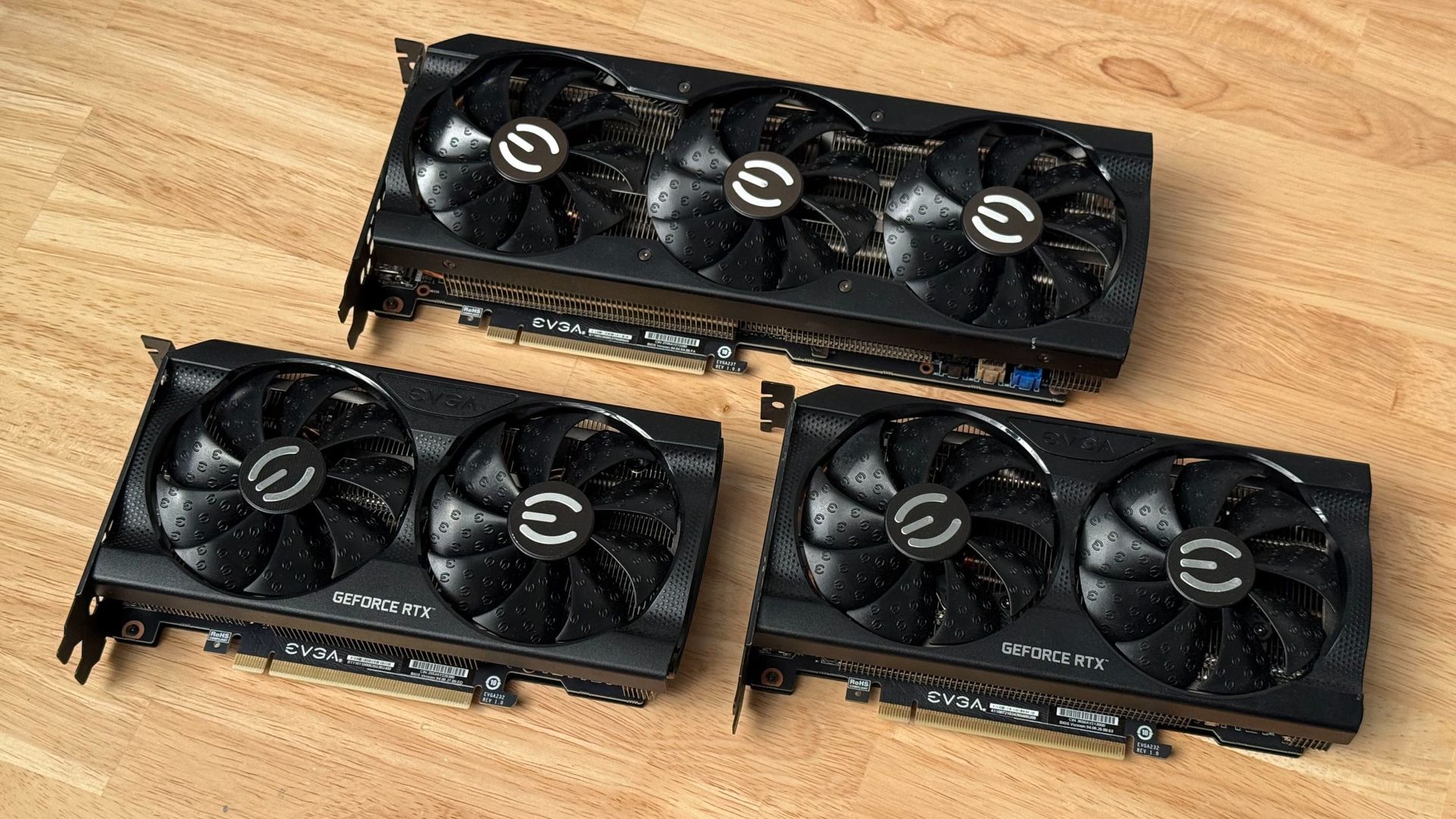
Tom's Hardware reported on a personal blog post by former EVGA product manager Brendon Ray Hedrick, who described how Nvidia's first Founders Edition GPUs alarmed EVGA and how pricing pressure and risky forward-looking technology ultimately ended the two companies' storied partnership. The account is a reminder that a close partner relationship can quietly become a constraint. When a supplier moves into your market, your roadmap is no longer entirely yours.
For US consumers, that constraint shows up as fewer choices and less competitive pricing at the high end. For US companies, it shows up as margin risk they cannot fully control. The EVGA episode is often filed under history, but the structural lesson has not aged. A partner that also competes with you changes the math on every allocation decision.
What makes the EVGA account useful in 2026 is what it says about timing. The alarm came from the first Founders Edition cards, not from a later crisis. By the time the relationship collapsed, the warning signs had been visible for years. Optionality is cheapest to build before you need it.
Designing Without Choosing
NuvaCore's approach, as reported by Tom's Hardware, takes the opposite instinct and pushes it further. The company says it is developing its WarpCore CPU IP without first choosing the instruction set architecture it will implement, a strategy meant to offer maximum technology and business flexibility.
That is an unusual way to build a processor. Normally the ISA comes first because everything else depends on it. NuvaCore is essentially betting that the design work can be decoupled from the commitment, and that the commitment can wait until the market signals are clearer. Whether that bet pays off is unknown, but the logic is consistent with the EVGA lesson: the longer you can defer an irreversible choice, the less likely you are to be trapped by it.
For the US market, this matters because ISA choice determines software compatibility, licensing costs, and which ecosystems a chip can serve. A vendor that can pivot late has more negotiating room with customers and partners. It also puts pressure on established ISA holders to make their case earlier and more concretely.
Commodity Components, Configurable Products
SteelSeries' new Rival Pro and Sensei Pro wireless gaming mice, covered by The Verge, ship with ultra-wideband connectivity and swappable batteries. The Verge notes they are among the company's most interesting models in years, at 53 grams in black and one gram more in white.
A swappable battery is a small decision with large implications. It extends a product's usable life, reduces the significance of charging behavior, and gives owners a path that does not require replacing the whole device. Weight figures this low also signal that the company is not treating every gram as sacred if it conflicts with a feature users want. The design keeps options open for the buyer rather than forcing a tradeoff at purchase.
US consumers have spent years being told that thinner and lighter require sealed, non-replaceable parts. Products like these are a quiet counterargument. They also give US retailers a story to tell beyond spec sheets, which matters in a category where differentiation is hard.