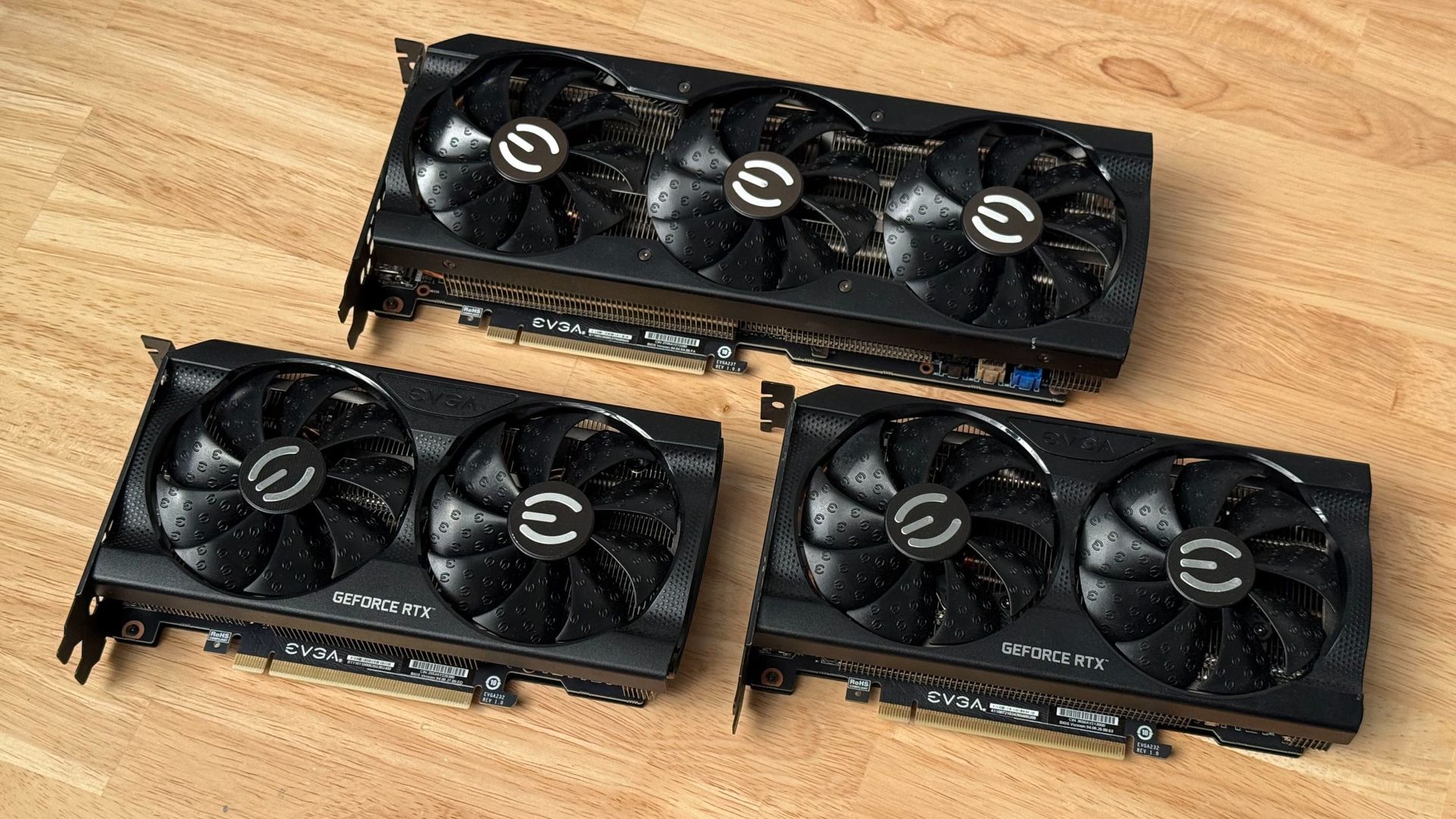
A former EVGA employee has described how the company's relationship with Nvidia deteriorated over a period of years before EVGA left the graphics card market. The account, from an employee named Hedrick, traces the tension back to Nvidia's release of its Founders Edition GPUs in 2016. Before that, EVGA had sold Nvidia reference designs under its own name, but Nvidia was now selling cards directly to customers and bypassing board partners such as EVGA.
Hedrick said the largest problem for EVGA came when Nvidia started requiring partners to sell a model at the announced MSRP even if that meant taking a loss. Partners that did not comply received reduced chip allocations, so companies had to offer a loss leader in order to get the chips needed to meet demand. According to Hedrick, EVGA's profitable models used its own circuit boards and cooling and carried a substantial premium, which could make EVGA appear to be charging a large amount over the advertised starting price.
In Hedrick's view, Nvidia's Founders Edition cards improved with each generation, making more expensive add-in-board offerings less appealing to most buyers. As a result, the loss-leading models sold out repeatedly, while customers who bought premium cards held onto them for an extra generation or more. Hedrick wrote that a manufacturer like EVGA still had cards to sell and a business to sustain, and that enough customers sitting out a generation could be financially devastating.
Hedrick also pointed to Nvidia's introduction of real-time ray tracing on its RTX 20-series cards in 2018. He said Nvidia could afford a long technological bet, and questioned whether a company as lean as EVGA could absorb the difficult work of convincing consumers to upgrade at a time when only a tiny handful of games supported ray tracing.
When Hedrick left EVGA, he believed the company and Nvidia had about four or five years left before the situation led to a confrontation. That prediction came true a year earlier than he projected. In 2022, EVGA announced it would stop making partner cards with the arrival of the RTX 40-series and would exit the GPU market once its stock of RTX 30-series GPUs ran out.
At the time, Nvidia GPUs reportedly made up 78 percent of EVGA's revenue while contributing only a tiny percentage of its overall profit. Other reports said that while lower-tier products like the RTX 3060 remained profitable, EVGA lost hundreds of dollars on every RTX 3080 and higher model it sold.
While Nvidia's policies are easy to blame for EVGA's exit, other analyses placed part of the responsibility on EVGA itself. Those analyses cited practices such as contracting manufacturing to third parties and providing overly generous customer service for its failures. EVGA's focus on North America and Europe also meant it shipped fewer units than competitors, leaving fixed costs to cut further into already narrow margins. Its customer-centric approach made it one of the most beloved brands in the GPU space, but left it vulnerable.
More hardware news from TechManNews.