The Thread
Across five very different stories this week, one pattern is unmistakable: computing is no longer happening in a single, central processor. It is spreading into memory, into graphics upscaling, into phone subwoofers, and into the very fabric of AI hardware. Nvidia’s $3.5 billion investment in MediaTek, its demanding new DLSS 5, Samsung’s plan to stack DRAM on top of processors, G.Skill’s specialized RAM tuning for Ryzen, and Poco’s collaboration with Bose all describe the same shift. The chip is becoming the whole computer, and the whole computer is becoming a collection of specialized, tightly coupled processors.
Memory That Thinks
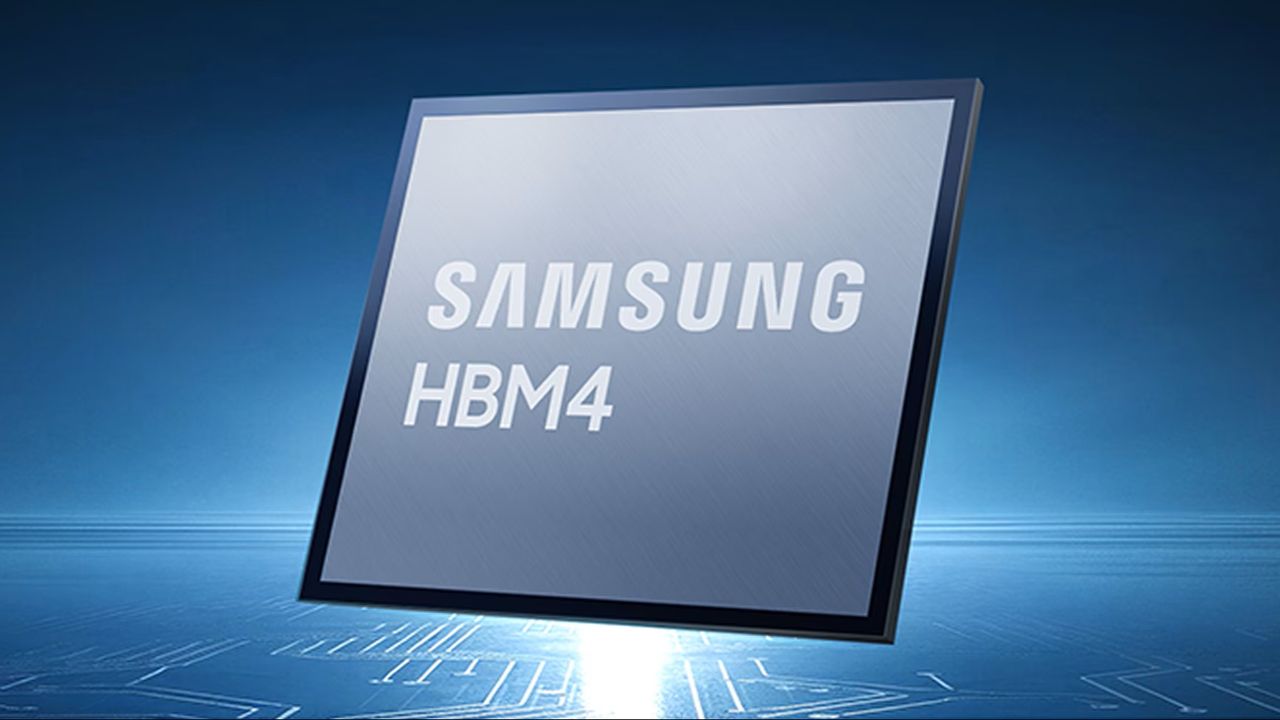
The most direct evidence comes from Samsung’s three-phase HBM roadmap, presented at Hot Chips 2026 and reported by Tom’s Hardware. Samsung is not just making faster memory; it is putting logic and compute inside the memory stack itself. The roadmap moves logic into the base die first, then ultimately stacks DRAM directly on top of the processor. That is a fundamental inversion of the traditional architecture, where memory sits beside the CPU and communicates over a narrow bus. By embedding compute inside memory, the system avoids the enormous energy and latency cost of shuttling data back and forth. For US companies running massive AI training clusters, this could mean the difference between a model that takes weeks to train and one that takes days. The implications are not incremental; they are architectural. Samsung is effectively arguing that the memory controller, the cache, and the arithmetic units all belong in one physical package, and the processor becomes just another layer in the stack.
The Cost of Intelligence
Nvidia’s DLSS 5, launching September 3rd and reported by The Verge, shows the same principle on the consumer side. The Verge has previously described DLSS as a “real-time generative AI filter for video games” and “motion smoothing for video games, but worse,” and the new version requires serious GPU horsepower. That requirement is not a flaw; it is the point. DLSS 5 is not a simple upscaler that runs on a small dedicated circuit. It is a generative AI model that needs a large, powerful GPU to run in real time. In other words, the graphics card is no longer just rendering frames; it is generating them. The GPU is becoming a neural network accelerator that happens to also draw polygons. For US gamers and PC builders, this means the GPU purchase decision is no longer about raw frame rate alone. It is about how much on-board AI capability you can afford. The old era of buying a mid-range card for 1080p gaming is ending, because the new features will simply not run on older or weaker hardware. Nvidia is betting that gamers will pay for intelligence, not just for silicon.
The Memory Bottleneck
G.Skill’s new Flare X5X DDR5 kits, also reported by Tom’s Hardware, are a quieter but equally telling sign. These kits bring AMD EXPO ULL technology, which stands for ultra-low latency optimized subtimings, specifically for Ryzen processors. The pricing remains a mystery, but the existence of the product reveals a clear truth: memory is no longer a commodity. It is now a tuned component that must be matched to the CPU’s internal architecture. The subtimings are not just about speed; they are about how the memory controller on the Ryzen chip interacts with the RAM. As Samsung moves compute into memory, and as Nvidia moves AI into graphics, the memory subsystem is becoming a first-class citizen in system design. G.Skill is selling precision, not just capacity. For US system integrators and enthusiasts, this means the days of buying any random DDR5 stick are over. You need memory that is tuned to your specific processor, or you leave performance on the table. The PC industry is fragmenting into tightly integrated ecosystems, where every component must be chosen with the others in mind.