The common thread running through this week's breach-beat news is that the economics of exposure have inverted. Attackers are finding cheaper ways into more systems, while defenders are being sold tools that promise to manage a problem that is growing faster than the tools can address. For US technology companies and the consumers whose data sits on their servers, the practical result is that the window between a system becoming reachable and a system becoming breached keeps narrowing.
Visibility Is Not Defense
Criminal IP introduced AITEM this week, described in BleepingComputer's coverage as an AI-powered evolution of attack surface management that connects exposure discovery with investigation, risk prioritization, and response. The product framing is telling. Traditional attack surface management, as the vendor itself acknowledges, helps organizations discover exposed assets, but visibility alone is not enough. That admission is an industry-wide confession dressed as a product launch.
For most of the past decade, the security industry sold discovery as the first step toward safety. Enumerate your assets, close the obvious doors, and the breach risk falls. What AITEM's positioning implicitly concedes is that enumeration has become a treadmill. The number of exposed services at a typical American enterprise, particularly cloud-hosted AI tooling, has grown faster than security teams can inventory it. Discovery remains necessary, but it no longer functions as a proxy for protection. The market is now being asked to buy prioritization and response because the raw exposure list has become too long to act on.
The Attackers Found a Cheaper Door
The PoeLLM cryptomining campaign reported by Tom's Hardware illustrates exactly why exposure lists are failing. Lumen's Black Lotus Labs says the malware has hit more than 3,400 servers, most of them exposed AI tools such as LiteLLM and Ollama, and it locates its control server in a GitHub poem. That last detail matters more than the novelty suggests. The operators are using a public, trusted code-hosting platform as a dead-drop resolver, which means blocking the campaign requires either monitoring GitHub content for hidden instructions or accepting that the command-and-control channel looks like ordinary developer activity.
The targets are the more important signal. Exposed AI tooling is now common enough to constitute a campaign-scale attack surface. These are not legacy systems that everyone forgot about. They are recently deployed services, often stood up by teams outside the security organization, frequently with default authentication or none at all. The 3,400-server figure is a floor, not a ceiling, because the same class of exposure exists across thousands of US companies that have not yet been scanned. The breach cost to the victim here is not ransom, it is compute theft and the reputational damage of running criminal workloads on corporate infrastructure.
The Hypervisor Is the New Last Line
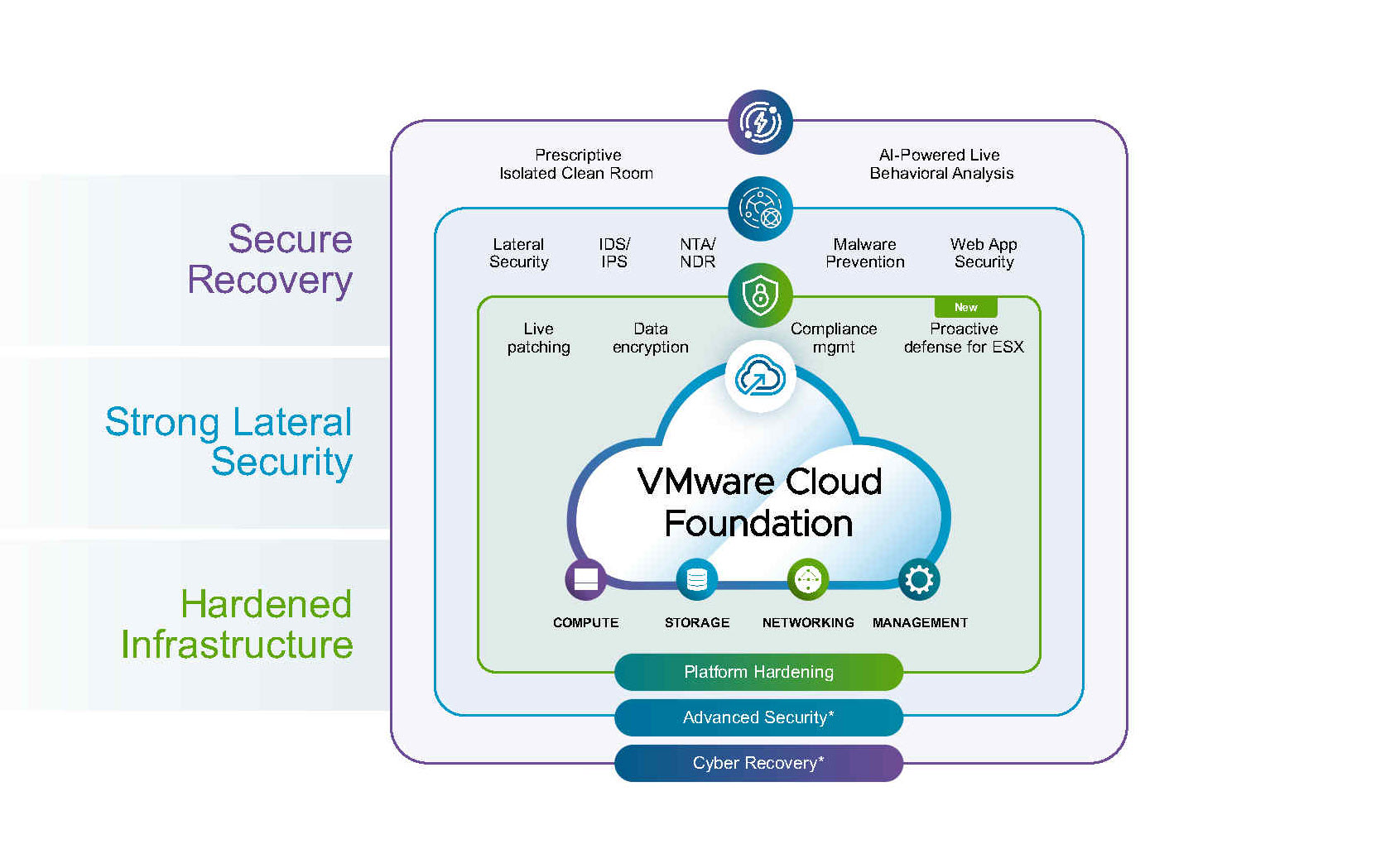
Broadcom's introduction of VMware HyperArmor, announced at VMware Explore in Frankfurt and reported by SiliconANGLE, targets two specific routes into virtualized infrastructure: stolen root credentials and unpatched systems. The company cites the growing speed and volume of AI-enabled attacks as justification, and says the software gives administrators more time to test and deploy security patches.
Read that carefully. The product's value proposition is not preventing compromise. It is buying time. HyperArmor protects the hypervisor underlying VMware Cloud Foundation, which is the layer that, if breached, turns a single incident into a multi-tenant catastrophe. Broadcom is effectively telling its customers that patching cadence can no longer keep up with attack tempo, so the hypervisor needs its own defensive layer to absorb the gap.
For US enterprises running VMware Cloud Foundation, this is a meaningful architectural shift. The hypervisor has historically been treated as trusted infrastructure, not as an attack surface requiring its own protection. That assumption is now being retired by the vendor itself.