CPU Makers Split Their Bets as Memory Costs Bite
Article

CPU Makers Split Their Bets as Memory Costs Bite

The CPU industry is diverging: cheaper DDR4 platforms for mainstream buyers, and rack-scale designs aimed at AI, while overclocking fades.

SuryaOctober 16, 20267 min read

Photo: The Verge

The Thread: CPUs Are Being Redesigned Around Economics, Not Speed

The three stories on this beat point to one shift. CPU makers are no longer selling raw performance gains as the main reason to upgrade. Instead they are responding to two very different sets of buyers: cost-sensitive PC owners squeezed by memory prices, and AI operators who need CPUs counted by the tens of thousands. The overclocking culture that once connected those worlds is fading, and the product roadmaps now reflect that split.

The unifying thread is that the constraints shaping processor design in 2026 are economic and structural, not technological. Memory pricing, rack density, and the diminishing returns of frequency scaling are doing more to determine what ships than any single architectural breakthrough.

DDR4's Return Shows Memory Prices Are Steering CPUs

As The Verge reported, decade-old DDR4 RAM is making a comeback because the seemingly unending RAM price hikes have made PC upgrades difficult for many buyers. CPU makers noticed. Intel and AMD are preparing new processors that support the older, more affordable memory type, and on Friday Gigabyte announced that two of its boards would support that path.

The significance is not that DDR4 is good. It is that the cost of memory has become large enough to bend CPU platform decisions that were, until recently, settled. For years the industry treated the DDR4-to-DDR5 transition as a one-way street, and CPU sockets were designed accordingly. Reopening DDR4 support means Intel and AMD are willing to reintroduce a previous-generation memory controller path into new silicon or new board designs to keep whole-system upgrade prices within reach.

That is an unusual concession, and it tells you where the pain is concentrated. A processor is one line item in a build, but memory is now the one that can knock the whole plan off course. When the memory bill grows faster than the CPU bill, platform designers have to attack the memory side. Supporting cheaper DIMMs is the most direct lever available to them.

What This Means for US Buyers and System Builders

For US consumers and small businesses, the practical effect is that a CPU upgrade no longer forces a full platform replacement. Someone holding a DDR4 kit can consider a new chip and a new board without also buying new memory, which preserves the value of parts already owned. That matters in a market where the cost of a complete rebuild has climbed.

For US system builders and retailers, the return of DDR4-capable platforms creates a second product tier. They can stock and market lower-cost configurations around older memory and reserve DDR5 for buyers who want the newest platform. That is a margin and inventory story as much as a technology story, and it gives vendors a way to keep average selling prices from drifting out of reach of mainstream customers.

There is a risk in reading this as a permanent reversal. Reintroducing DDR4 support is a response to a price environment, and if memory costs fall, the incentive to keep two memory paths alive weakens. The more durable takeaway is that memory economics now sit inside the CPU platform decision, not outside it.

Overclocking's Decline Is the Other Side of the Same Coin

Engadget's piece on why CPU overclocking is mostly a thing of the past fits the same pattern. The performance gains from overclocking modern chips are not as noteworthy as they used to be, which removes one of the main reasons enthusiasts once paid premiums for unlocked parts and elaborate cooling.

That decline is not a separate phenomenon from the DDR4 story. Both reflect a market where squeezing extra performance out of a CPU delivers less than it used to, while the surrounding components absorb more of the budget. When memory is the expensive part of a build, spending more on a chip and cooling to chase a modest frequency increase makes less sense. Buyers redirect that money toward the parts that actually constrain them.

The consequence for US chipmakers is that the premium desktop segment gets harder to justify on performance alone. Marketing around clock speeds and overclocking headroom resonates less when the measurable gains are smaller and the cost of a full build is higher. That pushes vendors toward value positioning and platform compatibility as selling points instead.

AI Racks Pull CPU Design in the Opposite Direction

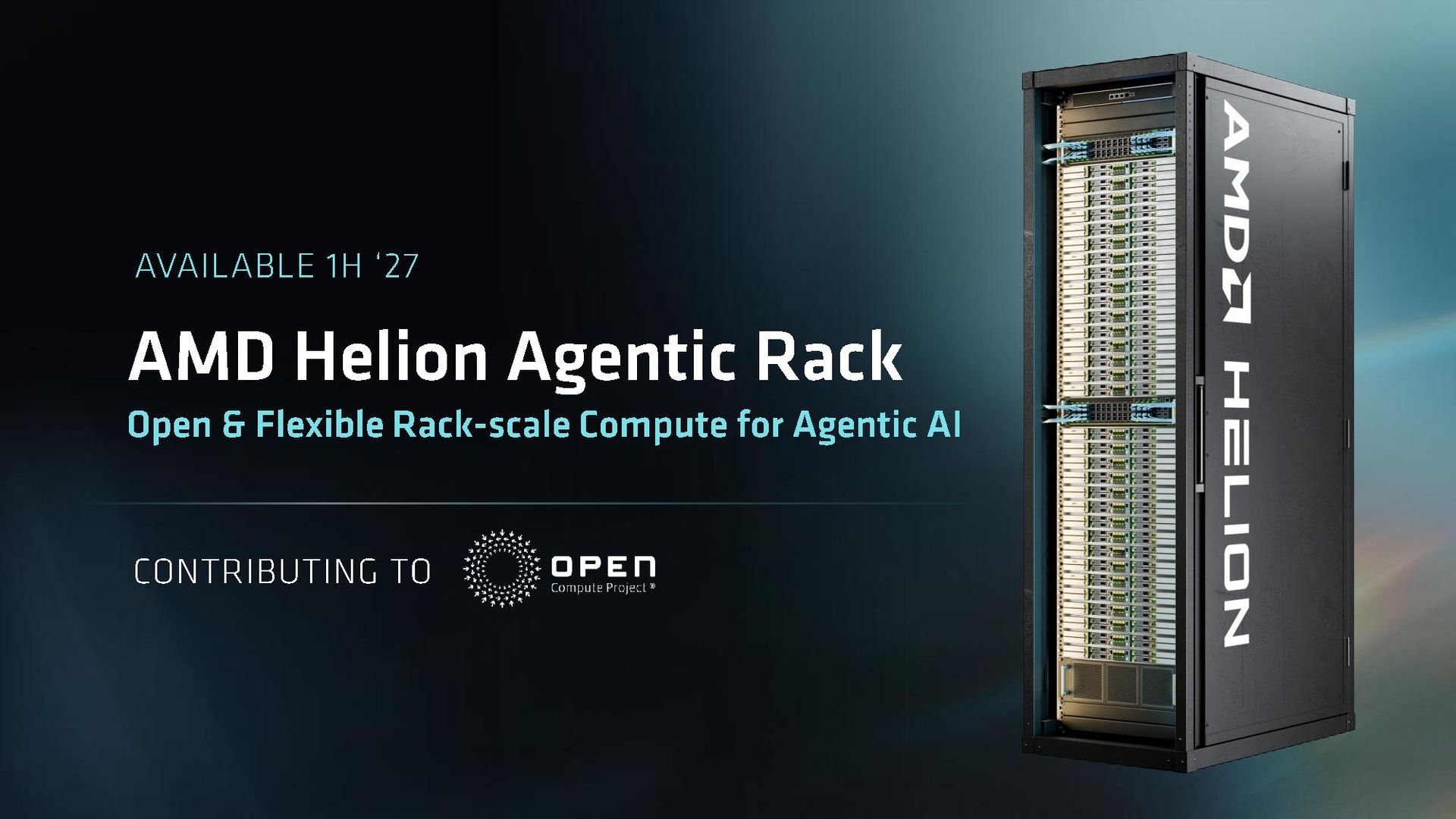
At the same time, the high end of the CPU business is moving toward density and scale. As Tom's Hardware reported, AMD used the OCP Global Summit to debut Helion, a rack-scale reference design for agentic AI that can house up to 32,768 Zen 6 'Venice' cores, with the rack design shipping next year in CPU-only and all-in-one configurations.

The contrast with the DDR4 story is sharp. In mainstream PCs, CPU makers are working to lower the cost of entry by accommodating older, cheaper memory. In AI infrastructure, they are working to cram as many cores as possible into a single rack-scale design and ship it to operators building out capacity.


This is where the economics of the CPU business are most favorable right now. Large-scale AI deployments can absorb high component costs because the systems are purchased as infrastructure rather than as individual upgrades. That lets vendors push core counts and reference designs aggressively, and it gives them a growth story that does not depend on convincing a household to rebuild a desktop.

The Overclocking Decline Is the Other Side of the Same Coin

Engadget's piece on why CPU overclocking is mostly a thing of the past fits the same pattern. The performance gains from overclocking modern chips are not as noteworthy as they used to be, which removes one of the main reasons enthusiasts once paid premiums for unlocked parts and elaborate cooling.

That decline is not a separate phenomenon from the DDR4 story. Both reflect a market where squeezing extra performance out of a CPU delivers less than it used to, while the surrounding components absorb more of the budget. When memory is the expensive part of a build, spending more on a chip and cooling to chase a modest frequency increase makes less sense. Buyers redirect that money toward the parts that actually constrain them.

The consequence for US chipmakers is that the premium desktop segment gets harder to justify on performance alone. Marketing around clock speeds and overclocking headroom resonates less when the measurable gains are smaller and the cost of a full build is higher. That pushes vendors toward value positioning and platform compatibility as selling points instead.

AI Racks Pull CPU Design in the Opposite Direction

At the same time, the high end of the CPU business is moving toward density and scale. As Tom's Hardware reported, AMD used the OCP Global Summit to debut Helion, a rack-scale reference design for agentic AI that can house up to 32,768 Zen 6 'Venice' cores, with the rack design shipping next year in CPU-only and all-in-one configurations.

The contrast with the DDR4 story is sharp. In mainstream PCs, CPU makers are working to lower the cost of entry by accommodating older, cheaper memory. In AI infrastructure, they are working to cram as many cores as possible into a single rack-scale design and ship it to operators building out capacity.

This is where the economics of the CPU business are most favorable right now. Large-scale AI deployments can absorb high component costs because the systems are purchased as infrastructure rather than as individual upgrades. That lets vendors push core counts and reference designs aggressively, and it gives them a growth story that does not depend on convincing a household to rebuild a desktop.

The Two-Track CPU Market Is Now the Baseline

Put together, the three stories describe a processor industry that has stopped pretending to serve one market. There is a cost-constrained track, where DDR4 support and modest performance gains define the product, and a scale-constrained track, where core density and rack integration define it. Overclocking, the enthusiast ritual that once bridged them, is losing its role as a selling point.

For US technology companies, that means the desktop and consumer CPU business is increasingly a compatibility and value play, while the AI infrastructure business is where design ambition and capital intensity concentrate. Both can be healthy, but they require different marketing, different supply chains, and different expectations from investors. Treating CPUs as a single performance-driven category will misread what is actually happening.

For US consumers, the near-term benefit is clear: the option to upgrade a processor without discarding a working memory kit. That is a real saving, and it exists because vendors are responding to prices rather than to a technology roadmap.

What to Watch

The DDR4 comeback should be judged by whether Intel, AMD, and board partners keep broadening support beyond the initial announcements, including Gigabyte's boards that The Verge noted. If memory prices ease, watch whether these platforms stay in the lineup or quietly disappear.

On the high end, the signal to track is the Helion rack design shipping next year in both CPU-only and all-in-one configurations, per Tom's Hardware. The balance between those two configurations will indicate how much of the AI CPU market wants processors alone versus fully integrated systems.

And on the desktop, the thing to watch is whether vendors keep leaning on clock speed and overclocking in their positioning, or whether they follow the evidence Engadget described and shift their pitch toward price, compatibility, and platform longevity. That choice will say more about the CPU business than any single launch.

More on this beat: Hardware on TechManNews.

#CPUs#DDR4#AMD#Intel#AI servers#overclocking

Newsletter

Get Tech News in Your Inbox

The latest AI, gadgets, software and startup stories from TechManNews, delivered every morning - free.