The Thread: Silicon's Expanding Job Description
The chip industry is no longer just selling horsepower. Across three otherwise unrelated stories logged on this beat, the same pattern appears: semiconductors are being asked to do cultural and commercial work that has nothing to do with processing power. A startup called Veritas is putting chips inside jewelry, trophies and fragrance bottles to prove authenticity, per TechCrunch. SK Hynix is trading export access to its China facility for a possible US NAND factory, also per TechCrunch. And a crop of 2026 films is treating Silicon Valley's output as a social problem rather than a marvel, per The Verge. The connective tissue is that the chip sector's center of gravity is shifting from what silicon computes to what silicon certifies, where it is built, and how the public judges it.
Veritas and the Authentication Market
Veritas, founded by former Tesla technical staffer Luci Holland, is expanding its anti-counterfeit chip beyond its original applications into jewelry, trophies and fragrance bottles, as TechCrunch reported. The target is the "superfake" problem: counterfeiters are getting better at replicating brand marks and passing dupes off as genuine. That is a hardware story, not a fashion story. Anti-counterfeit silicon is a new demand category for chipmakers, and it sits adjacent to existing authentication and secure-element work. For US technology companies, the appeal is a market where the buyer is a luxury house protecting margin rather than a consumer shopping on price. For US consumers, the practical question is whether a chip in a bottle or a bracelet meaningfully changes what they can verify at the point of sale, or whether it simply becomes another layer brands pay for and shoppers mostly ignore.
SK Hynix and the Geography of NAND
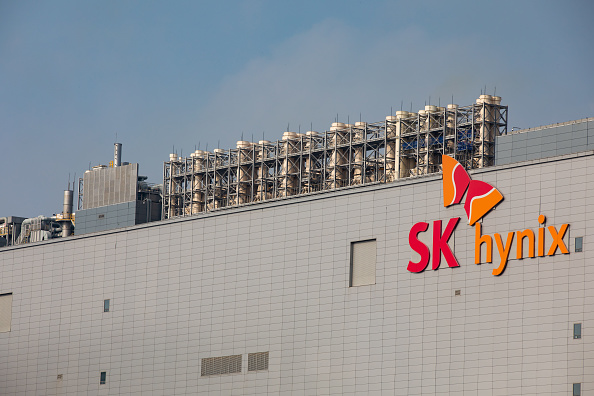
SK Hynix's Solidigm is reportedly seeking US approval to send more chipmaking equipment to its China facility while weighing a new NAND chip factory in America, as TechCrunch reported. That is a bargaining posture as much as a manufacturing decision. Equipment export approvals and factory siting are now traded against each other, which means the location of memory production is a negotiable asset rather than a fixed cost calculation. For US technology companies, the read is that memory supply remains exposed to policy rather than pure market forces. NAND underpins storage in phones, laptops, data centers and consumer devices, so any shift in where it is fabricated has downstream consequences for US buyers of memory and for the pricing of the devices that depend on it. For US consumers, the effect is indirect but real: memory is an input cost, and input costs show up in device prices.
Why the China-US Trade Matters to Buyers
What SK Hynix is doing is not unusual in isolation. What matters is that it confirms a pattern in which chipmakers manage two geographies at once and treat access to one as leverage for building in the other. The US has spent years pushing for more domestic semiconductor capacity. A reported willingness to build a NAND factory in America, in exchange for smoother equipment flows to China, shows how that push is being absorbed by the industry: not as a mandate, but as a chip to be played. For US technology companies, that means supply agreements carry geopolitical risk that cannot be fully hedged by contract. For US consumers, it means the long-running assumption that memory gets cheaper on a predictable schedule may not hold if siting decisions are driven by approval processes rather than efficiency.