The thread
Three recent product moves on the apps and services beat point the same direction. Opera revived its lightweight Air browser, Bluesky pushed its Attie app out to anyone who wants to build websites and games, and Amazon shipped a premium tablet that Engadget's review says gets almost everything right. None of these is a platform launch in the traditional sense. Each is an app behaving like a platform: absorbing the job that used to belong to an operating system, a storefront or a developer toolchain, and handing it to the person already holding the device.
The browser stops pretending to be a window
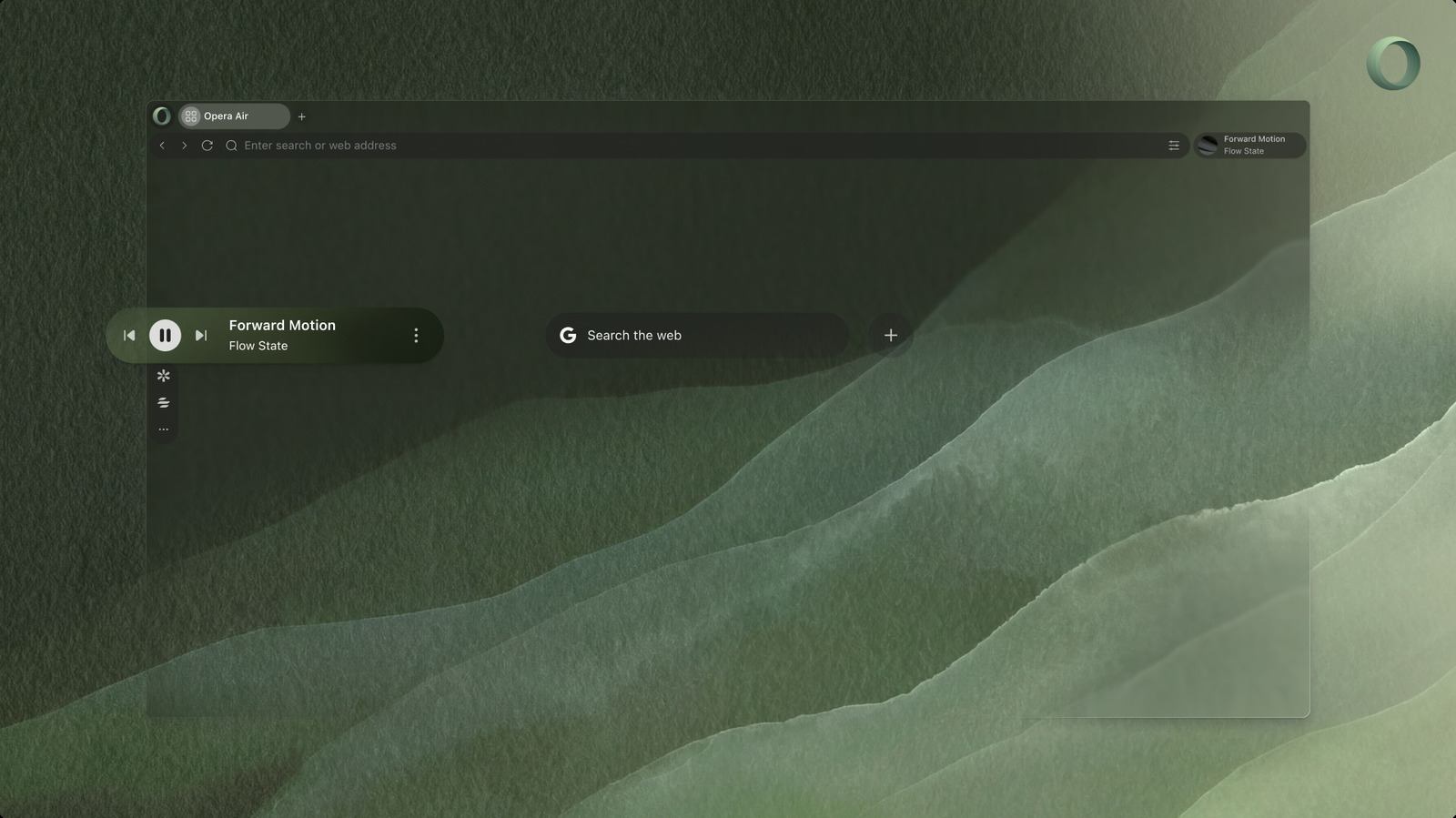
Opera's decision to bring back Air, as Engadget reported, is easy to read as nostalgia. Read it instead as a claim about what a browser is for. A lightweight browser is a deliberate subtraction: fewer processes, less memory, less insistence on being the center of the computing experience. That is a platform argument made by removal. If the browser can be small, it can run anywhere, including on hardware that was never meant to be a general-purpose computer.
That matters in the United States because the browser is still the most common place Americans encounter software they did not install. A browser that treats itself as a thin delivery layer for other services is functionally a platform without an app store attached. Opera is not alone in that posture, but the revival of an explicitly lightweight product signals that the company sees demand for a browser that gets out of the way rather than one that tries to become the desktop.
Attie hands the build tools to the audience
The Bluesky story is the sharpest version of the pattern. TechCrunch reported that Bluesky is expanding its AI-powered Attie app so that anyone can build websites, games, quizzes and other interactive experiences, and that those creations can tap into the social network's audience. That last clause is the platform move. Construction tools are common. Construction tools wired directly into a distribution graph are not.
What Bluesky is describing is closer to a social platform than a development environment. The hard part of building anything has never been making the thing; it has been getting anyone to see it. Attie's premise, as TechCrunch described it, collapses those two steps. Users make something, and the social network supplies the audience. The software supply chain that used to sit between an idea and a user - hosting, frameworks, app review, discovery - is being compressed into a single app.
For US technology companies, the implication is uncomfortable. The app store model depends on a bottleneck. If creation and distribution both live inside a social app, the bottleneck moves, and the economics move with it. For US consumers, the more immediate effect is that the line between using an app and shipping something on it gets thinner. That is a real shift in what ordinary users are expected to be able to do.
The tablet that has to justify itself
Engadget's review of the Alexa Tablet 12 Pro is the third data point, and the most grounded. The reviewer calls it a great value and says it gets almost everything right, while noting that Android apps still are not great on a big screen. That caveat is the tell. The hardware has caught up to the form factor; the software has not.
That is exactly the condition under which apps start acting like platforms. When a large-screen device cannot rely on a rich catalog of apps built specifically for it, the value has to come from somewhere else - from the services the device is bundled with, the assistant on top of it, and the first-party experiences that were designed for the screen. A tablet that gets almost everything right is a device whose usefulness is increasingly defined by the software Amazon controls rather than the software the wider Android ecosystem supplies.