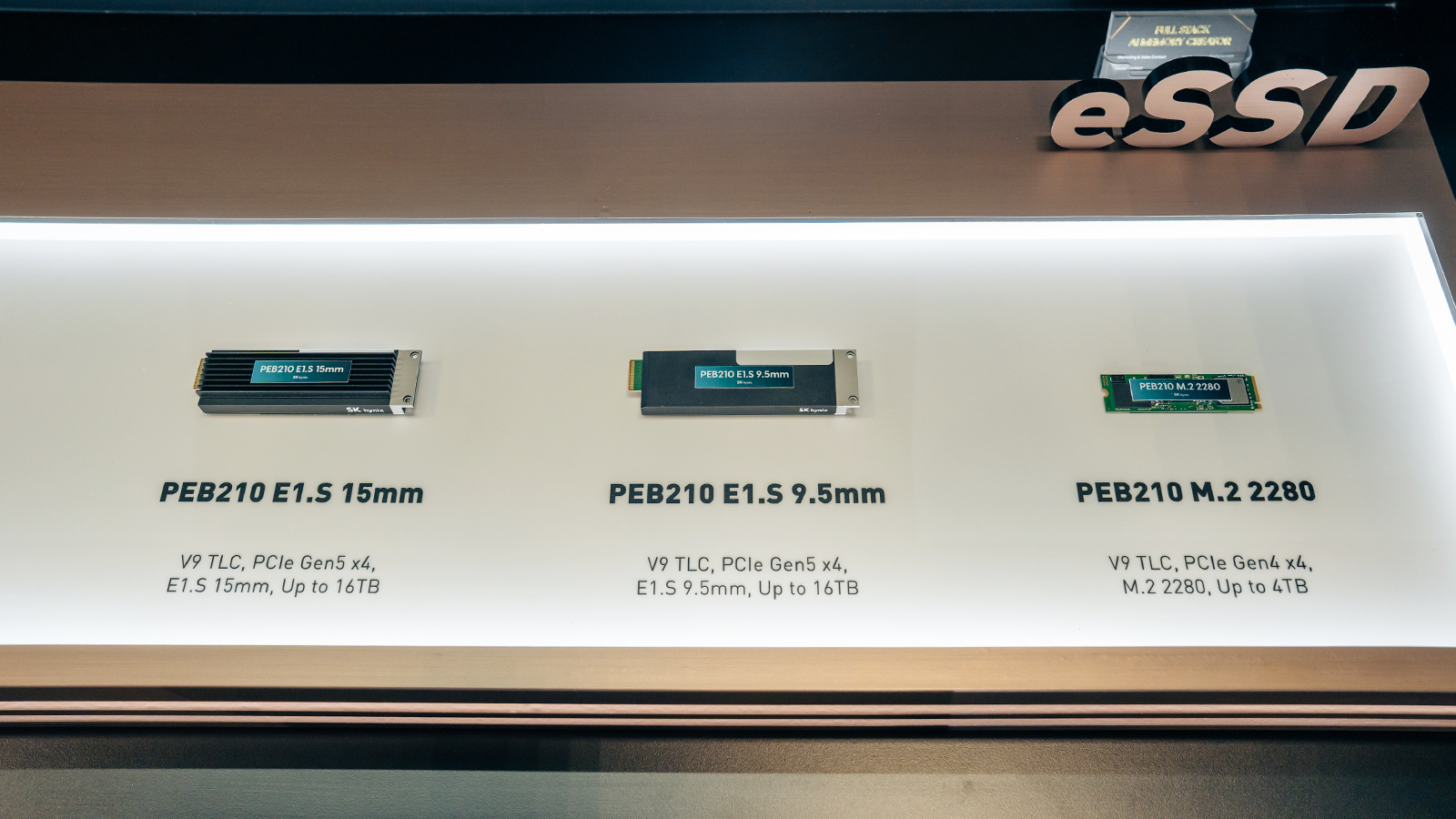
The CPU is no longer expected to do everything itself. Three recent disclosures on this beat - Apple's Minions, SK hynix's H-TPU, and Intel's retirement of SGX in favor of TDX - all describe the same move: pulling a distinct workload off the general-purpose core and handing it to something smaller and more specialized, or to a mechanism that does the job more cheaply. The pattern matters for US chipmakers and their customers because it changes what a processor is sold as, not just what it contains.\n\n## The general-purpose core is being asked to do less\n\nApple's researchers described Minions, an internal system that runs AI inference jobs on idle Apple Silicon Macs when GPUs are scarce, as Tom's Hardware reported. Read narrowly, that is a scheduling trick. Read against the other two stories, it is a statement about where inference is allowed to run: not only on the machine's primary accelerator, but on whatever silicon is sitting unused. SK hynix's H-TPU takes the opposite approach at the same problem. The company detailed tiny in-house cores that offload routine I/O from the Arm CPUs in its next enterprise SSD controllers, again per Tom's Hardware. Intel's move is a third variation. It plans to phase out SGX after Xeon Diamond Rapids and expand TDX instead, per Tom's Hardware, framing the shift around cloud, enterprise and agentic AI security needs.\n\nIn each case, a workload that used to sit on the main CPU - inference, storage I/O, trusted execution - is being reassigned to something narrower.\n\n## Specialization is arriving from both directions\n\nThe interesting part is that the pressure is coming from above and below at once. Apple's Minions pushes work outward to peer machines that already exist, treating the installed base of Macs as a pool rather than a set of individual computers. SK hynix pushes work inward, into the controller that already sits between the drive and the host, so the Arm cores there do less routine housekeeping. Intel pushes work sideways, from one security mechanism to a newer one better suited to the workloads it now expects.\n\nNone of these is a new instruction set or a faster clock. They are all reallocations. That is a different kind of progress than the one the CPU market has spent decades selling, and it is harder to express on a specification sheet.\n\n## Security moves from the chip to the platform\n\nIntel's SGX-to-TDX transition deserves separate attention because it is the clearest example of the CPU vendors redefining their own boundaries. SGX was an enclave model tied to the processor. TDX, as Intel describes the shift through Tom's Hardware's reporting, is aimed at cloud computing, enterprise workloads and agentic AI. That is a broader trust boundary than a single socket. It implies the security guarantee is increasingly a property of the deployment environment, not the chip alone.\n\nThat has a direct consequence for US enterprises buying servers. The questions they ask vendors shift from which processor supports which enclave to which cloud and which workload can be attested end to end. It also puts pressure on software stacks, which have to track a moving target while SGX support winds down after Diamond Rapids.\n\n## Storage controllers become small computers\n\nSK hynix's H-TPU is the most quietly consequential of the three for the US market, because storage controllers sit in nearly every enterprise system and are rarely discussed as compute. As drive speeds rise, the Arm cores inside those controllers face a growing share of routine I/O work. Adding tiny dedicated cores to absorb it is a recognition that the controller has become a small computer with its own scheduling problem.\n\nFor US hyperscalers and storage vendors, that changes the component conversation. The controller is no longer a passive part; it is a place where performance and power are decided. For consumers, the effect is indirect but real, since enterprise storage economics eventually reach cloud pricing.\n\n## What this does to the US CPU business\n\nThe strategic risk for US chipmakers is that as work migrates to specialized blocks, the value of the main core is harder to defend and harder to price. Apple can spread inference across idle Macs because it controls both the hardware and the operating system. SK hynix can put cores in its own controllers because it builds them. Intel can retire SGX because it owns the roadmap. Each is exploiting vertical control.\n\nThe companies that cannot do that - merchant CPU vendors selling into systems they do not own - face a market where customers ask why they should pay flagship prices for a core that is doing less of the total job. The counterargument is that orchestration, memory management and security coordination still belong to the main processor, and that someone has to decide what runs where. That is a real job, but it is a software-flavored job, and it is not obviously priced like a transistor-density story.\n\nFor US consumers, the near-term effects are modest: longer useful life for existing machines if idle capacity can be pooled, and better storage behavior that shows up as responsiveness rather than as a number on a box. The larger effect is on what gets built next. If inference, I/O and security increasingly live outside the main core, the next generation of US-designed processors will be judged on how well they delegate, not on how much they do alone.\n\n## What to watch\n\nWatch whether Intel's TDX expansion arrives on the schedule implied by the Diamond Rapids transition, and whether SGX-dependent software follows or stalls. Watch whether SK hynix's H-TPU appears in shipping enterprise controllers or remains a described design. Watch whether Apple's Minions stays an internal research system or becomes something customers are told about. And watch the specification sheets: if the CPU vendors start marketing orchestration and offload capability rather than raw core counts, this pattern will have become the industry's default framing rather than a set of isolated engineering choices.
More on this beat: Hardware on TechManNews.