The AI hardware market is no longer a single story about Nvidia selling every chip it can make. Three developments logged on this beat - Microsoft's new Maia 300 inference accelerator, Chinese firms reportedly buying a million Nvidia GPUs in a year, and a growing consumer culture of squeezing more life out of existing graphics cards - point to the same underlying shift: demand is maturing and splitting into distinct tiers, each with different buyers, constraints and economics. For US technology companies, that fragmentation is both an opening and a risk.
Microsoft Builds Its Own Inference Lane
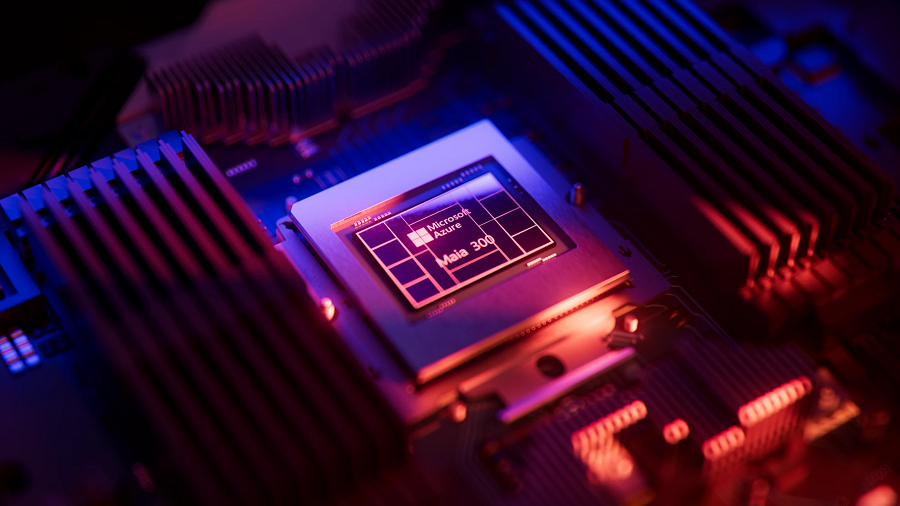
Microsoft's debut of the multichiplet Maia 300, as SiliconANGLE reported, is the clearest signal yet that the largest cloud buyers are no longer content to be pure consumers of Nvidia hardware. The chip is optimized specifically for inference, the workload that runs trained models rather than the training itself. Microsoft estimates it can process 40% more tokens per megawatt than "leading GPU-based systems," a phrase that reads as a direct reference to Nvidia's products.
The significance is not the benchmark. It is the placement. Inference is where the recurring cost lives. Training a frontier model is a capital event; serving it to millions of users is an operating expense that compounds every day. A hyperscaler that can shift even a portion of inference onto its own silicon controls that cost curve directly. Microsoft also stated the Maia series will continue, which matters more than any single generation: a roadmap signals institutional commitment, not a one-off experiment.
The 40% figure is Microsoft's own estimate, and independent verification is not yet available. But the direction is unambiguous. Vertically integrated inference silicon is now a strategic priority for the companies that buy the most GPUs.
China's Demand Compounds the Supply Question
While Microsoft works to reduce its dependence on Nvidia for serving models, Tom's Hardware reports that Chinese AI companies may have bought 1 million Nvidia GPUs in a single year. That is an enormous volume, and it runs against the assumption that export controls have meaningfully choked off Chinese access to advanced accelerators.
The two stories interact. If a hyperscaler like Microsoft can move a meaningful share of inference to in-house parts, it frees Nvidia supply for other buyers - including the export-eligible SKUs that Chinese firms can still purchase. A million units is not a rounding error. It represents real capacity that is not available to US cloud providers, US enterprises or US researchers at a moment when everyone is competing for the same fabs and packaging lines.
The policy implication is uncomfortable. Restrictions aimed at limiting Chinese AI compute coexist with evidence that Chinese buyers acquired GPUs at scale. Whether that volume reflects stockpiling, workarounds, or simply the legal purchase of downgraded parts is not established by the report. What is established is that Chinese demand is large enough to matter in global allocation.
The Upgrade Economy Is Not a Footnote
Engadget's guide to boosting GPU performance without buying new hardware looks like consumer advice, but it belongs in the same analysis. It reflects a user base that has been priced out of the top of the market and is optimizing what it already owns. The trade-off described is explicit: older cards lack newer features, but with the right settings they can still deliver high frame rates.
This is the third tier. Hyperscalers build custom inference silicon. Large AI labs and Chinese buyers absorb whatever Nvidia can ship. Everyone else - consumers, small studios, hobbyist AI users - extends the life of existing cards because replacement is expensive or unavailable. That behavior reduces pressure on the low end of the GPU market and keeps older inventory economically productive far longer than a normal replacement cycle would suggest.