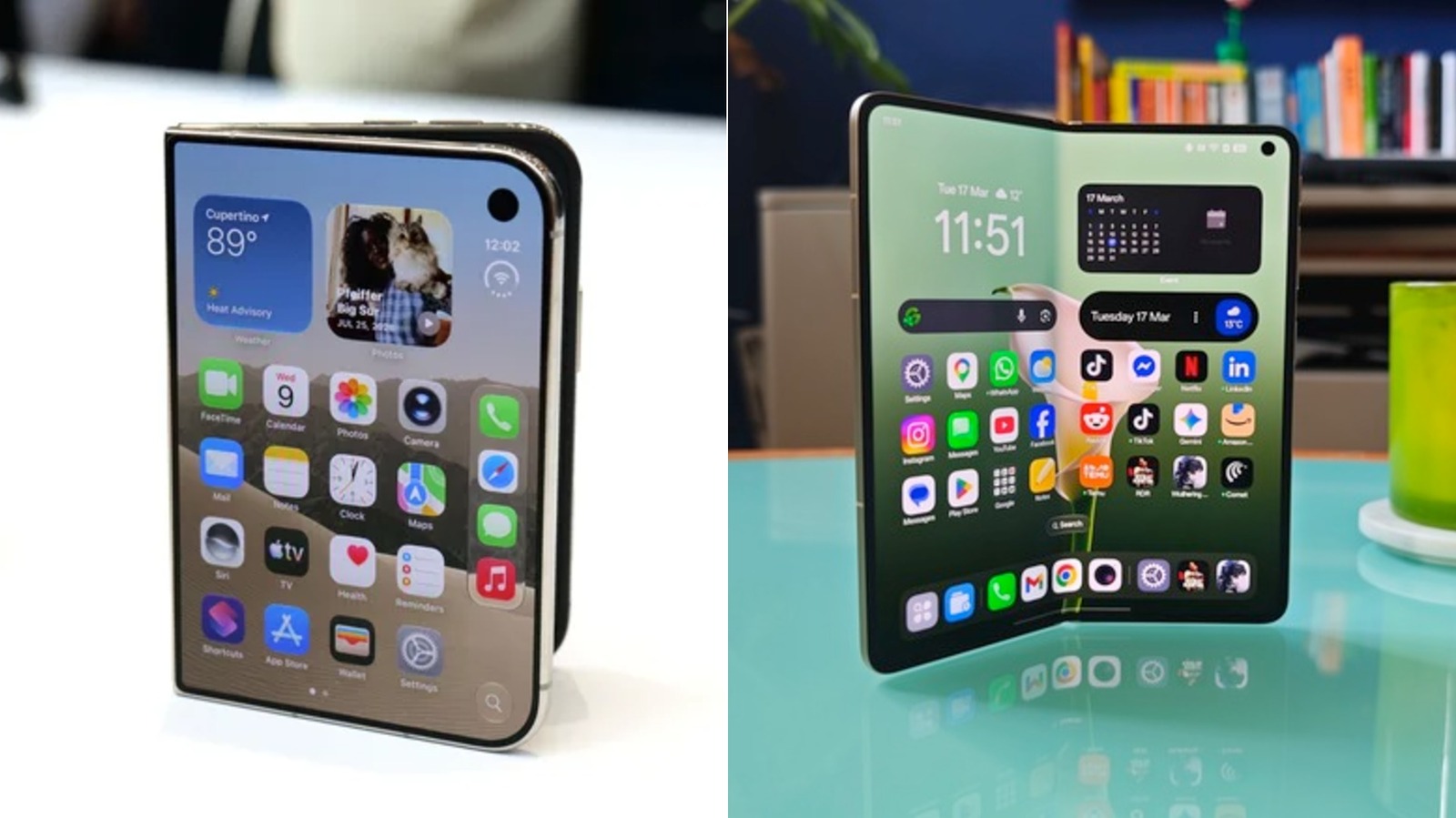
Apple's long-anticipated entry into the foldable market, confirmed by Engadget's report on the iPhone Duo, signals more than a new product category. Taken alongside the practical user questions dominating the newsroom's smartphone coverage this week - how to move playlists between platforms and whether an old Android handset can serve as a computer speaker - the pattern is clear. The smartphone beat is no longer organized around frontier speculation; it is increasingly about consolidation, interoperability, and extracting value from devices people already own. For US consumers and the companies that serve them, that shift carries real consequences.
Foldables Graduate From Experiment to Rivalry
Engadget's comparison of the iPhone Duo and the Oppo Find N6 frames the moment as one of direct competition rather than curiosity. The report describes the foldable scene as "exploding" precisely because Apple has now entered the arena, and it treats the comparison as a straightforward matchup between two shipping devices. That framing matters. For years, foldables were covered as experiments - concepts that might or might not find a market. A head-to-head comparison between an Apple foldable and an established Asian rival presumes that both are legitimate purchase options for ordinary buyers. The question has moved from whether foldables would work to which one a buyer should choose.
That is a maturation signal for the entire category. When the dominant US platform holder commits to a form factor, accessory makers, app developers, and carriers all get a clearer target. US consumers, in turn, get the competition that tends to follow: more choice at the high end and more pressure on price and durability claims over time. The comparison piece itself is evidence that the market now supports side-by-side evaluation rather than introductory explainers.
The Migration Problem Is the Platform Problem
Engadget's guide to transferring Spotify playlists and songs to Apple Music is, on its face, a how-to. As analysis, it is something more useful: a measure of how much friction still sits between the two dominant mobile ecosystems. The guide covers iPhone, iPad, Android, and the web, and it tells readers what they need to know before moving their songs over. The existence of that multi-platform instruction set reveals that switching costs are real and that they are felt at the level of personal data rather than hardware.
For US technology companies, this is the competitive terrain that matters. Apple's services business depends on keeping users inside its ecosystem, and music libraries are among the stickiest assets a user accumulates. The fact that a mainstream outlet publishes a step-by-step guide for leaving one service for another shows that the wall between platforms is porous enough to require navigation but tall enough to demand instructions. Neither platform is locked shut, but neither is frictionless. Consumers benefit when that friction is documented and reduced; platform holders benefit when it is not. The guide is a small artifact of a large, ongoing tension.
Repurposing as a Response to Mature Hardware
Engadget's question about using an old Android phone as a computer speaker points to a third strand: what happens to smartphones after their primary life ends. The story notes that an old Android phone lying around may be able to serve as a computer speaker, giving the device new life. This is not a story about innovation at the frontier. It is a story about the installed base - the billions of handsets already in drawers and closets - and about users looking for value from hardware they have already paid for.