AI Hardware's Cost Shift Lands on Users and Neighbors
Article

AI Hardware's Cost Shift Lands on Users and Neighbors

DLSS 5 on Radeon, Microsoft's silence, and $10,000 checks all point to one pattern: AI hardware economics are being pushed outward.

JaysuryaSeptember 28, 20265 min read

Photo: Tom's Hardware

The Thread

The GPU and AI hardware buildout is increasingly pushing its costs and its lock-ins outward, onto users and onto the communities that host it. Three recent stories on this beat look unrelated at first glance, but they share a common structure: the companies doing the building are asking someone else to absorb the friction. The result is a market where the hardware layer is no longer just a technical question. It is a question of who pays, who is asked, and who is left answering.

What the Modding Story Actually Shows

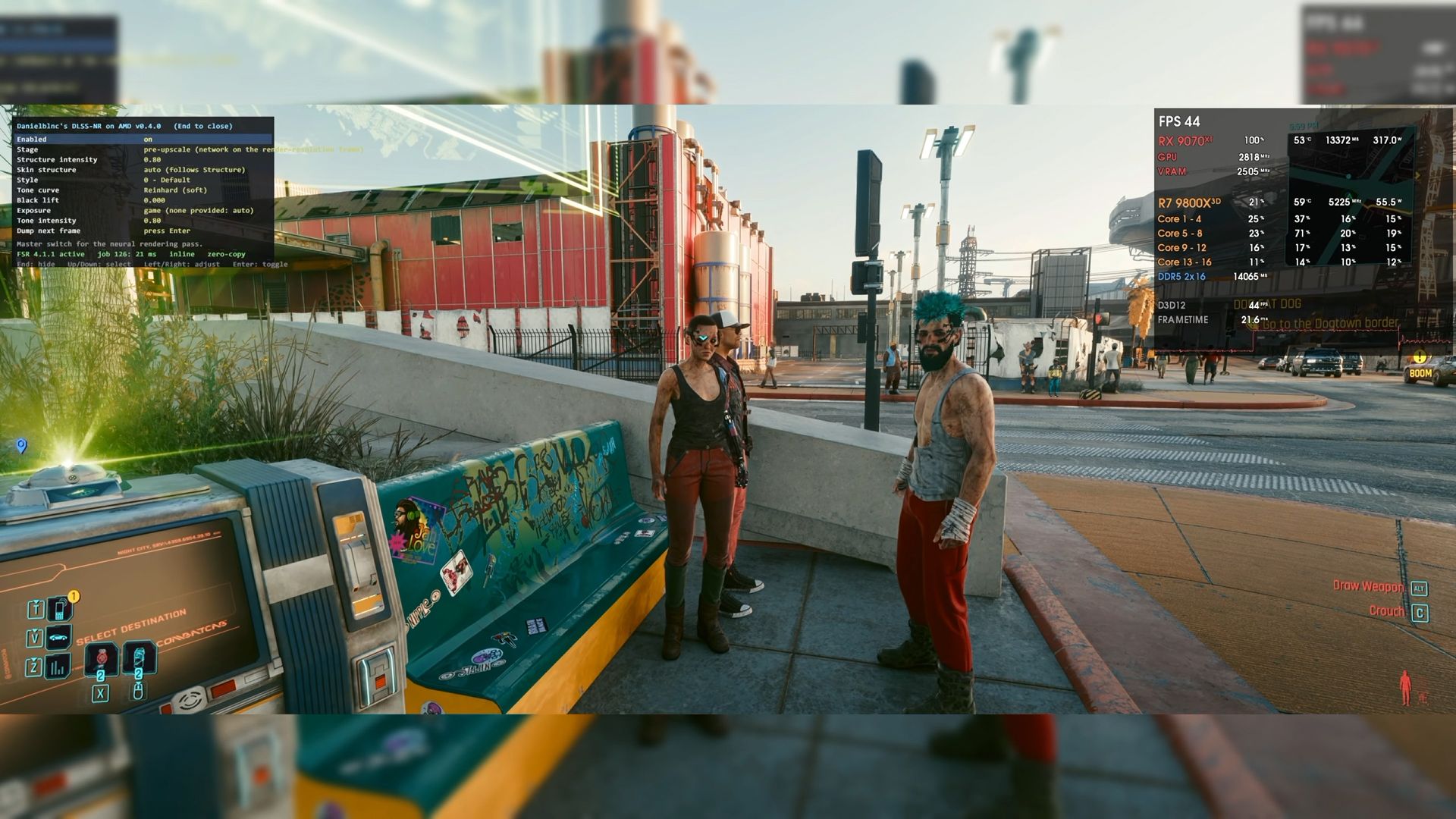
Tom's Hardware reported that an unofficial project has brought Nvidia's DLSS 5 neural rendering to AMD Radeon GPUs, with early testing showing performance in Cyberpunk 2077 climbing from around 30 frames per second to 50 frames per second after rapid optimization. The headline number is the frame rate jump. The more important fact is the direction of travel. A feature that Nvidia treats as part of its hardware and software stack was reproduced on a competitor's cards by outside developers, without Nvidia's involvement.

That matters because neural rendering has become one of the main reasons a buyer chooses one GPU over another. If DLSS-class upscaling can be ported to Radeon hardware, the software moat that Nvidia has spent years building becomes less of a lock and more of a convenience. It also tells US GPU buyers something practical: the value of a card may increasingly depend on what third parties can make it do, not just what the vendor ships on day one.

The caveat is that this is unofficial work. It is not a supported feature, it may not be stable, and it depends on the people maintaining it. But it is a real signal about where the technical barriers sit. Neural rendering is not so tightly bound to one vendor's silicon that it cannot be moved. For AMD, that is an opportunity it did not have to pay for. For Nvidia, it is a reminder that software advantages can be copied faster than hardware advantages can be built.

Why This Is a Cost Story

It is tempting to read the DLSS 5 port as purely technical news. It is better understood as a cost story. Getting more frames out of existing hardware is a substitute for buying new hardware. If a Radeon owner can reach 50 FPS in a demanding title instead of 30 FPS, the pressure to upgrade weakens. That is a direct transfer of value from the vendor's roadmap to the user's existing card.

The same logic runs through the rest of the beat. AI hardware is expensive to build and expensive to power, and the industry has spent the last few years deciding who absorbs that expense. The answer, increasingly, is not the company booking the revenue.

Microsoft's Silence on Data Center Costs

Ars Technica reported that Microsoft went quiet after church groups asked for 1 percent of data center costs, with the outlet quoting the line that Microsoft claims to want to be a good neighbor, but the jury is still out. The specific ask is modest and the response is notable for what it is not. There is no counter-offer described, no public negotiation, just silence.

Silence is a position. It means the company is not accepting the framing that data centers create a community cost that should be shared. It also means the debate is being conducted without the company at the table, which tends to push the argument into local government and, eventually, into the terms under which future facilities get approved.

For US technology companies, this is the practical risk. Data centers are not like software. They occupy land, draw power, and generate local opposition that can delay or block projects. A company that stays quiet when asked about cost-sharing gives opponents a simple story: the benefits are regional and the burdens are local. That story travels, and it travels from one proposed site to the next.

The $10,000 Check as a Pricing Signal

Tom's Hardware reported that a data center developer is offering checks of $10,000 to 4,500 households if a 1,300-acre facility is approved. The arithmetic here is straightforward. Multiplied across the stated households, the offer represents a direct payment tied to a planning outcome, not a general community benefit fund.

The pattern is the same as the Microsoft story, just with the opposite tactic. One company declines to discuss sharing costs. Another puts a number on consent and attaches it to approval. Both are responses to the same underlying condition: AI hardware capacity now has to be sited somewhere, and the people who live near it have learned that their agreement is a resource.

It is worth being precise about what the offer is and is not. It is a payment contingent on approval, aimed at swaying public sentiment. It is not a commitment to ongoing power costs, water use, noise, or road wear. Those are the recurring costs that communities usually worry about, and the one-time nature of the check is exactly the point. The developer is converting a long-term local burden into a short-term transaction.

For US consumers, this is less remote than it sounds. The cost of siting AI hardware shows up in electricity rates, land use, and local tax arrangements. If the standard model becomes one-time payments rather than ongoing cost-sharing, the recurring costs stay with the residents.

The Common Structure

Put the three stories side by side and the shape is clear. Nvidia's software advantage is being carried to AMD hardware by unpaid outsiders. Microsoft is declining to engage on the recurring costs of the facilities that host its AI workloads. A developer is paying households to accept a facility rather than negotiating a durable arrangement with them.

In each case, the party with the most capital is not the party absorbing the friction. Users absorb the uncertainty of an unsupported mod. Communities absorb the long-term costs of a facility. The vendor keeps the option and defers the obligation.

This is not a conspiracy. It is what happens when a technology buildout moves faster than the institutions around it. GPUs and the data centers that fill them are being deployed at a pace that outstrips the norms for software compatibility and for local infrastructure deals. The norms catch up later, usually through conflict.

What to Watch

The DLSS 5 port is the one to track most closely on this beat. If it holds up, it weakens the software lock-in argument that has justified premium pricing on Nvidia cards in the US market. If it fades, the moat holds and the frame-rate gap stays a purchasing decision. Either way, the outcome is measurable in benchmarks rather than in statements.

On the data center side, watch whether Microsoft or similar operators move from silence to a stated position on community cost-sharing, and whether the $10,000 check model is repeated at other sites. A single offer is an anecdote. The same offer appearing across multiple proposals would be a pricing convention for local consent. That is the number to watch next, because it will tell US consumers what their agreement is worth to the companies building AI hardware in 2026 and beyond.

Sources

Tom's Hardware, Ars Technica (as cited above).

More on this beat: Hardware on TechManNews.

#GPUs#AI Hardware#Data Centers#DLSS 5#Nvidia#AMD

Newsletter

Get Tech News in Your Inbox

The latest AI, gadgets, software and startup stories from TechManNews, delivered every morning - free.