The pattern running through the latest apps and services news is a tightening of control over how software works on the devices and pipelines people actually use. Platform owners are closing off older, messier paths, while the tools that verify software are being rebuilt around AI agents that need far less human maintenance. The result is an app economy that is simultaneously easier for ordinary users and more automated behind the scenes.
Easier Phones, Narrower Paths
Engadget reports that an easy setting change can make an Android phone feel instantly faster, speeding up navigation and app switching with very little setup. That story is a reminder that the phone experience is now largely a settings and services story. The performance users feel is often decided not by the hardware in their hand but by what the operating system and its bundled apps choose to prioritize, and by how many background services they can quietly enable or disable. For US consumers, the payoff is real: the gap between a sluggish phone and a responsive one may be a toggle rather than a new purchase, which stretches replacement cycles and shifts attention away from spec sheets.
At the same time, Engadget notes that the iPhone hates printer cables. AirPrint is the easiest path to printing on iPhone, other apps can enable printing, but printing with a cable is not supported. That is not a bug so much as a design choice. Apple has routed a common task through its own wireless protocol and the apps that support it, and the cable route is simply closed. For US consumers, that means fewer hardware headaches in the common case but also less recourse when the sanctioned path fails. For accessory and peripheral makers, it means the plug is no longer a neutral interface; the platform is.
Taken together, the two phone stories point the same direction. The most visible friction in mobile software is no longer about raw capability. It is about which services the platform blesses and which it quietly retires. Apps that follow the sanctioned route get to feel fast and seamless. Apps and accessories that rely on older, more open connections increasingly find themselves outside the supported path.
The Testing Function Moves Inward
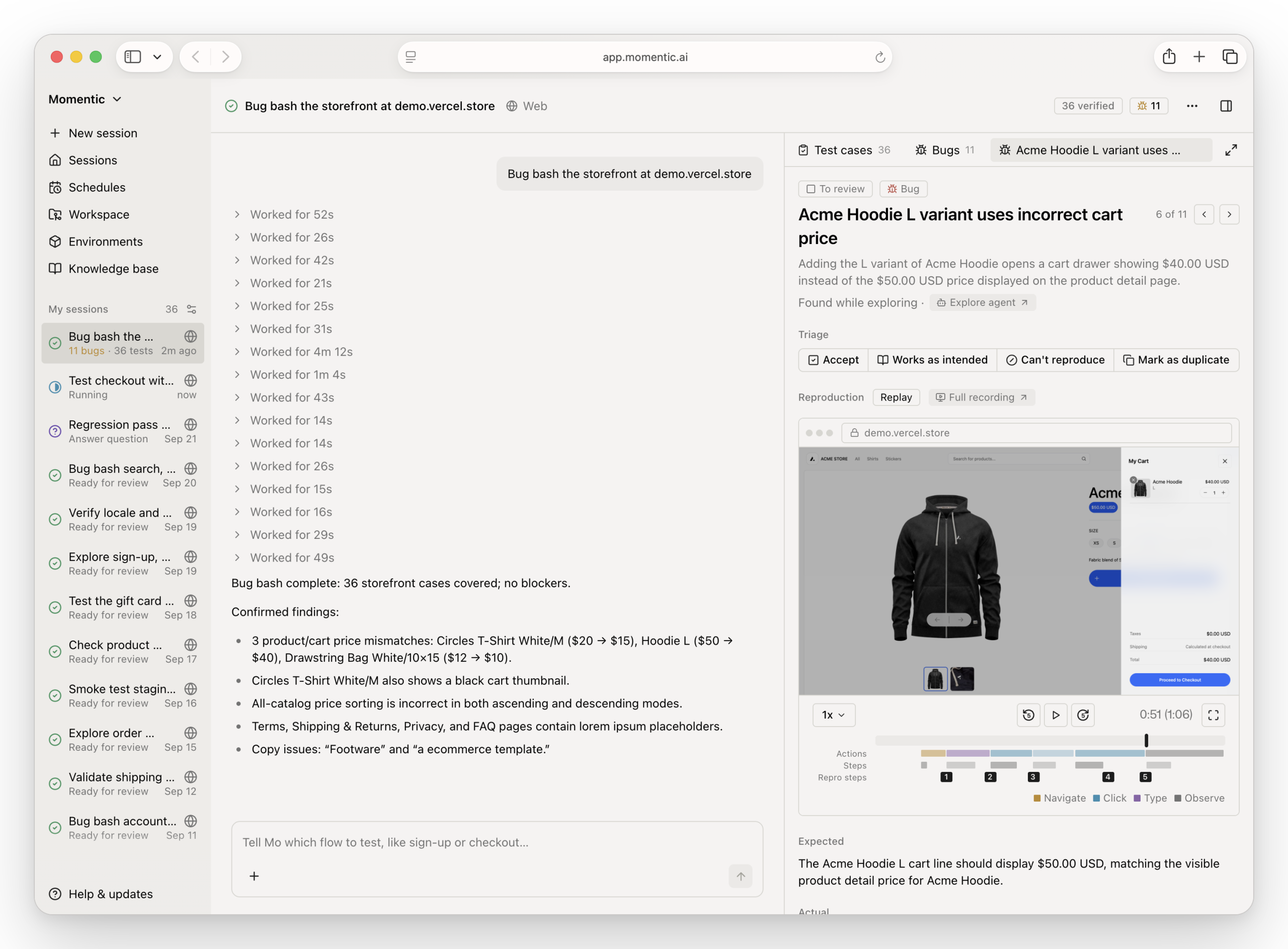
The third story shows the same logic moving into the software supply chain itself. SiliconANGLE reports that Momentic Inc., an AI-powered software testing and quality assurance platform, launched Mo, an AI agent that lets developers test software without maintaining a collection of scripts. The story is explicit about why this matters: whenever code is generated, whether written by a human or an AI agent, someone or something still has to test the app. Testing is not optional, and the volume of code being produced keeps rising.
The traditional answer was a script library, a pile of brittle tests that humans wrote and maintained. That approach does not scale well when code is generated quickly and changed constantly. An agent that tests without a maintained script collection changes the economics of quality assurance. It also changes who owns the testing function. Instead of a test suite as a long-lived asset that a team curates, testing becomes a service the development pipeline calls on demand. That is a platform move applied to the toolchain: control over the verification step, not just the build step.