AI Agents Gain Power While Users Lose Ground
Article

AI Agents Gain Power While Users Lose Ground

Google and Nvidia are pushing agentic AI forward while quietly reducing user control and access, raising hard questions for the US market.

ManishankarNovember 18, 20265 min read

Photo: TechCrunch

The throughline in this week's AI news is a widening gap between what AI systems are permitted to do and what users can see, keep, or take back. Google's Gemini is being allowed to act for users - making calls, logging into sites, buying things - while chat retention quietly stretches from 72 hours to two months even with history off. Meanwhile Nvidia has stopped shipping advanced AI chips to China despite White House approval, showing that capability expansion is now conditioned as much by corporate and geopolitical strategy as by product ambition.

Agents Get the Keys

Google's expansion of Gemini Tasks is the clearest signal of where consumer AI is heading. As TechCrunch reported, the Task mode can coordinate calls, log into websites, and make purchases on the user's behalf. That is a meaningful shift in the trust model: the assistant is not merely drafting text but acting with the user's credentials and, potentially, the user's money. For US consumers, the promise is convenience - fewer forms, fewer hold queues - but the exposure is concentrated. Delegated login and delegated payment mean the AI becomes a chokepoint for identity and fraud. The product logic is straightforward: whoever holds the task holds the user. Whether US households are ready to hand over those tasks is a separate question, and one the product rollout implicitly answers for them by normalizing the delegation before the norms exist.

Retention Without a History Switch

Running in the opposite direction is Google's change to Gemini chat retention. TechCrunch reported that Google is extending retention to two months, up from 72 hours, and that the change applies even when history is off, rolling out globally over the coming weeks. The detail that matters is the phrase "even with history off." A setting named for privacy no longer functions as a user might reasonably read it. For US consumers, this is a governance question disguised as a settings toggle: if the off switch does not mean off, the consent model is doing less work than it appears to. Regulators and litigants in the US have grown attentive to exactly this kind of gap between labeling and behavior. The practical result is that conversations with an AI assistant now carry a longer evidentiary and privacy tail than many users will assume, and the burden falls on the user to understand a policy most will never read.

The Export Freeze That Approval Didn't Prevent

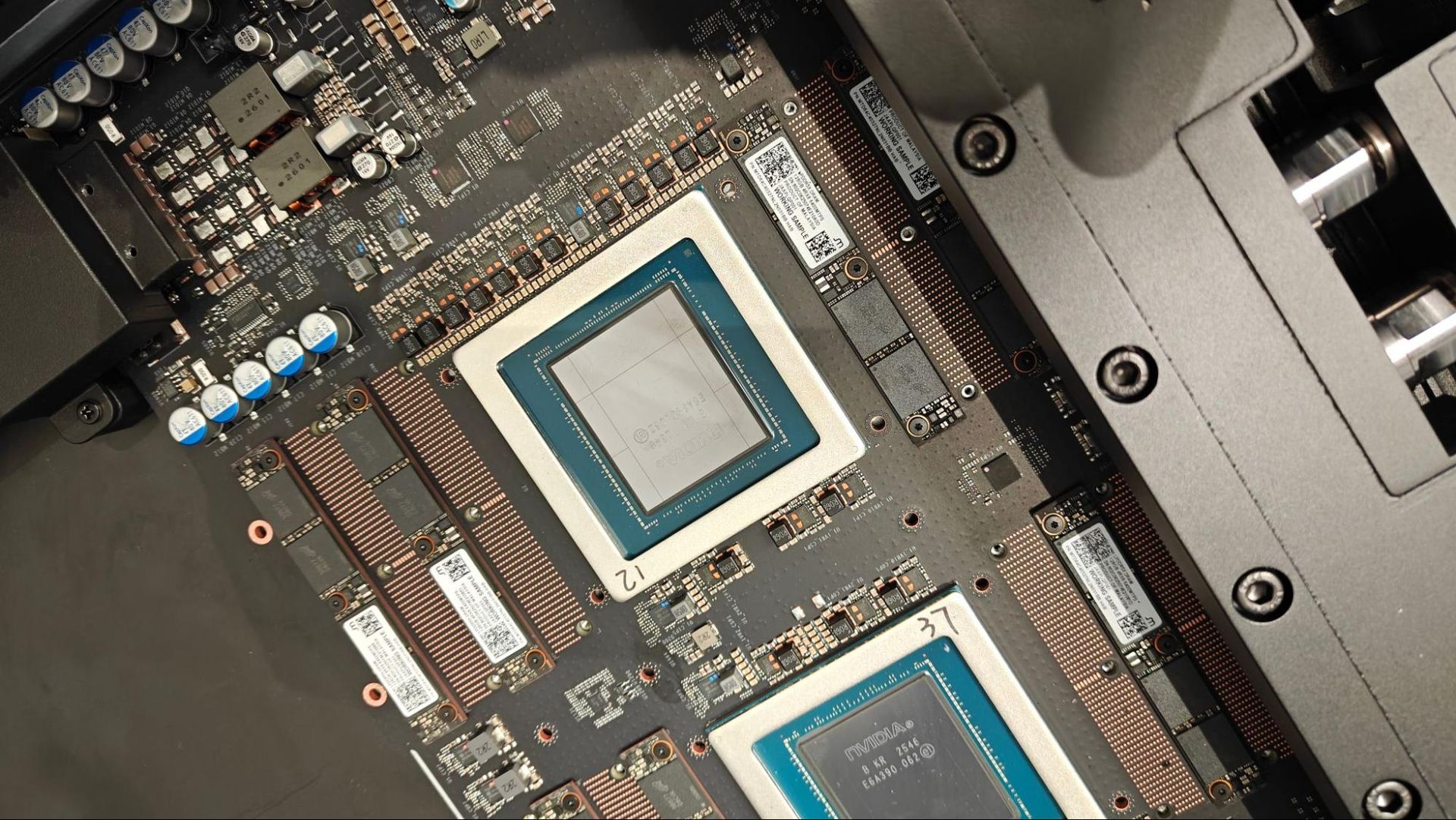
Nvidia's halt on advanced AI chip shipments to China complicates any simple story about export controls working. As The Verge reported, Nvidia has stopped sending its advanced AI chips to China despite approval it received from the White House in December last year. The announcement came from interim CEO Colette Kress during an earnings call on Tuesday, and The Verge framed it as a notable shift for a company that, under former CEO Jensen Huang, had pursued the China market aggressively. The lesson for US technology companies is that a government green light is not the same as a business decision to proceed. Export permissions can be granted and still go unused when the strategic, financial, or political calculus shifts. For the US market, that means supply that might have gone abroad stays closer to home - a dynamic that affects allocation, pricing, and competitive positioning among domestic AI buyers, without any formal policy change required.
Capital Keeps Flowing Into the Control Layer

If agents are taking on more tasks, someone has to supervise the money and the process, and investors are funding precisely that layer. TechCrunch reported that Payhawk, founded in 2018, raised $280 million at a $2 billion valuation for its enterprise financial management platform, which helps companies track expenses and procurement using AI agents. The size of the raise, relative to the company's founding date, says something about where confidence sits in 2026: not in the flashiest consumer assistant, but in the systems that audit, constrain, and account for what automated agents do. For US enterprises, the message is that agent deployment is increasingly paired with agent oversight. The companies selling automation are increasingly selling the controls around it, and buyers are paying for both.

Who Bears the Risk

Put these stories together and a pattern emerges. Capability is expanding on one side - agents doing more, enterprises automating procurement, chips being allocated under new constraints - while the mechanisms of user control are being redefined on the other, sometimes in ways that narrow rather than widen user authority. The retention change is the sharpest example, because it alters what "off" means for US consumers without requiring them to do anything at all. The Gemini Tasks expansion is subtler: every delegated call and purchase is a small transfer of agency, and the aggregate effect is a user base habituated to letting software act on its behalf. The Nvidia story adds a third dimension, showing that even government-approved capability can be withheld at corporate discretion. The common thread is that decisions about what AI may do - and what records of it persist - are increasingly made above the user's head.

For US technology companies, the competitive pressure runs toward more autonomy and more data, because both improve the product and the model. The risk is that consumer trust, once spent, is difficult to rebuild, and that US regulators eventually respond to the gap between privacy labels and privacy behavior with rules rather than guidance. For US consumers, the near-term reality is an assistant that can do more for them and remember more about them, with fewer meaningful levers to limit either.

What to Watch

Three concrete signals follow from the material above. First, whether the Gemini Tasks rollout produces visible friction around purchases and logins - disputes, reversals, or authentication failures - that would test the delegation model in public. Second, how US users and regulators respond to a retention policy that extends to two months even with history off; the global rollout over the coming weeks gives a short window to observe complaints and any policy clarification. Third, whether Nvidia's halt on advanced AI chip shipments to China holds, and whether the interim leadership's posture differs in practice from the Huang era. The Payhawk raise is a useful barometer alongside these: continued funding at a $2 billion valuation for AI-agent expense oversight would suggest the market expects the control layer to grow as fast as the autonomy it governs.

More on this beat: AI on TechManNews.

#AI agents#Google Gemini#Nvidia#data privacy#enterprise AI#export controls

Newsletter

Get Tech News in Your Inbox

The latest AI, gadgets, software and startup stories from TechManNews, delivered every morning - free.