As automakers increasingly abandon phone mirroring systems in favor of native in-car software, two Google offerings are drawing attention for doing similar work under different names. Android Automotive and Google Built-in are both independent infotainment systems from Google that run without a phone, unlike Android Auto, which only projects a handset's display onto a dashboard. The distinction matters for US drivers because it shapes what their screens can do, and neither system requires an Android phone, though linking a car and phone to one Google account can improve compatibility.
Android Automotive Operating System is a full-stack, open-source solution that manufacturers build into vehicles to control the radio, climate, cameras, mirrors, lighting, seat adjustments and instrument clusters. Its flexibility lets automakers design their own interfaces and add Android in-house applications. Rivian relies on the architecture for its Rivian OS but declines to put Google-specific branding in it, meaning some drivers may not know Google software is underneath.
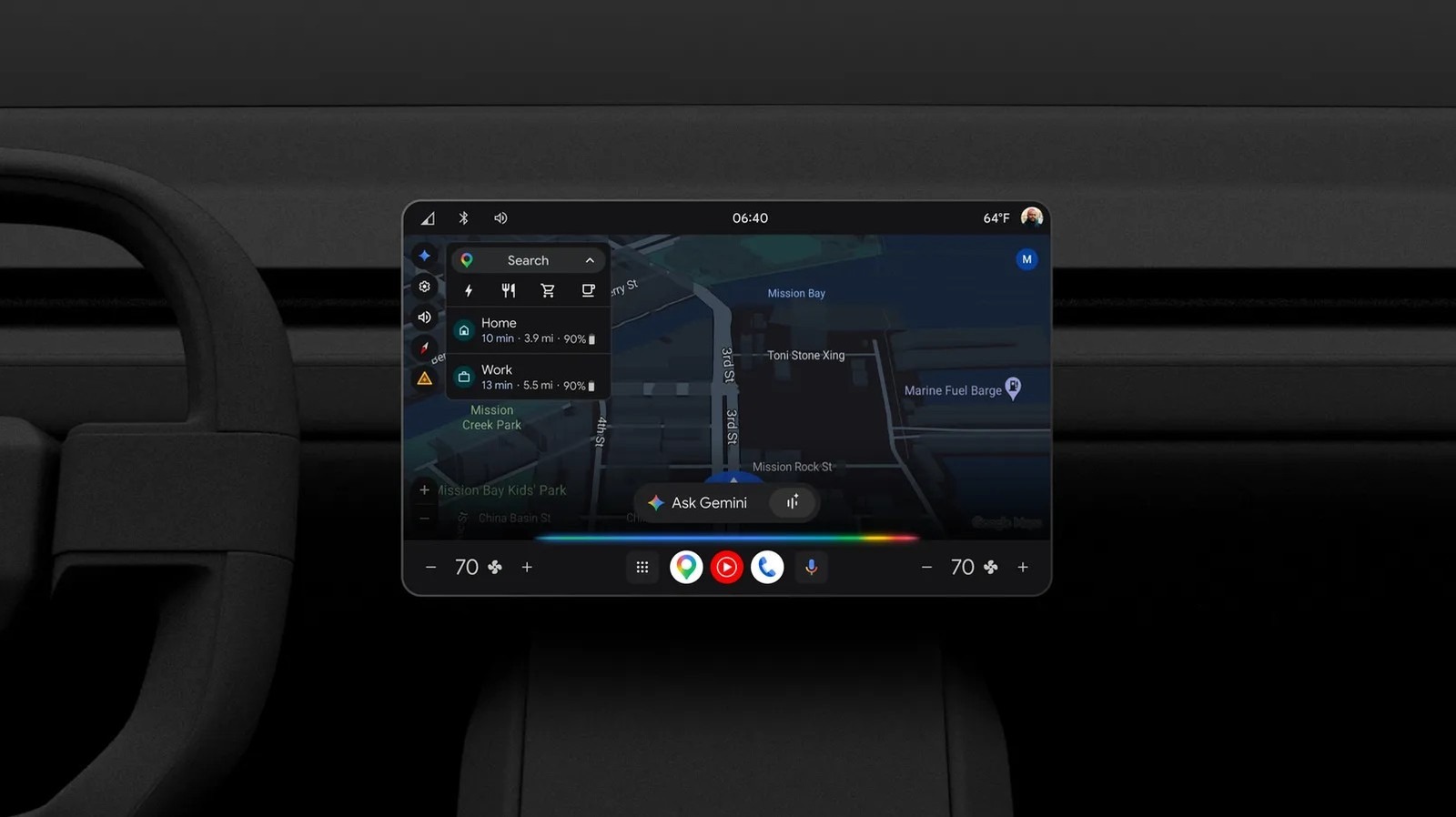
Google Built-in is different: a licensed collection of applications that manufacturers add to their Android Automotive systems. Debuting in 2020, it gives drivers access to apps including Google Maps and Gemini, plus the Google Play Store for media services such as Spotify, YouTube and Google Play. Sixteen brands offer it, among them Honda, Volvo, Chevy, Nissan, Ford, BYD and Renault.
Gemini is now officially replacing Google Assistant as the in-car chatbot across those sixteen brands. The company is folding AI features into its Built-in suite, including Google Maps updates with real-time traffic, EV-tailored routing and smart navigation, along with voice commands to check email and messages, build playlists or order dinner. A feature called Gemini Live lets drivers converse about a destination and can tap the car's front-facing camera.
The Gemini rollout began earlier this summer, starting with cars that support Android Auto before reaching Google Built-in brands such as Honda, Chevrolet and Volvo. Some customers, including Ford and Rivian, have instead invested in their own AI assistants. GM is reportedly pursuing both, bringing Gemini to its Google Built-in system while developing a proprietary in-vehicle assistant due later this year.
GM executive Anna Santos told CNBC that the assistant will use GM vehicle knowledge and OnStar intelligence to go beyond what a general purpose assistant can do. That dual-track approach reflects a broader race among manufacturers to add AI while building homegrown agents, leaving open how Google's in-car software strategy evolves.
More software news from TechManNews.