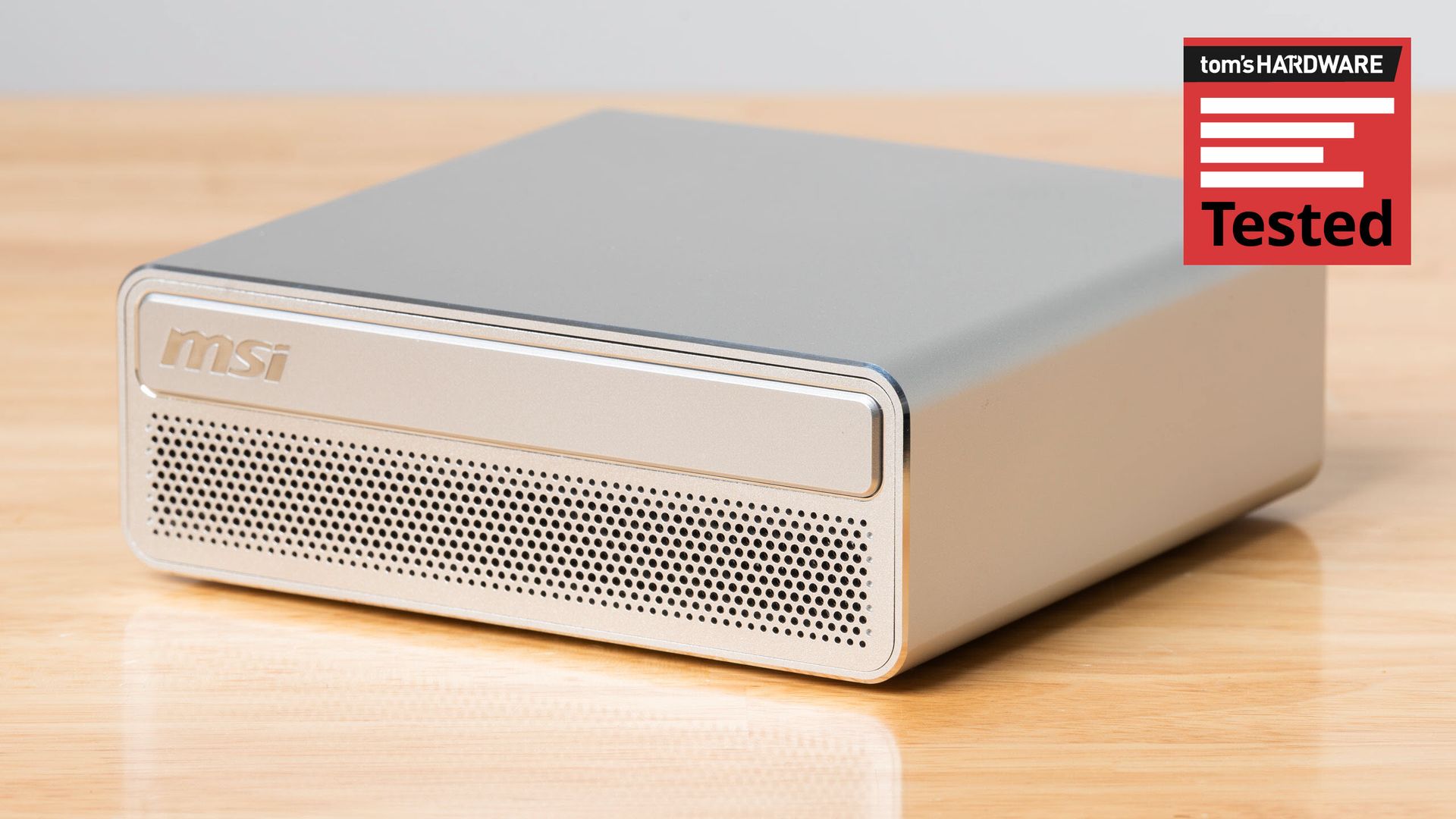
Asus, Dell, and MSI are now selling the first desktop mini PCs built around Nvidia’s RTX Spark N1X chip, marking the processor’s move from laptops into desktops. The machines pair Nvidia’s “superchip” design with up to 128GB of memory, aimed at developers running local AI models. The RTX Spark laptop lineup arrived earlier this year, and Nvidia is now extending the platform to small-form-factor desktops through three launch partners.
Each of the new mini PCs carries a 6144-core Nvidia Blackwell RTX GPU, a 20-core Nvidia Grace CPU, and up to 128GB of memory. Asus’s ProArt GR1X is priced from $4,499 in a configuration with 64GB of memory and 1TB of storage, a figure that reflects the high-end hardware inside. More RTX Spark desktops are on the way from Acer, Gigabyte, and HP, and Microsoft’s Surface RTX Spark Dev Box is scheduled to begin shipping this month.
The systems are positioned as alternatives to Apple’s Mac Mini and Mac Studio for developers who work with local AI models and software accelerated by RTX hardware. That includes AI-driven features in tools such as Adobe Premiere and Photoshop, along with new DLSS 4.5 Ray Reconstruction support in Blender 5.3. Nvidia launched its DGX Spark desktop last year, and the new mini PCs follow the same developer-focused approach as the RTX Spark laptops that compete with the MacBook Pro.
The machines can also run games, and Windows on Arm game support has been improving, though the pricing makes gaming an unlikely reason to buy one. Nvidia describes them as a dedicated Windows PC for local models and always-on agents, and claims up to 1 petaflop of AI performance. The systems also offer native CUDA support and access to Linux development tools through Windows Subsystem for Linux.
For US buyers, the launch puts Nvidia’s desktop AI hardware on sale through three major PC vendors, with additional brands and Microsoft’s dev box set to broaden the choices. The starting price of $4,499 for Asus’s 64GB ProArt GR1X places the category well above typical consumer desktops. Nvidia has not indicated any change to that pricing structure.
More hardware news from TechManNews.