Nvidia used its Supercomputing 2026 appearance to announce the Rubin HPC GPU, a data-center part the company says carries the largest number of CUDA cores of any GPU it has built. Nvidia put that figure at more than 50,000 cores. The announcement targets the most demanding scientific and engineering workloads, the segment where Nvidia is positioning the chip against competing offerings discussed at the same conference.
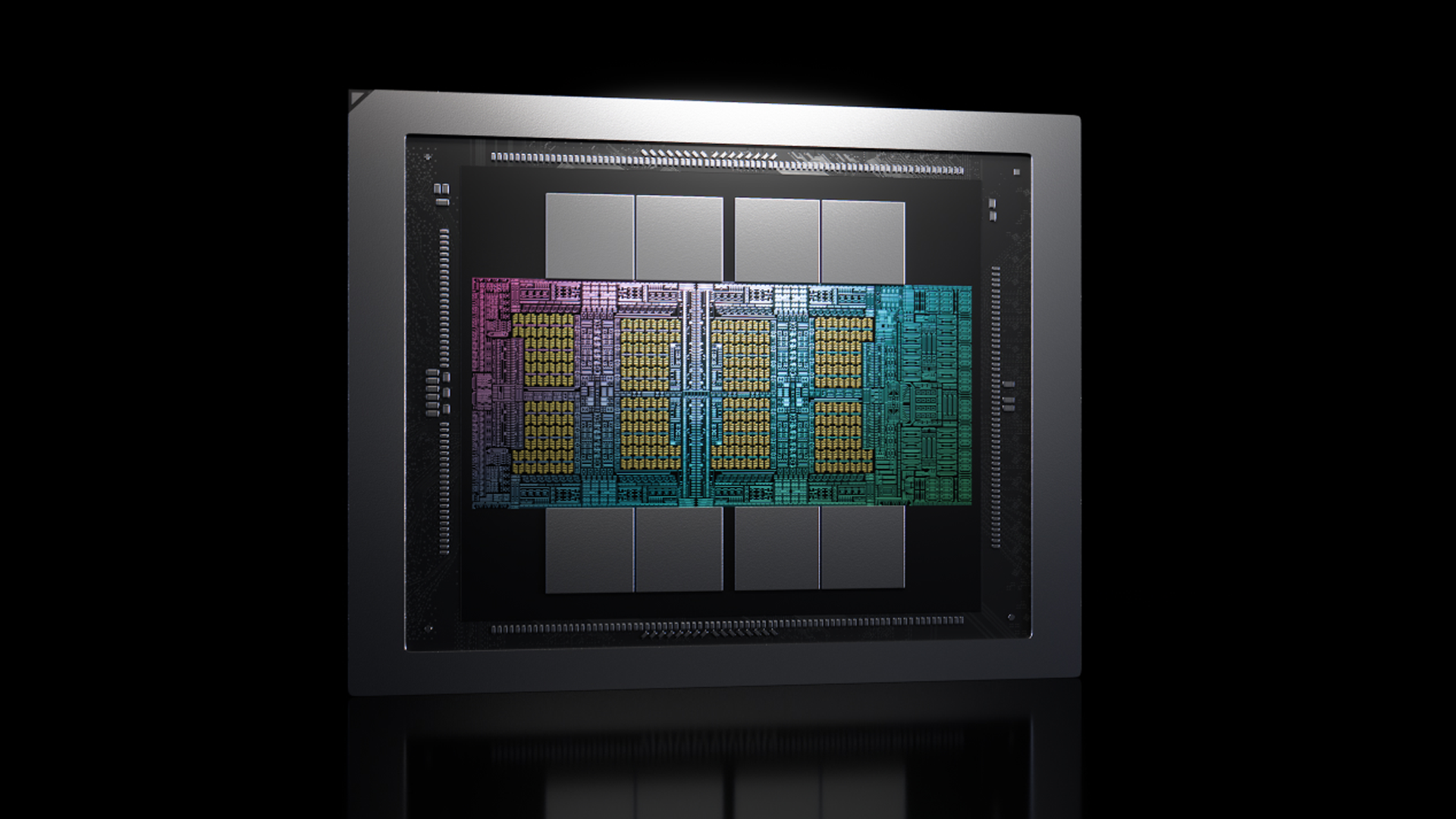
The core count is a large step up from the current Rubin GPU, which has 224 SMs and 28,672 CUDA cores. Reaching more than 50,000 cores would appear to require additional dies on the package, in a configuration resembling the four-die Rubin Ultra GPU that ties its dies together with NVLink-C2C. Nvidia did not disclose further details of Rubin HPC's physical layout, and the representative image it shared did not appear to reflect such a design.
For communication between Rubin HPC GPUs, Nvidia will rely on its NVLink 7 interconnect. The company did not provide new information on the bandwidth or physical layer of the interconnect within the rack. Earlier disclosures about the technology indicated it keeps the 3.6 TB/s of per-GPU bandwidth delivered by NVLink 6 while expanding the size of the scale-up domain.
Nvidia did not share the HBM capacity or bandwidth of the Rubin HPC GPU. It also did not say whether the part shifts its compute balance toward native FP64, an area where AMD and Intel are promoting their own GPUs at the conference this week.
Instead, Nvidia is emphasizing the chip's fit for scientists and engineers running agentic workflows, arguing that faster simulation will translate into more rapid discovery in those fields. In climate research, genomic analysis and financial simulation, Nvidia says the GPU's balanced design, combining higher compute with presumably faster movement of data between nodes, will help keep large data sets flowing to the chip and reduce idle compute. Nvidia also points to its CUDA-X domain-specific libraries as a way for researchers running agent swarms to speed performance on Rubin HPC, shortening the cycle from hypothesis to simulation to refinement.
More hardware news from TechManNews.