Three recent developments on the chips beat point to a single shift in American semiconductor strategy. Washington is no longer just subsidizing leading-edge logic fabs; it is buying supply-chain resilience in the back end and in specialty materials, while the industry itself is learning to share advanced packaging capacity rather than own it outright. The pattern is a US chip ecosystem in which the binding constraints are no longer only transistor density, but interposers, compound semiconductors and the political reliability of who supplies them.
The packaging bottleneck becomes a national concern
The clearest signal of this shift is the five-year, $2 billion agreement for GlobalFoundries to produce silicon interposers for TSMC's CoWoS advanced packaging in the United States, as Tom's Hardware reported. The arrangement matters less as a financial event than as an admission. TSMC's CoWoS capacity has been the gating factor for AI and high-performance computing accelerators, and the US now has a path to participate in that supply chain without having to stand up another leading-edge logic fab on American soil.
That is a significant change in how the American chip industry thinks about onshoring. For most of the past decade, "bringing chipmaking back" was shorthand for building cutting-edge logic fabs. Packaging was treated as a downstream, low-margin afterthought, largely outsourced to Asia. The GlobalFoundries-TSMC arrangement shows that logic is now the wrong place to look for the marginal capacity gain. The accelerators that dominate US AI demand do not ship without interposers, and interposers are now a US industrial policy subject.
For US technology companies, this is mostly good news in the medium term. More domestic packaging capacity reduces exposure to cross-strait logistics and to the queueing that has kept AI accelerator lead times long. For US consumers, the effect is indirect but real: a less fragile packaging supply chain is a precondition for the cloud capacity that underpins most consumer AI services. It also gives the US government a lever it did not previously have over the tail end of the AI manufacturing process.
Compound semiconductors get a defense underwriter
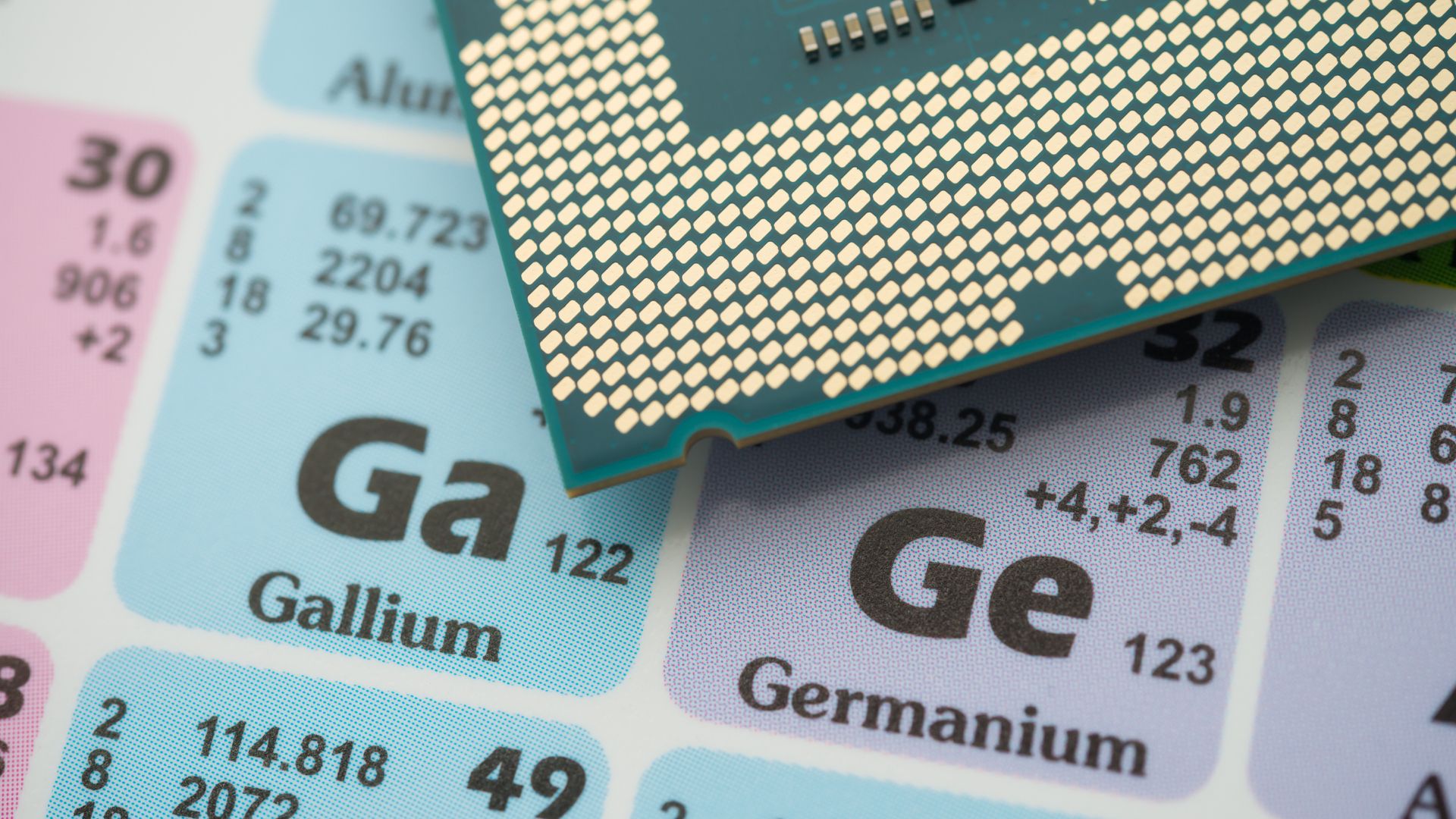
The second prong of the pattern is the conditional $1.5 billion, 30-year loan commitment from the US Department of War to Wolfspeed, as Tom's Hardware reported. The money is aimed at expanding gallium nitride epitaxy and radiation-hardened silicon carbide and gallium nitride technologies for national security applications. Two details stand out. The first is the lender: not the Commerce Department, which has administered most of the CHIPS-era incentives, but the Department of War, which is underwriting capacity on the basis of defense need. The second is the technology: compound semiconductors, not the silicon logic that dominates most policy discussion.
This is a meaningful split. Silicon logic gets attention because it is where the most valuable design work sits. But GaN and SiC are where power electronics, radar, communications and hardened electronics live, and those are the parts of the stack that matter most to defense buyers. A 30-year loan is a long horizon by the standards of commercial semiconductor finance, and it implies that the government expects this capacity to be needed for decades rather than one product cycle.
For US chip companies, the arrangement creates a somewhat unusual industrial structure: a defense-backed supplier of specialty materials that is not purely dependent on commercial demand cycles. That can be stabilizing, but it can also complicate pricing and capacity planning for commercial customers who share the same fabs. For the US market, the strategic logic is straightforward even if the economics are not: a domestic source of radiation-hardened compound semiconductors reduces a dependency that has no easy substitute.