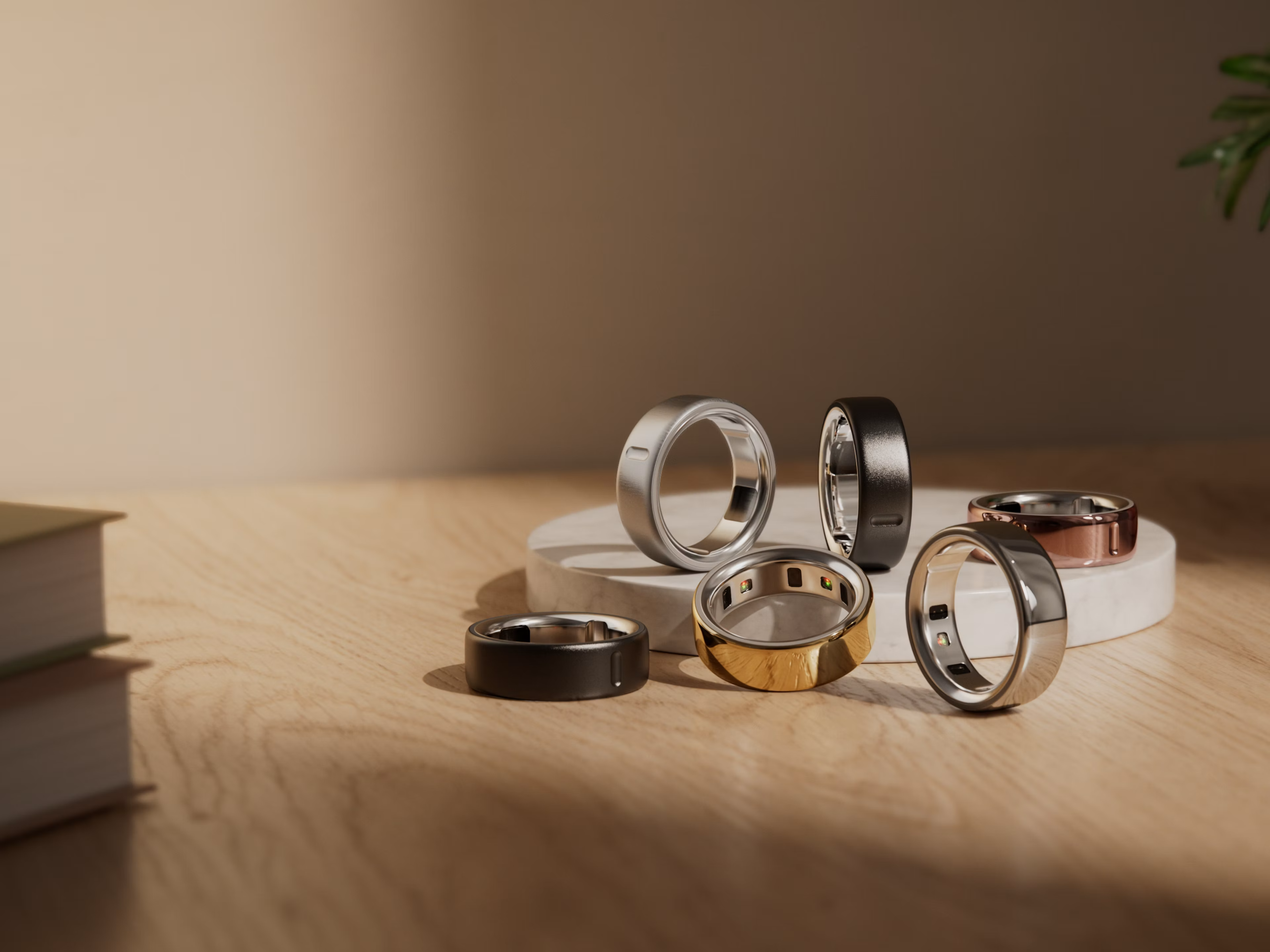
The two smart ring stories that crossed the newsroom this week - Oura's public filing and Ultrahuman's new funding - point to a single, significant shift in the US technology market. After years of being positioned as sleep trackers and wellness jewelry, smart rings are being re-engineered as wearable computers. Their small size and always-on contact with the finger make them an attractive next surface for compute, and the companies racing to own that surface are suddenly pursuing different business models and hardware architectures.
The pattern is visible in how each company describes its next step. Oura, as SiliconANGLE reported, filed for an initial public offering on the Nasdaq under the ticker "OURA," having filed confidentially in May. Revenue jumped 74%, but the share count and price range are still unset. Ultrahuman, meanwhile, took a $70 million round backed by Qualcomm, with TechCrunch reporting that the company is targeting a $200 million annual revenue run rate by January 2027. Crucially, TechCrunch noted the new product is a "Qualcomm-powered smart ring."
Those two facts - a public listing and a chipmaker's direct investment - signal that the category is moving from consumer gadget to platform play. The implications for US technology companies, the US market, and US consumers are specific and concrete.
The Ring as a General-Purpose Device
The first thing to notice is the shift in what these devices are built to do. Early smart rings, including Oura's first generations, were purpose-built for sleep and recovery data. The hardware was minimal, the sensor suite specialized, and the software largely closed. That is not the profile of a company filing for a public listing with 74% revenue growth, nor is it the profile of a company that needs a mobile application processor.
Ultrahuman's decision to build its next ring around a Qualcomm chip is the clearest evidence of the platform turn. A smart ring that runs on a Qualcomm platform is no longer a sensor pod with a Bluetooth link. It is a miniature computer with an operating system, application space, and the potential for third-party software. Qualcomm's backing is not incidental; as TechCrunch reported, Qualcomm is an investor in the $70 million round. Chipmakers do not typically invest in companies that will remain simple accessories. They invest in devices that will drive demand for their silicon, their software stacks, and their developer tools.
For US technology companies, this is a meaningful development. A Qualcomm-powered ring creates a new anchor for the US semiconductor ecosystem, which has long depended on smartphones as the primary volume driver. Rings are smaller than phones, but they are worn constantly, which creates different demands on power, thermal management, and wireless connectivity. Those constraints push chip design in new directions, and US-based fabless designers like Qualcomm are positioned to benefit.
The IPO Window Reopens for Hardware
Oura's filing is the other half of the story. A US listing, on the Nasdaq Global Select Market, is not just a fundraising event. It changes the company's relationship with the US capital markets and with public shareholders. The fact that Oura filed confidentially in May and moved to a public registration statement by early September - as SiliconANGLE reported - suggests the company believes its financial trajectory is strong enough to withstand scrutiny.
That trajectory is notable for a hardware company. The 74% revenue jump, as reported by SiliconANGLE, is the kind of number that investors associate with software platforms, not with manufacturing-dependent device companies. Historically, wearable hardware has been a low-margin business. Smart rings, though, have a different cost structure than smartwatches. They have no display, no speaker, and no complex haptics. Their bill of materials is lower, their repairability is irrelevant, and their attachment to the body is higher.
If Oura's public filing succeeds, it will open a door for other US-focused wearable hardware startups. The last few years have seen a contraction in consumer hardware funding, with most venture dollars flowing to software and AI. A successful Oura IPO would be a signal that vertically integrated device companies can still scale profitably, particularly when they own their software stack and data pipeline.
For US consumers, this means more choices with different tradeoffs. Oura and Ultrahuman are not identical products. Oura's existing devices have a strong reputation for sleep tracking accuracy, while Ultrahuman is building toward a broader compute platform. As both companies scale, US consumers will be able to choose between a wellness-focused device with a public company's balance sheet behind it and a more open, application-oriented device backed by a major US chipmaker.