The Unflashy Work of Making Technology Durable
Article

The Unflashy Work of Making Technology Durable

Four recent stories share a theme: the hard, unglamorous work of turning clever technology into something that survives contact with customers and markets.

BhavyaNovember 16, 20265 min read

Photo: Tom's Hardware

The four stories on this desk share a thread that has little to do with any one product: technology firms are being judged less on whether they can build something clever and more on whether that something lasts. Intel is trying to convert research into a commercial business, Microsoft is explaining how a months-old defect broke a global service, Minisforum is selling a competent machine whose appeal is blunted by component economics, and a battery startup is going public after nearly failing. Each is a case of durability, operational or commercial, becoming the deciding variable.

Research Is Not a Business

Intel's move to acquire Classiq, reported by Tom's Hardware, is framed as a bet on turning quantum efforts into a commercially viable business. The deal would pair Intel's silicon spin-qubit technology and manufacturing capabilities with Classiq's established software platform and customer base, and is expected to close by the first half of 2027. The phrasing matters: the company is not claiming a breakthrough, it is claiming a route to customers. That is the harder problem in quantum computing, where promising physics has outrun the software, tooling and buyer readiness needed to sell it. Buying an established software platform and customer base is an admission that the manufacturing story alone does not constitute a market. For US technology companies, the lesson is familiar from earlier platform shifts: the vendor that wins is often the one that makes the technology usable, not the one that first demonstrates it.

The Cost of a Latent Defect

Microsoft's account of last week's worldwide Microsoft 365 outage, as reported by BleepingComputer, is a study in how a small, old flaw becomes a large, new failure. The company says a software bug introduced in July caused the outage, triggering a cascading failure that left more than 80% of its networking gateway servers unresponsive. Two things stand out. The defect was months old, meaning it sat undetected through whatever testing and monitoring existed in the interim. And the failure was cascading, meaning redundancy did not contain it. For US consumers and businesses that treat Microsoft 365 as ambient infrastructure, the relevant fact is not the bug but the blast radius: a single flaw reaching more than four-fifths of a class of servers is an architectural outcome, not just a coding error. Stated plainly, the incident is a reminder that reliability at scale is a design property, and that a service can be widely used and still be thinly protected against a fault it introduced itself.

When Entry-Level Stops Paying

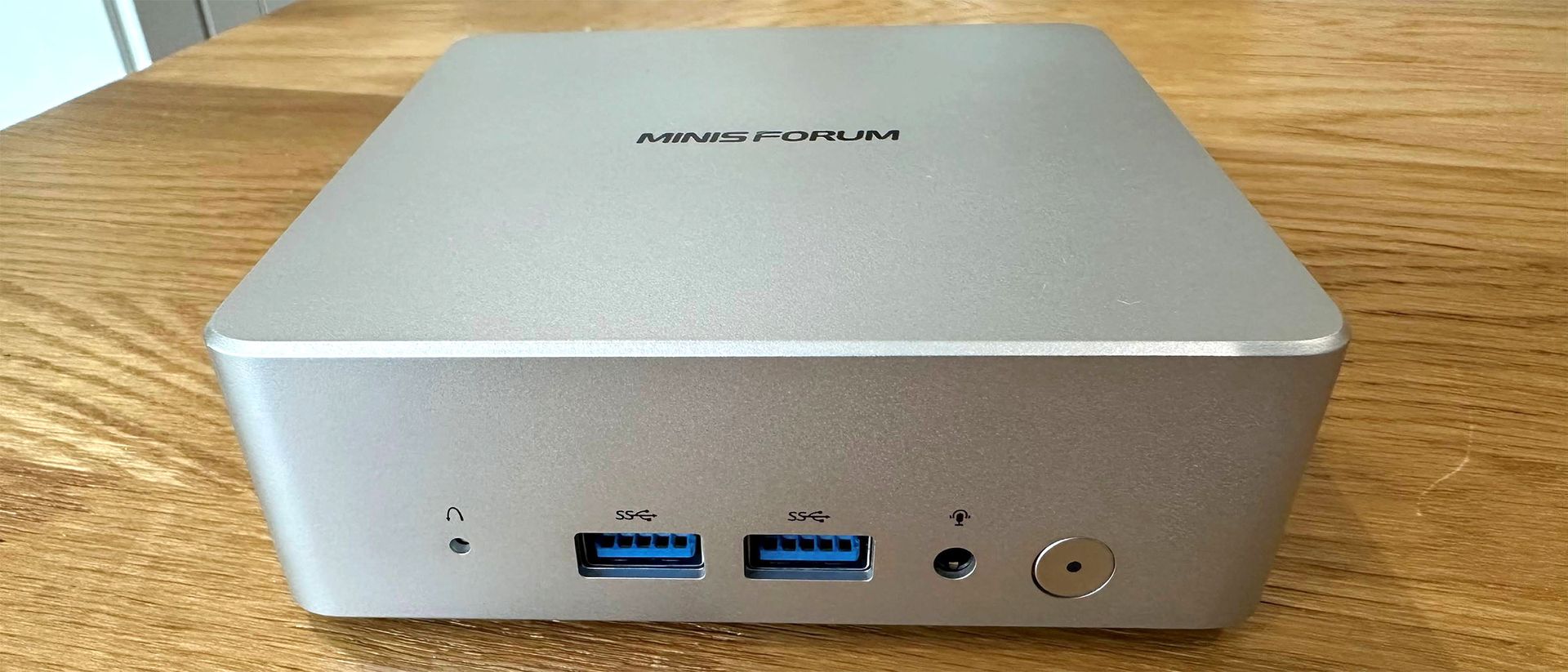
Minisforum's Elite Mini M2 Air-304, reviewed by Tom's Hardware, is a quiet, compact machine built around an Intel Wildcat Lake CPU that runs cool and quiet but suits only casual users. The interesting sentence in that review is about economics: due to the prices of RAM and storage, trying to save money using entry-level silicon does not work as well as it used to. That is a market signal rather than a product complaint. When memory and storage costs dominate a build, a cheap processor no longer delivers a cheap computer, and the budget segment loses the value proposition that justified it. For US consumers, that means the floor price of a usable desktop is being set by components other than the CPU. For US vendors, it means entry-level silicon alone no longer sells a system; the surrounding bill of materials does.
Surviving Is Not the Same as Prospering

Our Next Energy, a battery startup, is going public via SPAC after dodging death, as TechCrunch reported. TechCrunch frames the open question directly: whether the company now has what it needs to survive in a cutthroat battery industry. Going public is a financing event, not an operational verdict, and the article treats it that way. Battery manufacturing is capital-intensive and competitive, and a public listing buys time rather than immunity. For the US market, the case illustrates a broader pattern in hardware: capital can rescue a company from a near-term failure, but it does not by itself create the manufacturing scale, cost position or customer commitments that determine whether the company is still here in several years.

The Common Thread

Read together, the stories describe a shift in what counts as progress. Intel is buying a customer base to make research sellable. Microsoft is answering for a defect that survived months in production and then propagated widely. Minisforum is selling competent engineering whose value is set by memory and storage prices. Our Next Energy is using public markets to extend a survival that is not yet assured. In none of these cases is the headline the clever part; the headline is the business, operational or economic question that the clever part has to answer. That is characteristic of a maturing hardware cycle. The easy claims, faster chips, new qubit approaches, another startup listing, are abundant. What is scarce is the unglamorous infrastructure of durability: software that makes a platform usable, monitoring and architecture that contain a fault, bill-of-materials economics that make a product worth buying, and manufacturing scale that makes a company worth backing. US technology companies are, on this evidence, being measured on that second list.

What to Watch

The Intel and Classiq deal is slated to close by the first half of 2027, per Tom's Hardware, so the question is whether the combined software platform and customer base actually converts research into revenue before that date and after it. Microsoft's account of the July-introduced bug invites scrutiny of whether the networking gateway failure produces changes in how such latent defects are detected and how cascading failures are contained; the 80% figure is the benchmark to watch. Minisforum's review points to component pricing as the binding constraint on budget PCs, so movement in RAM and storage prices is the variable that decides whether entry-level machines recover their value story. And Our Next Energy's SPAC listing will be tested by whether public capital translates into the scale the battery industry demands, a question TechCrunch leaves open. None of these outcomes is determined yet. Each will be decided by execution rather than announcement.

More on this beat: Hardware on TechManNews.

#hardware#quantum computing#cloud reliability#consumer PCs#batteries#market analysis

Newsletter

Get Tech News in Your Inbox

The latest AI, gadgets, software and startup stories from TechManNews, delivered every morning - free.